
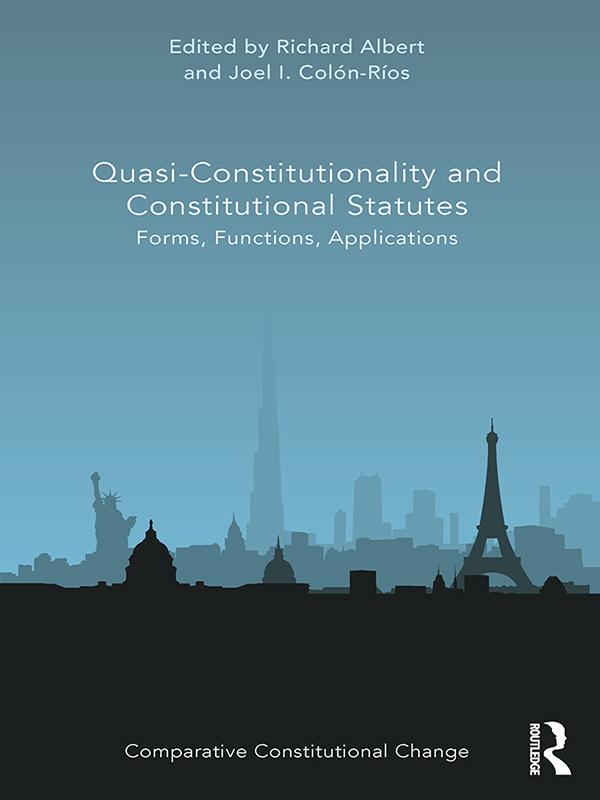
This book examines the interstices among statutory enactment, constitutional convention and formal constitution in which quasi-constitutionality exists. It provides a focal resource that can serve as a point of reference for scholars interested in quasi-constitutionality as a whole, from national and transnational perspectives, expanding on its many forms, functions, and applications with recourse to comparative insights. The book is divided in three main Parts, each of them preceded by a separate critical introduction in which an informed scholar contextualizes the chapters and offers reflections on the themes they develop. The first Part, titled 'Forms', is composed of chapters that address, from a theoretical and comparative perspective, questions related to the recognition of constitutional statutes and quasi-constitutional legislation. The second Part is titled 'Functions', and contains chapters that explore the explanatory power of quasi-constitutionality in different institutional contexts. The third Part, titled 'Applications', considers the ways in which constitutional statutes and quasi-constitutionality operate in relation to particular tensions and debates present in various jurisdictions.
Payez facilement par carte, Klarna, Apple Pay ou Google Pay. Pas satisfait ? Vous avez toujours une garantie de remboursement de 14 jours. En savoir plus dans nos conditions. Si vous avez des questions, envoyez-nous un e-mail à hello@memmo.org.
Memmo facilite tes études, où que tu sois dans le monde. On rassemble tes manuels de cours et des outils d'étude intelligents au même endroit : résumés, quiz, podcasts et flashcards. Et il y a Ted, ton compagnon d'étude qui répond à toutes tes questions. Plus de 50 000 étudiants étudient déjà ici – conçu pour t'aider à apprendre plus vite et à moins stresser.