
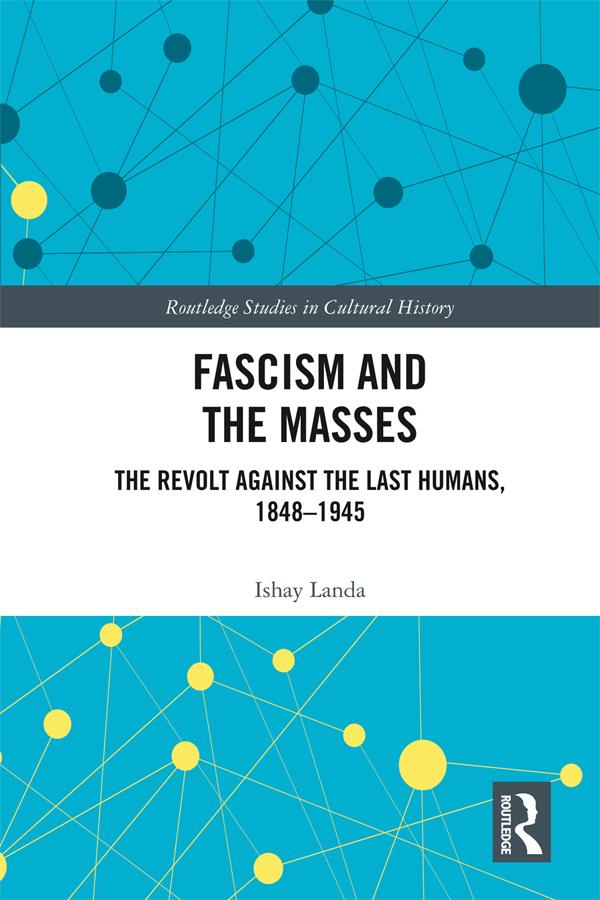
Highlighting the "mass" nature of interwar European fascism has long become commonplace. Throughout the years, numerous critics have construed fascism as a phenomenon of mass society, perhaps the ultimate expression of mass politics. This study deconstructs this long-standing perception. It argues that the entwining of fascism with the masses is a remarkable transubstantiation of a movement which understood and presented itself as a militant rejection of the ideal of mass politics, and indeed of mass society and mass culture more broadly conceived. Thus, rather than "massifying" society, fascism was the culmination of a long effort on the part of the élites and the middle-classes to de-massify it. The perennially menacing mass – seen as plebeian and insubordinate – was to be drilled into submission, replaced by supposedly superior collective entities, such as the nation, the race, or the people. Focusing on Italian fascism and German National Socialism, but consulting fascist movements and individuals elsewhere in interwar Europe, the book incisively shows how fascism is best understood as ferociously resisting what Elias referred to as "the civilizing process" and what Marx termed "the social individual." Fascism, notably, was a revolt against what Nietzsche described as the peaceful, middling and egalitarian "Last Humans."
Payez facilement par carte, Klarna, Apple Pay ou Google Pay. Pas satisfait ? Vous avez toujours une garantie de remboursement de 14 jours. En savoir plus dans nos conditions. Si vous avez des questions, envoyez-nous un e-mail à hello@memmo.org.
Memmo facilite tes études, où que tu sois dans le monde. On rassemble tes manuels de cours et des outils d'étude intelligents au même endroit : résumés, quiz, podcasts et flashcards. Et il y a Ted, ton compagnon d'étude qui répond à toutes tes questions. Plus de 50 000 étudiants étudient déjà ici – conçu pour t'aider à apprendre plus vite et à moins stresser.