
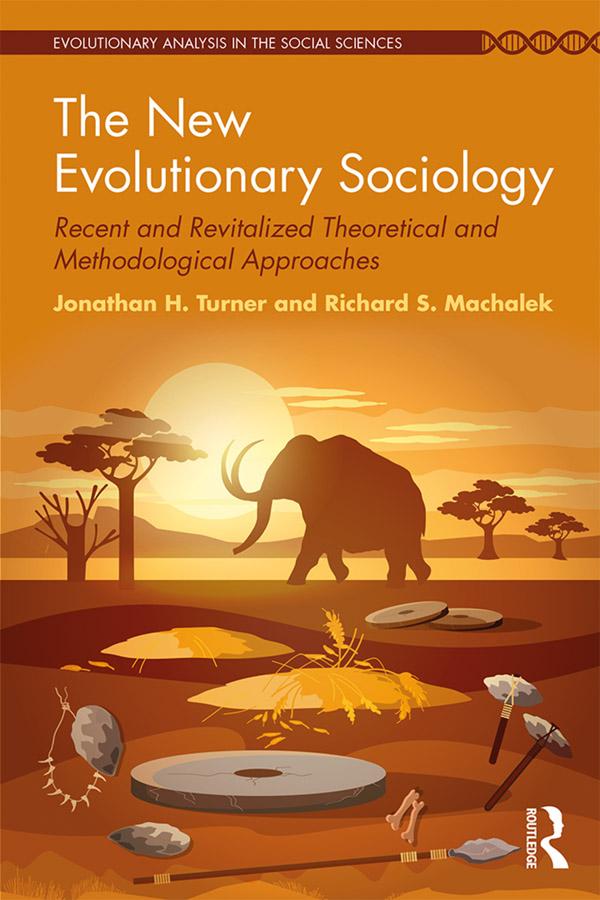
For decades, evolutionary analysis was overlooked or altogether ignored by sociologists. Fears and biases persisted nearly a century after Auguste Comte gave the discipline its name, as did concerns that its effect would only reduce sociology to another discipline – whether biology, psychology, or economics. Worse, apprehension that the application of evolutionary theory would encourage heightened perceptions of racism, sexism, ethnocentrism and reductionism pervaded.
Turner and Machalek argue instead for a new embrace of biology and evolutionary analysis. Sociology, from its very beginnings in the early 19th century, has always been concerned with the study of evolution, particularly the transformation of societies from simple to ever-more complex forms. By comprehensively reviewing the original ways that sociologists applied evolutionary theory and examining the recent renewal and expansion of these early approaches, the authors confront the challenges posed by biology, neuroscience, and psychology to distinct evolutionary approaches within sociology. They emerge with key theoretical and methodological discoveries that demonstrate the critical – and compelling – case for a dramatically enriched sociology that incorporates all forms of comparative evolutionary analysis to its canon and study of sociocultural phenomena.
Payez facilement par carte, Klarna, Apple Pay ou Google Pay. Pas satisfait ? Vous avez toujours une garantie de remboursement de 14 jours. En savoir plus dans nos conditions. Si vous avez des questions, envoyez-nous un e-mail à hello@memmo.org.
Memmo facilite tes études, où que tu sois dans le monde. On rassemble tes manuels de cours et des outils d'étude intelligents au même endroit : résumés, quiz, podcasts et flashcards. Et il y a Ted, ton compagnon d'étude qui répond à toutes tes questions. Plus de 50 000 étudiants étudient déjà ici – conçu pour t'aider à apprendre plus vite et à moins stresser.