
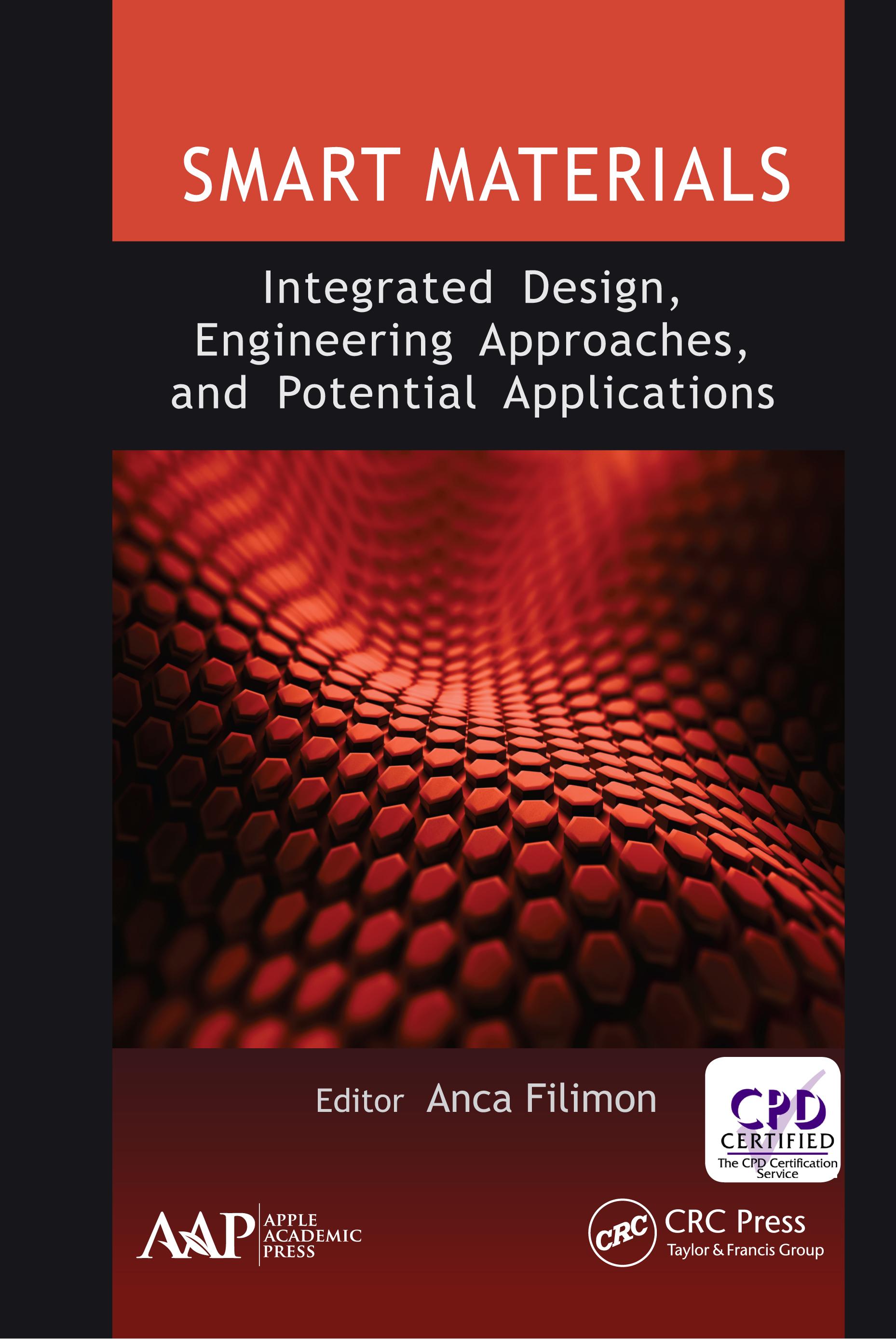
Polymer-based smart materials have become attractive in recent years due to the fact that polymers are flexible and provide many advantages compared to inorganic smart materials: they are low cost, they are easy to process, and they exhibit good performance at nano- and microscale levels.
This volume focuses on a different class of polymers that are used as smart materials in the areas of biotechnology, medicine, and engineering. The volume aims to answer these questions: How do we distinguish ‘smart materials’? and How do they work? The chapters lay the groundwork for assimilation and exploitation of this technological advancement. Four of the key aspects of the approach that the authors have developed throughout this book are highlighted, namely the multidisciplinary exchange of knowledge, exploration of the relationships between multiple scales and their different behaviors, understanding that material properties are dictated at the smallest scale, and, therefore, the recognition that macroscale behavior can be controlled by nanoscale design.
Payez facilement par carte, Klarna, Apple Pay ou Google Pay. Pas satisfait ? Vous avez toujours une garantie de remboursement de 14 jours. En savoir plus dans nos conditions. Si vous avez des questions, envoyez-nous un e-mail à hello@memmo.org.
Memmo facilite tes études, où que tu sois dans le monde. On rassemble tes manuels de cours et des outils d'étude intelligents au même endroit : résumés, quiz, podcasts et flashcards. Et il y a Ted, ton compagnon d'étude qui répond à toutes tes questions. Plus de 50 000 étudiants étudient déjà ici – conçu pour t'aider à apprendre plus vite et à moins stresser.