
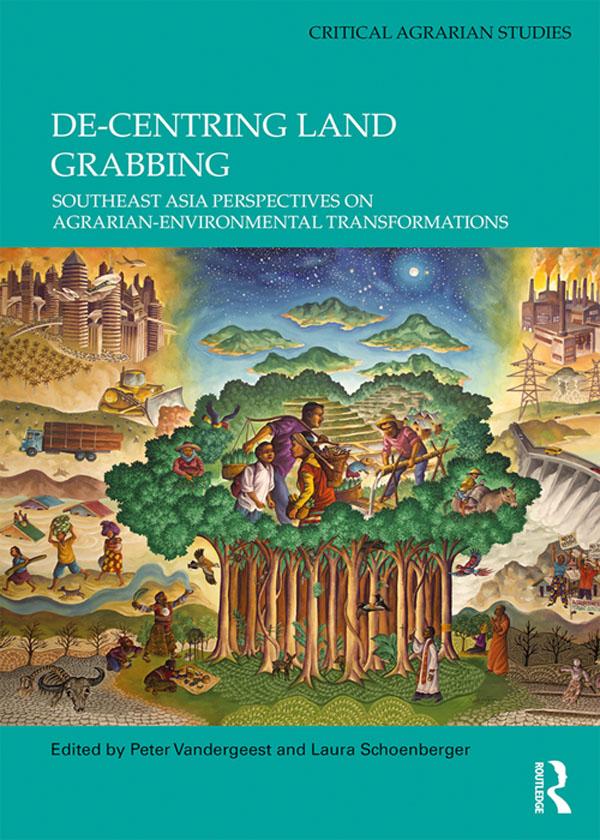
Southeast Asia has been portrayed as a key site in the global land grab. Featuring leading scholars in the field, this collection critically examines the nature and extent of land grabbing in Southeast Asia, and seeks to locate this phenomena in broader agrarian and environmental transitions (AET). The individual contributions suggest that there is little evidence of a global land grab in Southeast Asia, but that over the last ten years the surge of plantations and processes of land grabbing has been a key feature in the region. The collection considers how broader AET processes may be brought more clearly into focus by decentring land grabbing, including consideration of its absence as well presence. The diversity of cases in this collection coalesces around the productive tension in land grab studies between global capitalist processes on the one hand, and context-specificity and contingent motivations fuelling the expansion of large-scale plantations for oil palm, rubber, cassava and other cash crops, on the other hand. The contributors further broaden the entry points to consider cross-sectoral AET processes such as enclosures for mining, conservation and hydropower and explore the contingencies that help to maintain smallholder production.
The chapters originally published as a special issue in The Journal of Peasant Studies.
Payez facilement par carte, Klarna, Apple Pay ou Google Pay. Pas satisfait ? Vous avez toujours une garantie de remboursement de 14 jours. En savoir plus dans nos conditions. Si vous avez des questions, envoyez-nous un e-mail à hello@memmo.org.
Memmo facilite tes études, où que tu sois dans le monde. On rassemble tes manuels de cours et des outils d'étude intelligents au même endroit : résumés, quiz, podcasts et flashcards. Et il y a Ted, ton compagnon d'étude qui répond à toutes tes questions. Plus de 50 000 étudiants étudient déjà ici – conçu pour t'aider à apprendre plus vite et à moins stresser.