
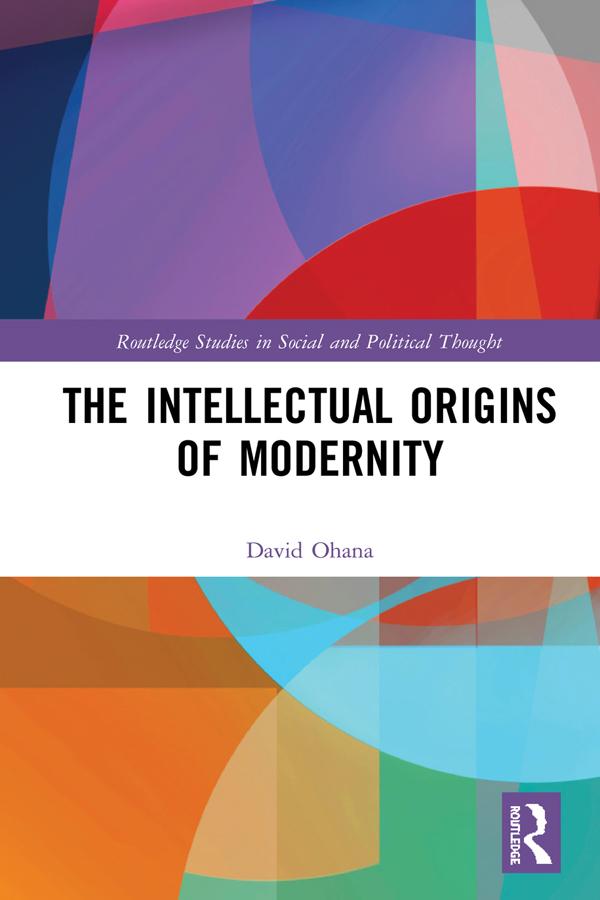
The Intellectual Origins of Modernity explores the long and winding road of modernity from Rousseau to Foucault and its roots, which are not to be found in a desire for enlightenment or in the idea of progress but in the Promethean passion of Western humankind. Modernity is the Promethean passion, the passion of humans to be their own master, to use their insight to make a world different from the one that they found, and to liberate themselves from their immemorial chains. This passion created the political ideologies of the nineteenth century and made its imprint on the totalitarian regimes that arose in their wake in the twentieth.
Underlying the Promethean passion there was modernity—humankind's project of self-creation—and enlightenment, the existence of a constant tension between the actual and the desirable, between reality and the ideal. Beneath the weariness, the exhaustion and the skepticism of post-modernist criticism is a refusal to take Promethean horizons into account. This book attests the importance of reason, which remains a powerful critical weapon of humankind against the idols that have come out of modernity: totalitarianism, fundamentalism, the golem of technology, genetic engineering and a boundless will to power. Without it, the new Prometheus is liable to return the fire to the gods.
Payez facilement par carte, Klarna, Apple Pay ou Google Pay. Pas satisfait ? Vous avez toujours une garantie de remboursement de 14 jours. En savoir plus dans nos conditions. Si vous avez des questions, envoyez-nous un e-mail à hello@memmo.org.
Memmo facilite tes études, où que tu sois dans le monde. On rassemble tes manuels de cours et des outils d'étude intelligents au même endroit : résumés, quiz, podcasts et flashcards. Et il y a Ted, ton compagnon d'étude qui répond à toutes tes questions. Plus de 50 000 étudiants étudient déjà ici – conçu pour t'aider à apprendre plus vite et à moins stresser.