
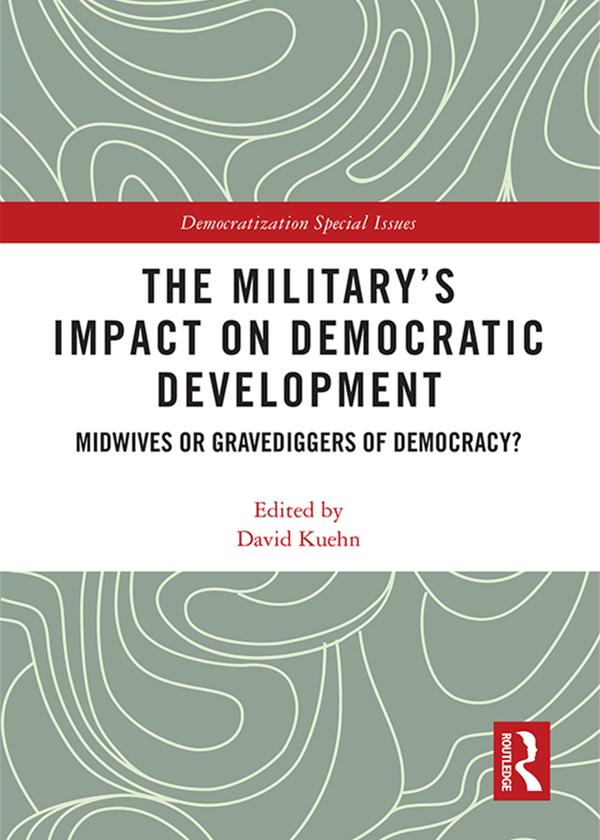
Despite the decline in the number of military coups since the 1960s and 1970s, Militaries continue to be crucial political actors in many world regions. Their impact on the democratic development of nations, however, has been mixed. On the one hand, coups against democratically elected leaders in Mali (2012), Egypt (2013), and Thailand (2014) have spelled doom for these countries’ nascent democratic regimes and have ushered in new periods of military dominance in politics. The cases of Portugal (1974), the Philippines (1986), and Tunisia (2011), on the other hand, show that the military’s decision not to defend authoritarian leaders against mass protests contributed crucially to the fall of dictatorships and facilitated transitions to democracy. This volume addresses the military’s ambivalent role as "midwife" or "gravedigger" of democracy and highlights the often multi-layered and complex relationship between militaries’ political behaviour and democratization.
The chapters were originally published in a special issue of Democratization.
Payez facilement par carte, Klarna, Apple Pay ou Google Pay. Pas satisfait ? Vous avez toujours une garantie de remboursement de 14 jours. En savoir plus dans nos conditions. Si vous avez des questions, envoyez-nous un e-mail à hello@memmo.org.
Memmo facilite tes études, où que tu sois dans le monde. On rassemble tes manuels de cours et des outils d'étude intelligents au même endroit : résumés, quiz, podcasts et flashcards. Et il y a Ted, ton compagnon d'étude qui répond à toutes tes questions. Plus de 50 000 étudiants étudient déjà ici – conçu pour t'aider à apprendre plus vite et à moins stresser.