
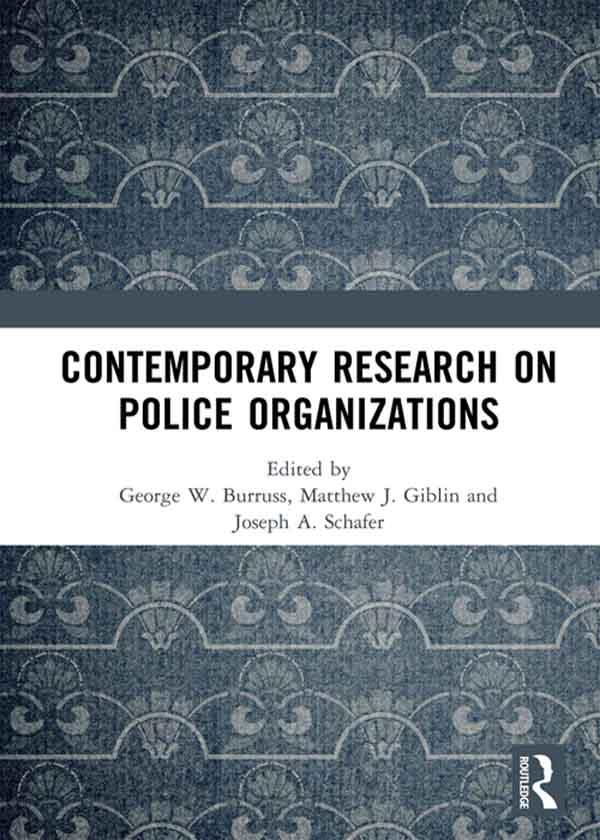
Much research on policing focuses on individual officer decision making in the field, but officers are positioned within organizations. Organizational characteristics, including structures, policies, management, training, culture, traditions, and the environmental context affect individual officer behavior and attitudes. Recent high-profile controversies surrounding policing have generated interest in examining what factors may have led to current crises.
In this book, contributors discuss how police department priorities are made; how departments respond to sexual assault complaints; how forensic scientists deal with job stress and satisfaction; how police use gun crime incident reviews for problem solving and information sharing; how police officers view the use of body-worn cameras given their perceptions of organizational justice; and how officers view their work culture. The purpose of this book is to give policy makers and scholars some guidance on the interplay between the individual and the organization. By understanding this dynamic, police administrators should be able to better devise reform efforts. This book was originally published as a special issue of the Journal of Crime and Justice.
Payez facilement par carte, Klarna, Apple Pay ou Google Pay. Pas satisfait ? Vous avez toujours une garantie de remboursement de 14 jours. En savoir plus dans nos conditions. Si vous avez des questions, envoyez-nous un e-mail à hello@memmo.org.
Memmo facilite tes études, où que tu sois dans le monde. On rassemble tes manuels de cours et des outils d'étude intelligents au même endroit : résumés, quiz, podcasts et flashcards. Et il y a Ted, ton compagnon d'étude qui répond à toutes tes questions. Plus de 50 000 étudiants étudient déjà ici – conçu pour t'aider à apprendre plus vite et à moins stresser.