
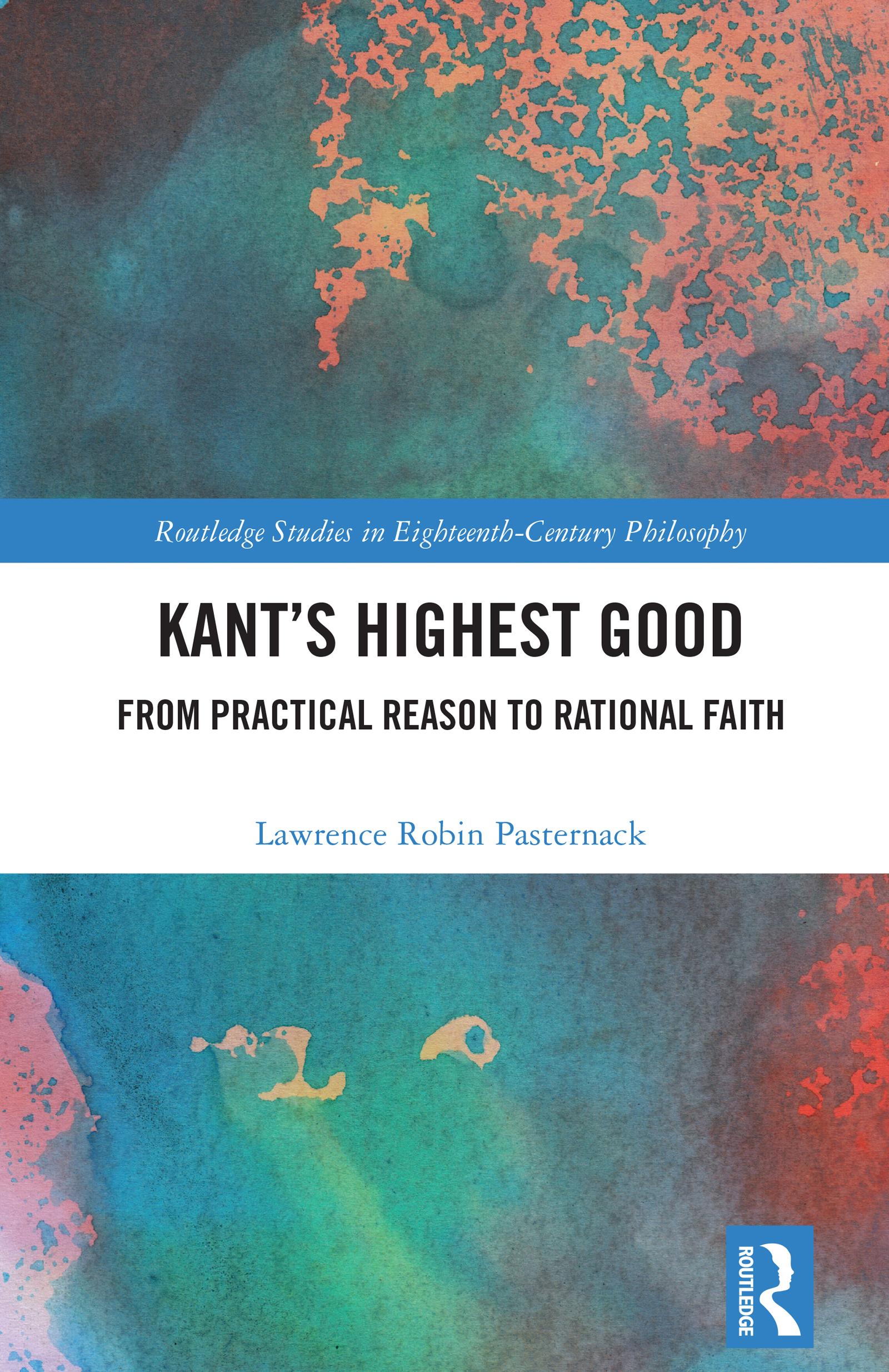
Kant’s doctrine of the Highest Good is among the most perplexing and controversial aspects of his practical philosophy. There is widespread disagreement about exactly what the Highest Good is, how Kant argues for it, and what function it is supposed to fulfill. The Highest Good is also situated at the nexus of some of the most acrimonious disputes within Kant scholarship.
This book is the first comprehensive, English-language interpretation of the Highest Good’s internal structure, its development, and its place within Kant’s broader philosophical system. Pasternack offers sustained engagement with the contemporary secondary literature on these issues, and discusses key texts of the German Enlightenment which helped to shape Kant’s conception of the Highest Good. He argues that prevailing interpretations rely upon a faulty understanding of the Highest Good, one which has its roots in a number of early interpretive missteps. Pasternack proceeds to discuss how the Highest Good relates to other elements of Kant’s philosophical system, including the conflicting interpretations of his moral psychology, the epistemic strictures of Transcendental Idealism, and how to reconcile his positive philosophy of religion with these strictures.
Payez facilement par carte, Klarna, Apple Pay ou Google Pay. Pas satisfait ? Vous avez toujours une garantie de remboursement de 14 jours. En savoir plus dans nos conditions. Si vous avez des questions, envoyez-nous un e-mail à hello@memmo.org.
Memmo facilite tes études, où que tu sois dans le monde. On rassemble tes manuels de cours et des outils d'étude intelligents au même endroit : résumés, quiz, podcasts et flashcards. Et il y a Ted, ton compagnon d'étude qui répond à toutes tes questions. Plus de 50 000 étudiants étudient déjà ici – conçu pour t'aider à apprendre plus vite et à moins stresser.