
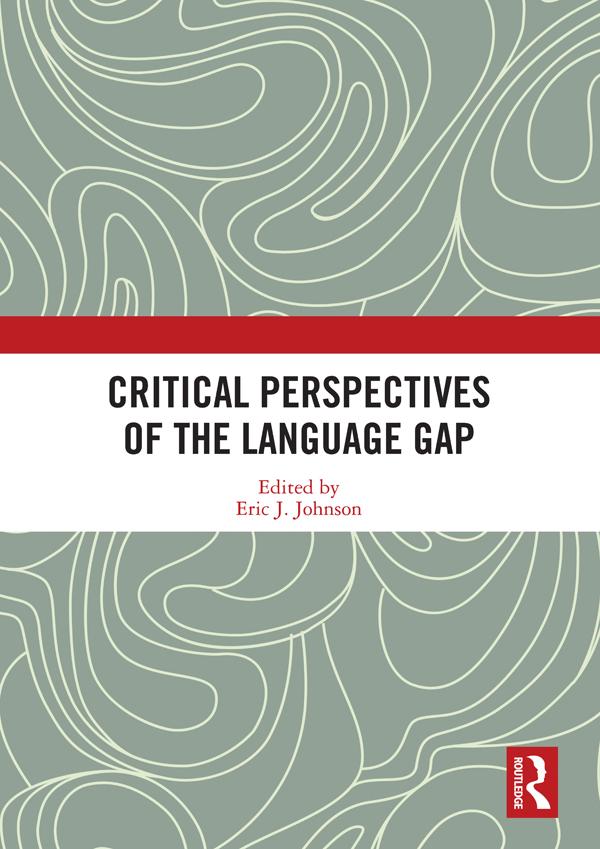
This volume is an orchestrated critique of the notion that individuals from lower socioeconomic status communities have inferior language skills as compared to middle- and upper-class groups. The idea of this so-called “language gap” stems in large part from Hart and Risley’s (1995) publication Meaningful Differences in the Everyday Experience of Young American Children. Hart and Risley proposed that by age 3, children from more economically affluent households were exposed to approximately 30 million more words than children from low-income backgrounds. They also claimed that this gap in exposure to words negatively impacts cognitive development and eventual academic achievement. The contributing authors in this book contest the original concept of a “language-gap” as well as the recent swell of academic research and public programs that it has produced. The chapters interrogate the linguistic, academic, cultural, and social implications of the “language-gap” by providing critical accounts grounded in the scholarly disciplines of sociolinguistics, anthropology, and education.
This book was originally published as a special issue of the International Multilingual Research Journal.
Payez facilement par carte, Klarna, Apple Pay ou Google Pay. Pas satisfait ? Vous avez toujours une garantie de remboursement de 14 jours. En savoir plus dans nos conditions. Si vous avez des questions, envoyez-nous un e-mail à hello@memmo.org.
Memmo facilite tes études, où que tu sois dans le monde. On rassemble tes manuels de cours et des outils d'étude intelligents au même endroit : résumés, quiz, podcasts et flashcards. Et il y a Ted, ton compagnon d'étude qui répond à toutes tes questions. Plus de 50 000 étudiants étudient déjà ici – conçu pour t'aider à apprendre plus vite et à moins stresser.