
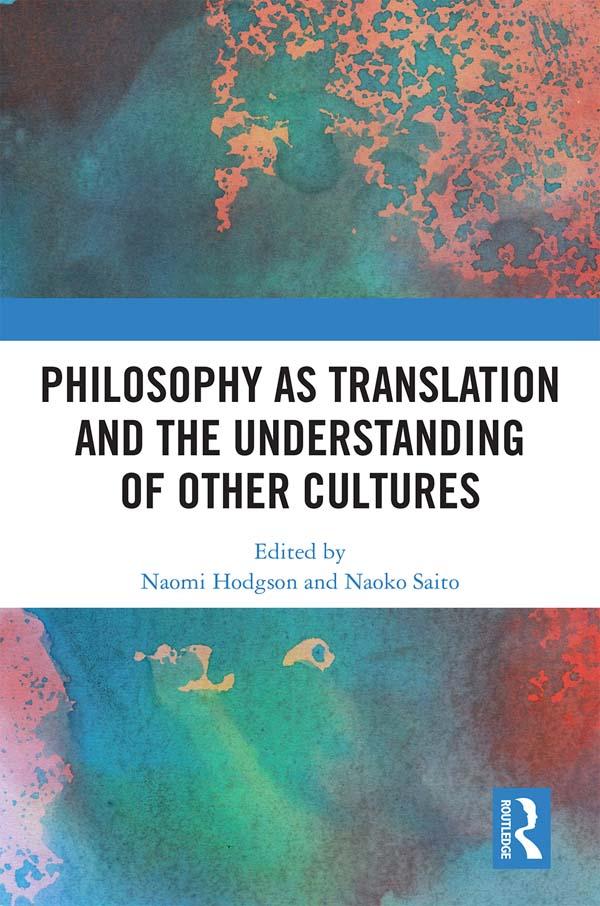
The existential crises involved in translation are part of our political life, especially in times when the closing of borders symbolized by Brexit and the triumph of Donald Trump, present new challenges to those living lives of immigrancy and those waiting at the borders. How to resist the emotive tide of populism and, in particular, the language that legitimates exclusion? How to confront the anxieties of inclusion? These challenges are increasingly pressing. The 2016 Conference of the International Network of Philosophers of Education sought to address such concerns through the theme ‘Philosophy as translation and the understanding of other cultures’. The chapters included here represent the breadth and richness of that conference, addressing questions of ethics, desire, religious understanding, intercultural philosophy, and practices of higher education and teacher education. The processes of translation they discuss are not limited to linguistic translation as conventionally understood. Instead translation is taken to be a window through which to understand how we, as linguistic beings, are constantly in a process of transformation, and how our personal and cultural identities are, hence, also already involved in processes of translation. This book was originally published as a special issue of Ethics & Education.
Payez facilement par carte, Klarna, Apple Pay ou Google Pay. Pas satisfait ? Vous avez toujours une garantie de remboursement de 14 jours. En savoir plus dans nos conditions. Si vous avez des questions, envoyez-nous un e-mail à hello@memmo.org.
Memmo facilite tes études, où que tu sois dans le monde. On rassemble tes manuels de cours et des outils d'étude intelligents au même endroit : résumés, quiz, podcasts et flashcards. Et il y a Ted, ton compagnon d'étude qui répond à toutes tes questions. Plus de 50 000 étudiants étudient déjà ici – conçu pour t'aider à apprendre plus vite et à moins stresser.