
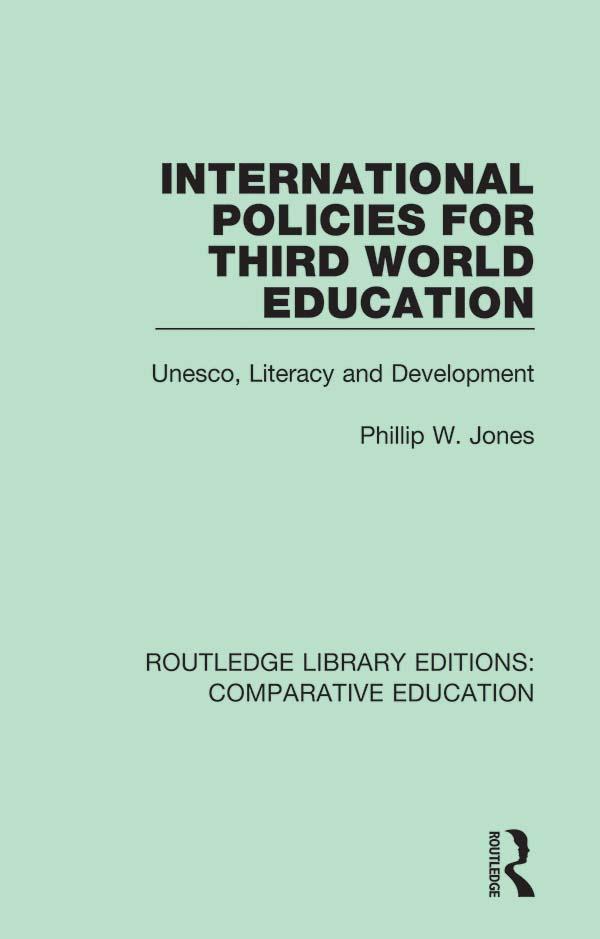
Originally published in 1988. Bringing the world close to universal literacy will be a major legacy of the twentieth century. But the rapid and widespread developments in education that have enabled this to happen have not taken place in a social and political vacuum. In some instances conditions conducive to mass literacy have only come about through popular revolution or rapid economic development, but a less spectacular and frequently less tangible role has been played by a number of international agencies. The most prominent of these is Unesco, which has had the goal of global literacy at the heart of its endeavours ever since its foundation in 1946. Agreement on the best means of achieving this goal, however, has been very difficult to come by, and Unesco's literacy program has been shaped by internal and external politics as well as by local exigencies. This book outlines how Unesco's literacy program has evolved, and by discussing how idealistic aims and intentions have been given shape and direction by more immediate political and bureaucratic concerns provides a critique, in miniature, of the post-war history of the United Nations and related organisations.
Payez facilement par carte, Klarna, Apple Pay ou Google Pay. Pas satisfait ? Vous avez toujours une garantie de remboursement de 14 jours. En savoir plus dans nos conditions. Si vous avez des questions, envoyez-nous un e-mail à hello@memmo.org.
Memmo facilite tes études, où que tu sois dans le monde. On rassemble tes manuels de cours et des outils d'étude intelligents au même endroit : résumés, quiz, podcasts et flashcards. Et il y a Ted, ton compagnon d'étude qui répond à toutes tes questions. Plus de 50 000 étudiants étudient déjà ici – conçu pour t'aider à apprendre plus vite et à moins stresser.