
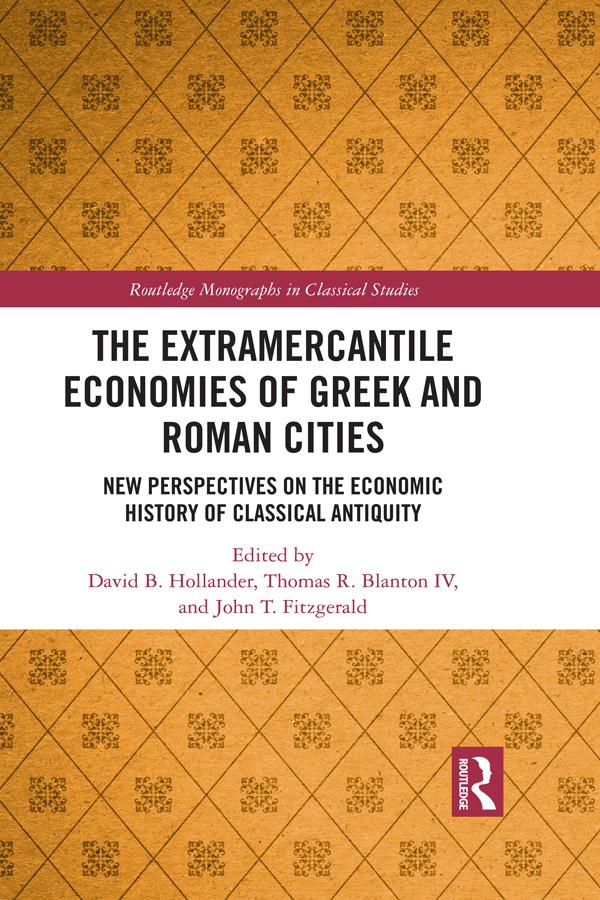
Recent work on the ancient economy has tended to concentrate on market exchange, but other forces also caused goods to change hands. Such nonmarket transfers ranged from small private gifts to the wholesale confiscation of cities, lands, and their peoples. The papers presented in this volume examine aspects of this extramercantile economy, particularly benefaction and the role of associations, as well as their impact on the market economy.
This volume brings together ancient historians, New Testament scholars, and classicists to assess critically the New Institutional Economics framework. Combining theoretical approaches with detailed investigations of particular regions and topics, its chapters examine Greek economic thought, the benefits of membership in private associations, and the economic role of civic euergetism from classical Athens to the municipalities of Roman Spain.
The Extramercantile Economies of Greek and Roman Cities will be of use to those interested in the economic context of ancient religions, the role of associations in the economy, theoretical approaches to the study of the ancient economy, labor and politics in the ancient city, as well as how Greek philosophers, from Xenophon to Philodemus, developed ethical ideas about economic behavior.
Payez facilement par carte, Klarna, Apple Pay ou Google Pay. Pas satisfait ? Vous avez toujours une garantie de remboursement de 14 jours. En savoir plus dans nos conditions. Si vous avez des questions, envoyez-nous un e-mail à hello@memmo.org.
Memmo facilite tes études, où que tu sois dans le monde. On rassemble tes manuels de cours et des outils d'étude intelligents au même endroit : résumés, quiz, podcasts et flashcards. Et il y a Ted, ton compagnon d'étude qui répond à toutes tes questions. Plus de 50 000 étudiants étudient déjà ici – conçu pour t'aider à apprendre plus vite et à moins stresser.