
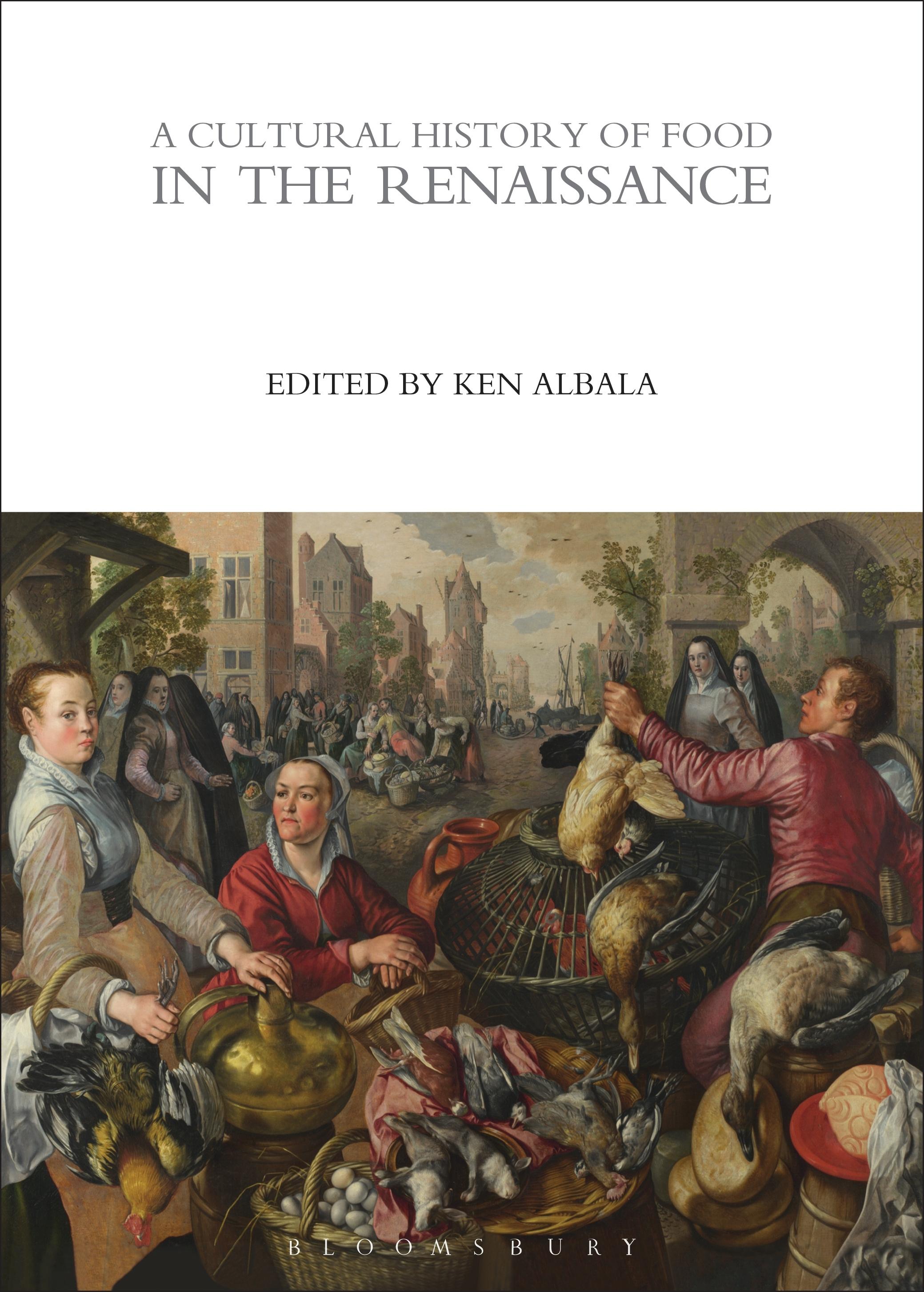
Food and attitudes toward it were transformed in Renaissance Europe. The period between 1300 and 1600 saw the discovery of the New World and the cultivation of new foodstuffs, as well as the efflorescence of culinary literature in European courts and eventually in the popular press, and most importantly the transformation of the economy on a global scale. Food became the object of rigorous investigation among physicians, theologians, agronomists and even poets and artists. Concern with eating was, in fact, central to the cultural dynamism we now recognize as the Renaissance.
A Cultural History of Food in the Renaissance presents an overview of the period with essays on food production, food systems, food security, safety and crises, food and politics, eating out, professional cooking, kitchens and service work, family and domesticity, body and soul, representations of food, and developments in food production and consumption globally.
A Cultural History of Food in the Renaissance presents an overview of the period with essays on food production, food systems, food security, safety and crises, food and politics, eating out, professional cooking, kitchens and service work, family and domesticity, body and soul, representations of food, and developments in food production and consumption globally.
Payez facilement par carte, Klarna, Apple Pay ou Google Pay. Pas satisfait ? Vous avez toujours une garantie de remboursement de 14 jours. En savoir plus dans nos conditions. Si vous avez des questions, envoyez-nous un e-mail à hello@memmo.org.
Memmo facilite tes études, où que tu sois dans le monde. On rassemble tes manuels de cours et des outils d'étude intelligents au même endroit : résumés, quiz, podcasts et flashcards. Et il y a Ted, ton compagnon d'étude qui répond à toutes tes questions. Plus de 50 000 étudiants étudient déjà ici – conçu pour t'aider à apprendre plus vite et à moins stresser.