
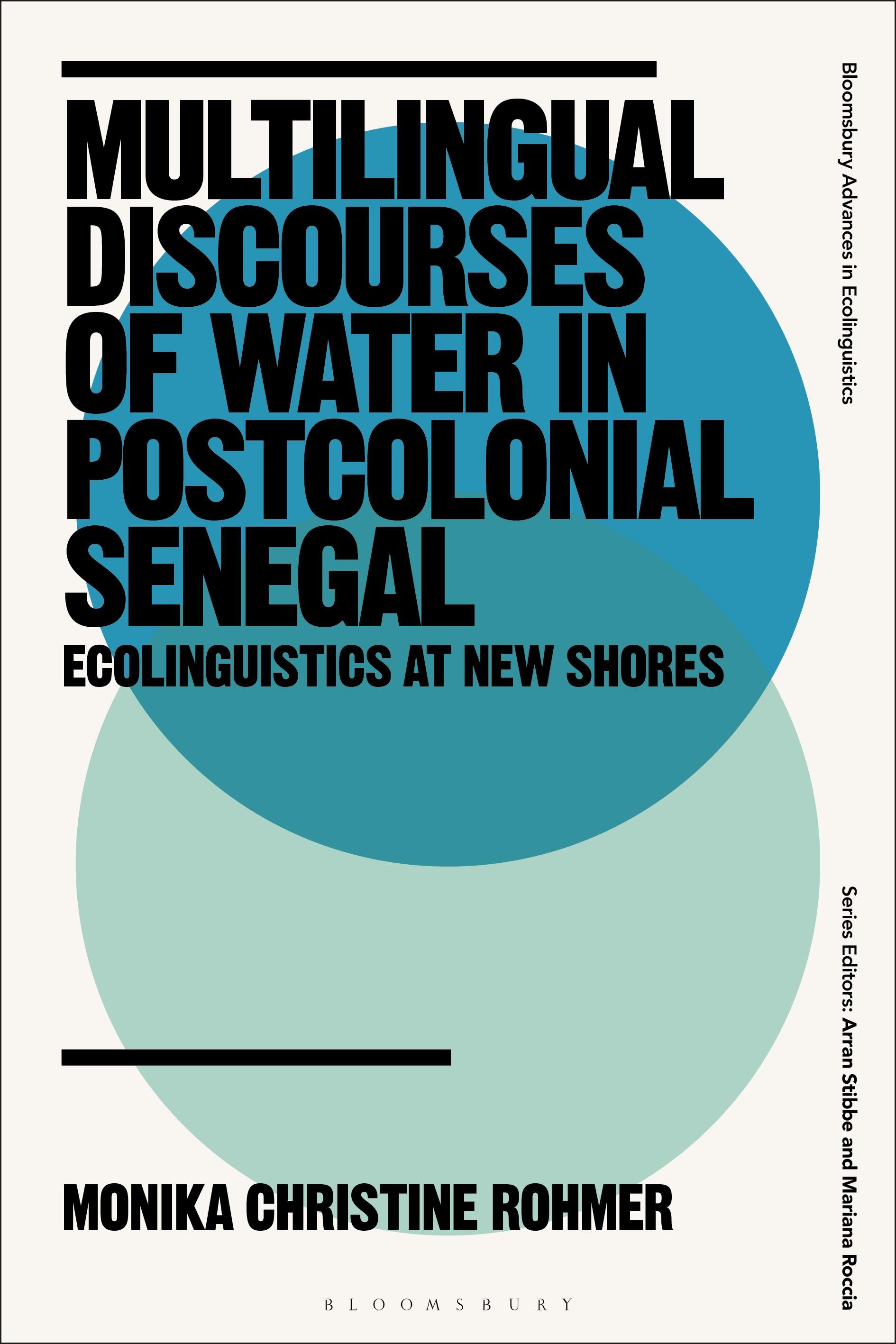
Exploring multilingual discourses on water in Senegal, this book takes ecolinguistics beyond its Eurocentric confinements and illustrates important contemporary developments in the field.
Senegal is marked by a linguistic discrepancy: Wolof, spoken by roughly 90% of the population, is used in everyday communication, while French, spoken by roughly 20% of the population, is the only official language since colonisation. Inspired by water's movement, this book proposes an innovative approach to studying two languages coexisting in one environment. Water is a constant in any natural environment and a crucial basis of human life. Its availability shapes socioeconomic and cultural practices, including language and discourse. In multilingual environments, speakers need to navigate contradicting evaluations and metaphors.
The comparative and contrastive study of conceptualisations and discourses in two languages advances the discipline of ecolinguistics by integrating new approaches, methods, and contexts. The double-language approach unravels dimensions of meaning that would otherwise go unnoticed. With selected examples, the book demonstrates the relevance for other world regions and the global nature of water problems and water discourses. It offers researchers in ecolinguistics and (critical) discourse analysis a methodological framework to empirically investigate language practices beyond monolingualism.
Senegal is marked by a linguistic discrepancy: Wolof, spoken by roughly 90% of the population, is used in everyday communication, while French, spoken by roughly 20% of the population, is the only official language since colonisation. Inspired by water's movement, this book proposes an innovative approach to studying two languages coexisting in one environment. Water is a constant in any natural environment and a crucial basis of human life. Its availability shapes socioeconomic and cultural practices, including language and discourse. In multilingual environments, speakers need to navigate contradicting evaluations and metaphors.
The comparative and contrastive study of conceptualisations and discourses in two languages advances the discipline of ecolinguistics by integrating new approaches, methods, and contexts. The double-language approach unravels dimensions of meaning that would otherwise go unnoticed. With selected examples, the book demonstrates the relevance for other world regions and the global nature of water problems and water discourses. It offers researchers in ecolinguistics and (critical) discourse analysis a methodological framework to empirically investigate language practices beyond monolingualism.
Pages: 240
Catégorie: Språk & Lingvistik
e-ISBN: 9781350581043
Poids d'expédition: 1.2 kg
Expédié sous: 1-2 jours
Payez facilement par carte, Klarna, Apple Pay ou Google Pay. Pas satisfait ? Vous avez toujours une garantie de remboursement de 14 jours. En savoir plus dans nos conditions. Si vous avez des questions, envoyez-nous un e-mail à hello@memmo.org.
Memmo facilite tes études, où que tu sois dans le monde. On rassemble tes manuels de cours et des outils d'étude intelligents au même endroit : résumés, quiz, podcasts et flashcards. Et il y a Ted, ton compagnon d'étude qui répond à toutes tes questions. Plus de 50 000 étudiants étudient déjà ici – conçu pour t'aider à apprendre plus vite et à moins stresser.