
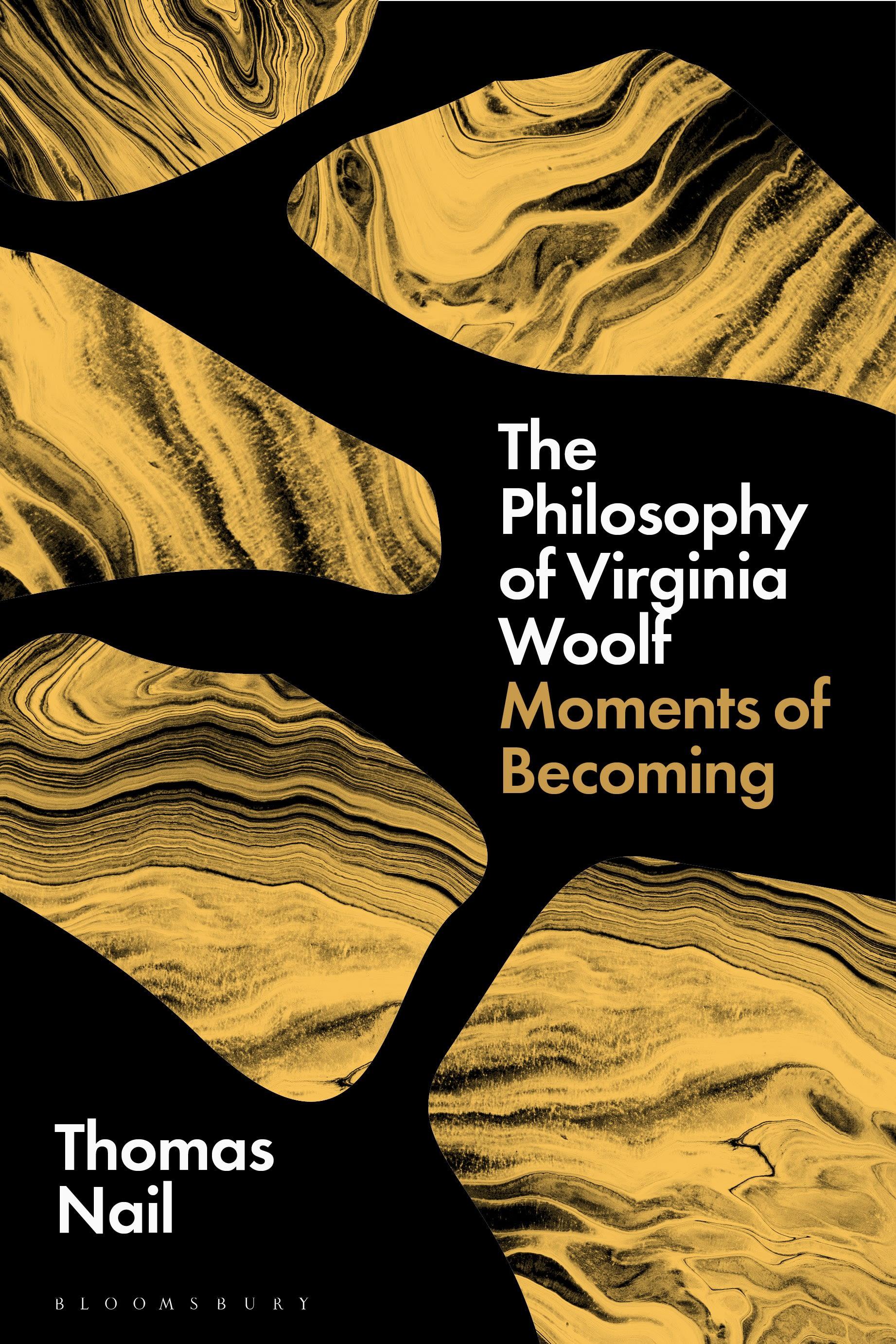
Towards the end of her life, Virginia Woolf defined her “philosophy”-the “constant idea” that “makes her a writer.” She wrote that this idea had given her “the strongest pleasure known to [her].” She called these “exceptional moments,” or “moments of being.”
Thomas Nail contends that Woolf is a philosopher of being. And these "moments of being" as forming a unique process philosophy of motion. In her description of these moments Woolf gives us access to a world in motion and process; where all of nature and matter flows, ripples, and quivers. In these moments the anthropocentric division between humans and nature dissolves into metastable patterns-without essences or vital forces. Matter becomes dynamic, and what originally appeared solid is perceived as woven, porous, and fluid.
The Philosophy of Virginia Woolf begins by defining the basic idea of the moment of being, why it is important and how to understand it and its philosophical implications. It recounts a series of 14 'moments' each of which explores an aspect of Woolf's philosophy. They show how the moments evolve and articulate Woolf's process philosophy of movement. Each moment reveals unique aspects of how moments work and the kind of philosophical vision Woolf held. Nail concludes by addressing some of the ethical and political consequences of these moments in Woolf 's thinking. In the end, the book contends that Woolf offers us an absolutely unique philosophical and aesthetic understanding of phenomena, including nature, culture, desire, gender, writing/reading, consciousness, art, ecology, and sensation. It shows that Woolf is a philosopher in her own right, and held a unique philosophical position that makes a unique contribution to how to think in the world.
Thomas Nail contends that Woolf is a philosopher of being. And these "moments of being" as forming a unique process philosophy of motion. In her description of these moments Woolf gives us access to a world in motion and process; where all of nature and matter flows, ripples, and quivers. In these moments the anthropocentric division between humans and nature dissolves into metastable patterns-without essences or vital forces. Matter becomes dynamic, and what originally appeared solid is perceived as woven, porous, and fluid.
The Philosophy of Virginia Woolf begins by defining the basic idea of the moment of being, why it is important and how to understand it and its philosophical implications. It recounts a series of 14 'moments' each of which explores an aspect of Woolf's philosophy. They show how the moments evolve and articulate Woolf's process philosophy of movement. Each moment reveals unique aspects of how moments work and the kind of philosophical vision Woolf held. Nail concludes by addressing some of the ethical and political consequences of these moments in Woolf 's thinking. In the end, the book contends that Woolf offers us an absolutely unique philosophical and aesthetic understanding of phenomena, including nature, culture, desire, gender, writing/reading, consciousness, art, ecology, and sensation. It shows that Woolf is a philosopher in her own right, and held a unique philosophical position that makes a unique contribution to how to think in the world.
Pages: 296
Catégorie: Litteraturvetenskap & Teori
e-ISBN: 9781350526082
Poids d'expédition: 1.2 kg
Expédié sous: 1-2 jours
Payez facilement par carte, Klarna, Apple Pay ou Google Pay. Pas satisfait ? Vous avez toujours une garantie de remboursement de 14 jours. En savoir plus dans nos conditions. Si vous avez des questions, envoyez-nous un e-mail à hello@memmo.org.
Memmo facilite tes études, où que tu sois dans le monde. On rassemble tes manuels de cours et des outils d'étude intelligents au même endroit : résumés, quiz, podcasts et flashcards. Et il y a Ted, ton compagnon d'étude qui répond à toutes tes questions. Plus de 50 000 étudiants étudient déjà ici – conçu pour t'aider à apprendre plus vite et à moins stresser.