
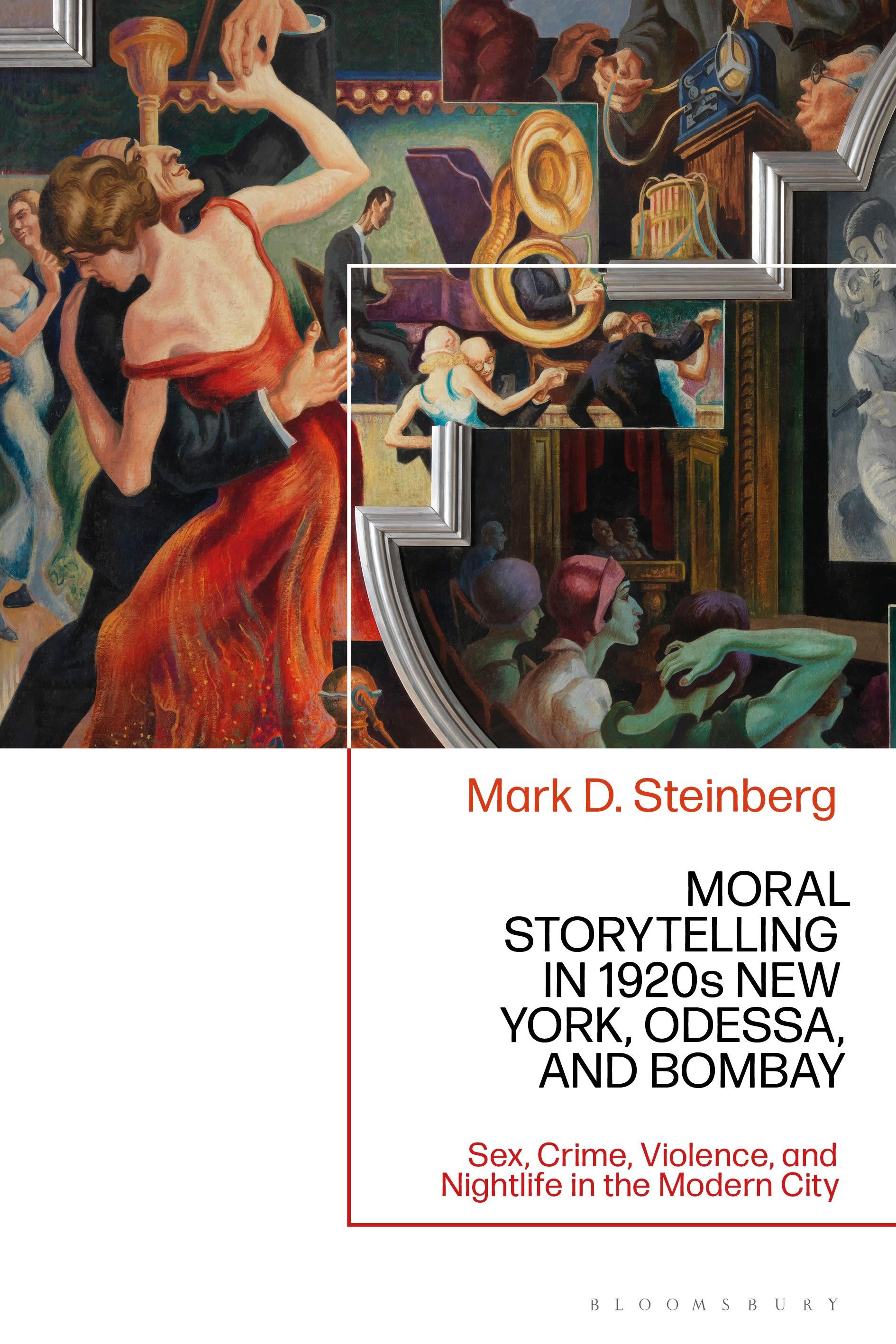
Using public storytelling as driving force, this book explores everyday social moralities relating to stories of sex, crime, violence, and nightlife in the 1920s city space. Focusing on capitalist New York, communist Odessa, and colonial Bombay, Mark D. Steinberg taps in to the global dimension of complex everyday moral anxiety that was prevalent in a vital and troubled decade.
Moral Storytelling in 1920s New York, Odessa, and Bombay compares and connects stories of the street in three compelling cosmopolitan port cities. It offers novel insights into significant and varied areas of study, including city life, sex, prostitution, jazz, dancing, gangsters, criminal undergrounds, cinema, ethnic and racial experiences and conflicts, prohibition and drinking, street violence, 'hooliganism' and other forms of 'deviance' in the contexts of capitalism, colonialism, communism, and nationalism.
The book tells the stories of moralizers: empowered and insistent critics of deviance driven to investigate, interpret, and interfere with how people lived and played. Beside them, not always comfortably, were the policemen and journalists who enforced and documented these efforts. It also reveals the histories of women and men, mostly working class and young, who were observed and categorized: those judged to be wayward, disreputable, disorderly, debauched, and wild. Steinberg explores this global culture war and the everyday moral improvisations-shaped by experiences of class, generation, gender, ethnicity, and race-that came with it.
Moral Storytelling in 1920s New York, Odessa, and Bombay compares and connects stories of the street in three compelling cosmopolitan port cities. It offers novel insights into significant and varied areas of study, including city life, sex, prostitution, jazz, dancing, gangsters, criminal undergrounds, cinema, ethnic and racial experiences and conflicts, prohibition and drinking, street violence, 'hooliganism' and other forms of 'deviance' in the contexts of capitalism, colonialism, communism, and nationalism.
The book tells the stories of moralizers: empowered and insistent critics of deviance driven to investigate, interpret, and interfere with how people lived and played. Beside them, not always comfortably, were the policemen and journalists who enforced and documented these efforts. It also reveals the histories of women and men, mostly working class and young, who were observed and categorized: those judged to be wayward, disreputable, disorderly, debauched, and wild. Steinberg explores this global culture war and the everyday moral improvisations-shaped by experiences of class, generation, gender, ethnicity, and race-that came with it.
Payez facilement par carte, Klarna, Apple Pay ou Google Pay. Pas satisfait ? Vous avez toujours une garantie de remboursement de 14 jours. En savoir plus dans nos conditions. Si vous avez des questions, envoyez-nous un e-mail à hello@memmo.org.
Memmo facilite tes études, où que tu sois dans le monde. On rassemble tes manuels de cours et des outils d'étude intelligents au même endroit : résumés, quiz, podcasts et flashcards. Et il y a Ted, ton compagnon d'étude qui répond à toutes tes questions. Plus de 50 000 étudiants étudient déjà ici – conçu pour t'aider à apprendre plus vite et à moins stresser.