
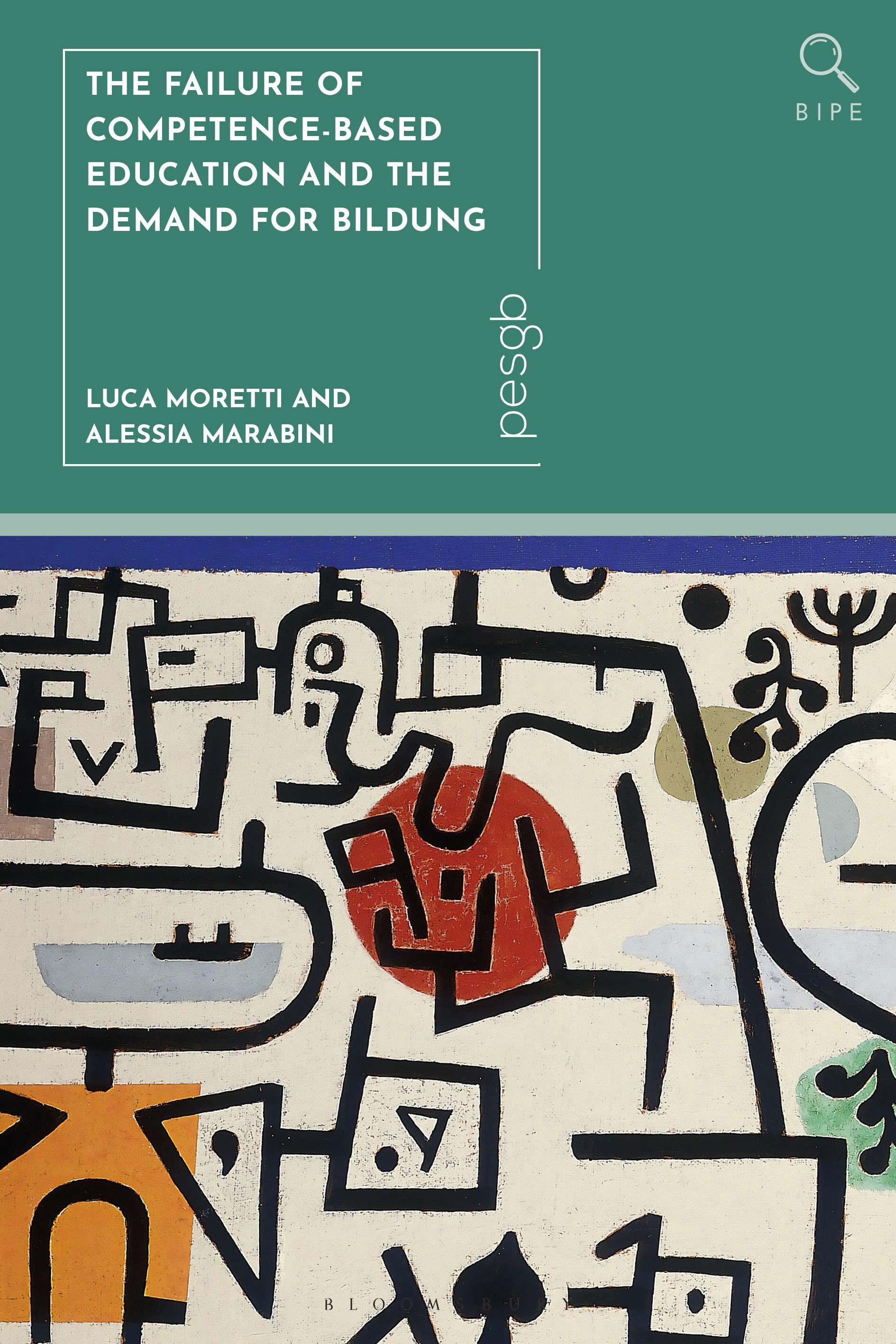
This book contrasts two prominent models of education, Competence-Based Education (CBE) which is the dominant model in most school systems of the world, and Bildung-Oriented Education (BOE), once the basis of school systems of Northern Europe.
CBE interprets learning as the acquisition of clearly definable and allegedly measurable competences, and it is supported by supranational organisations, such as the OECD. BOE characterises learning holistically, aimed at the progressive articulation of a meaningful 'big picture' in the student's mind. Moretti and Marabini argue that, in spite of its celebrated 'scientificity', CBE is incoherent and unreliable, and contributes to structural forms of oppression and injustice, fosters social pathologies, and fails to provide students with the kind of intellectual autonomy they need in our complex post-industrial societies. They defend BOE from objections made by critical theorists, poststructuralists and postcolonial thinkers, and argue that it is a coherent and flexible model of education that endows students with autonomy and responsibility, and can help heal social pathologies. The book builds analytical bridges and explores connections between philosophy of education and important issues currently debated in critical theory, political philosophy and social epistemology.
CBE interprets learning as the acquisition of clearly definable and allegedly measurable competences, and it is supported by supranational organisations, such as the OECD. BOE characterises learning holistically, aimed at the progressive articulation of a meaningful 'big picture' in the student's mind. Moretti and Marabini argue that, in spite of its celebrated 'scientificity', CBE is incoherent and unreliable, and contributes to structural forms of oppression and injustice, fosters social pathologies, and fails to provide students with the kind of intellectual autonomy they need in our complex post-industrial societies. They defend BOE from objections made by critical theorists, poststructuralists and postcolonial thinkers, and argue that it is a coherent and flexible model of education that endows students with autonomy and responsibility, and can help heal social pathologies. The book builds analytical bridges and explores connections between philosophy of education and important issues currently debated in critical theory, political philosophy and social epistemology.
Pages: 304
Catégorie: Utbildning & lärande
e-ISBN: 9781350518001
Poids d'expédition: 1.2 kg
Expédié sous: 1-2 jours
Payez facilement par carte, Klarna, Apple Pay ou Google Pay. Pas satisfait ? Vous avez toujours une garantie de remboursement de 14 jours. En savoir plus dans nos conditions. Si vous avez des questions, envoyez-nous un e-mail à hello@memmo.org.
Memmo facilite tes études, où que tu sois dans le monde. On rassemble tes manuels de cours et des outils d'étude intelligents au même endroit : résumés, quiz, podcasts et flashcards. Et il y a Ted, ton compagnon d'étude qui répond à toutes tes questions. Plus de 50 000 étudiants étudient déjà ici – conçu pour t'aider à apprendre plus vite et à moins stresser.