
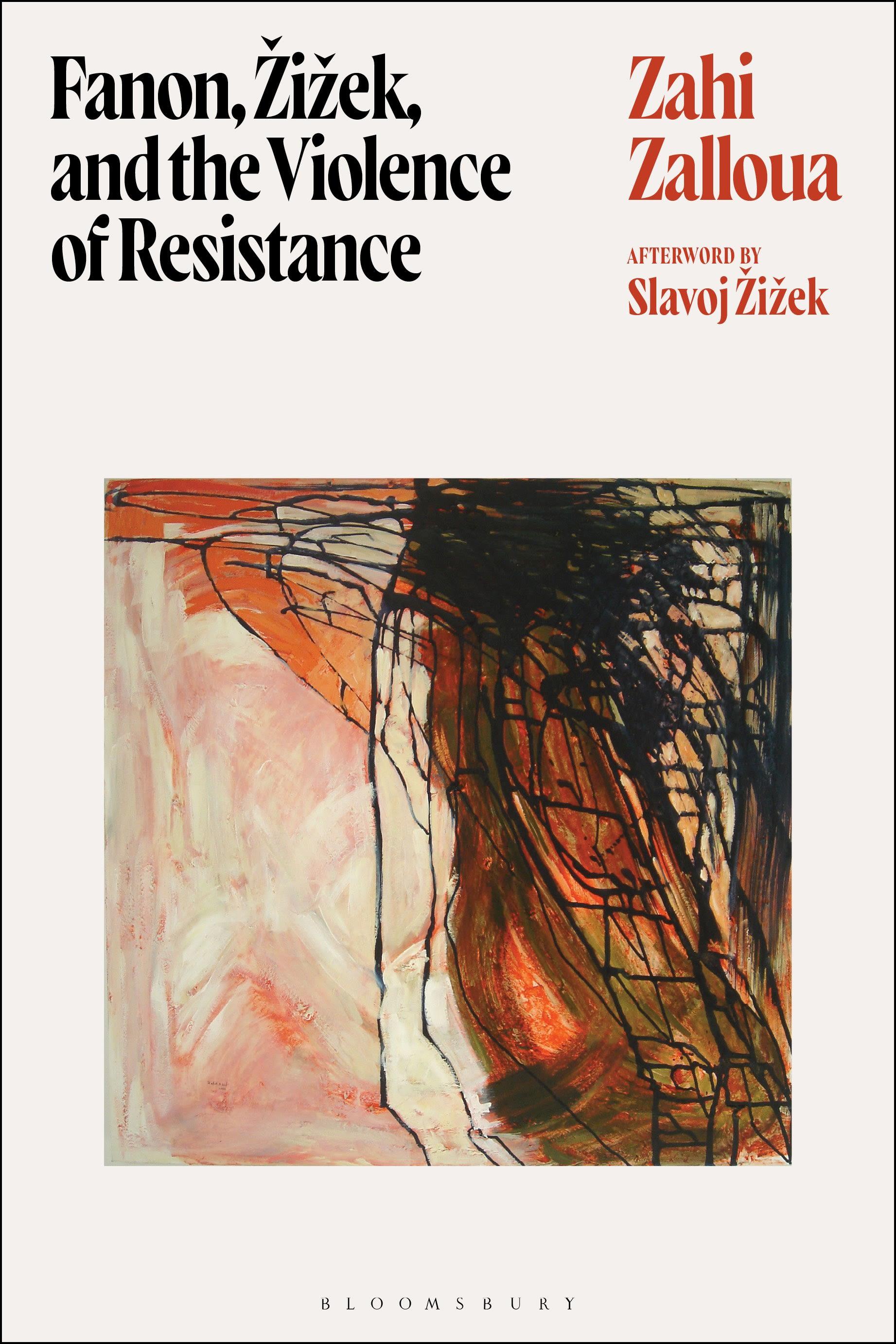
In a novel pairing of anti-colonial theorist Frantz Fanon with Marxist-Lacanian philosopher Slavoj Žižek, Zahi Zalloua explores the ways both thinkers expose the violence of political structures.
This inventive exploration advances an anti-racist critique, describing how ontology operates in a racial matrix to produce some human bodies that count and others (deemed not-quite- or non-human) that do not. For Fanon and Žižek, the violence of ontology must be met with another form of violence, a revolutionary violence that delegitimizes the logic of the symbolic order and troubles its collective fantasies. Whereas Fanon begins his challenge to ontology by exposing its historical linkages to Europe's destructive imperialist procedures before proceeding to “stretch” Marxism, along with psychoanalysis, to account for the crushing (neo)colonial situation, Žižek premises his work on the refusal to accept the totality of ontology. Because of these different points of intervention, Fanon and Žižek together offer a powerful and multifaceted assessment of the liberal anti-racist paradigm whose propensity for identity politics and aversion to class struggle silence the cry of the dispossessed and foreclose radical change. Avoiding contemporary separatist temptations (decoloniality and Afropessimism), and breaking with a non-violent, sentimentalist futurology that announces more of the same, Fanon and Žižek point in a different direction, one that eschews identitarian thought in favor of a collective struggle for freedom and equality.
This inventive exploration advances an anti-racist critique, describing how ontology operates in a racial matrix to produce some human bodies that count and others (deemed not-quite- or non-human) that do not. For Fanon and Žižek, the violence of ontology must be met with another form of violence, a revolutionary violence that delegitimizes the logic of the symbolic order and troubles its collective fantasies. Whereas Fanon begins his challenge to ontology by exposing its historical linkages to Europe's destructive imperialist procedures before proceeding to “stretch” Marxism, along with psychoanalysis, to account for the crushing (neo)colonial situation, Žižek premises his work on the refusal to accept the totality of ontology. Because of these different points of intervention, Fanon and Žižek together offer a powerful and multifaceted assessment of the liberal anti-racist paradigm whose propensity for identity politics and aversion to class struggle silence the cry of the dispossessed and foreclose radical change. Avoiding contemporary separatist temptations (decoloniality and Afropessimism), and breaking with a non-violent, sentimentalist futurology that announces more of the same, Fanon and Žižek point in a different direction, one that eschews identitarian thought in favor of a collective struggle for freedom and equality.
Payez facilement par carte, Klarna, Apple Pay ou Google Pay. Pas satisfait ? Vous avez toujours une garantie de remboursement de 14 jours. En savoir plus dans nos conditions. Si vous avez des questions, envoyez-nous un e-mail à hello@memmo.org.
Memmo facilite tes études, où que tu sois dans le monde. On rassemble tes manuels de cours et des outils d'étude intelligents au même endroit : résumés, quiz, podcasts et flashcards. Et il y a Ted, ton compagnon d'étude qui répond à toutes tes questions. Plus de 50 000 étudiants étudient déjà ici – conçu pour t'aider à apprendre plus vite et à moins stresser.