
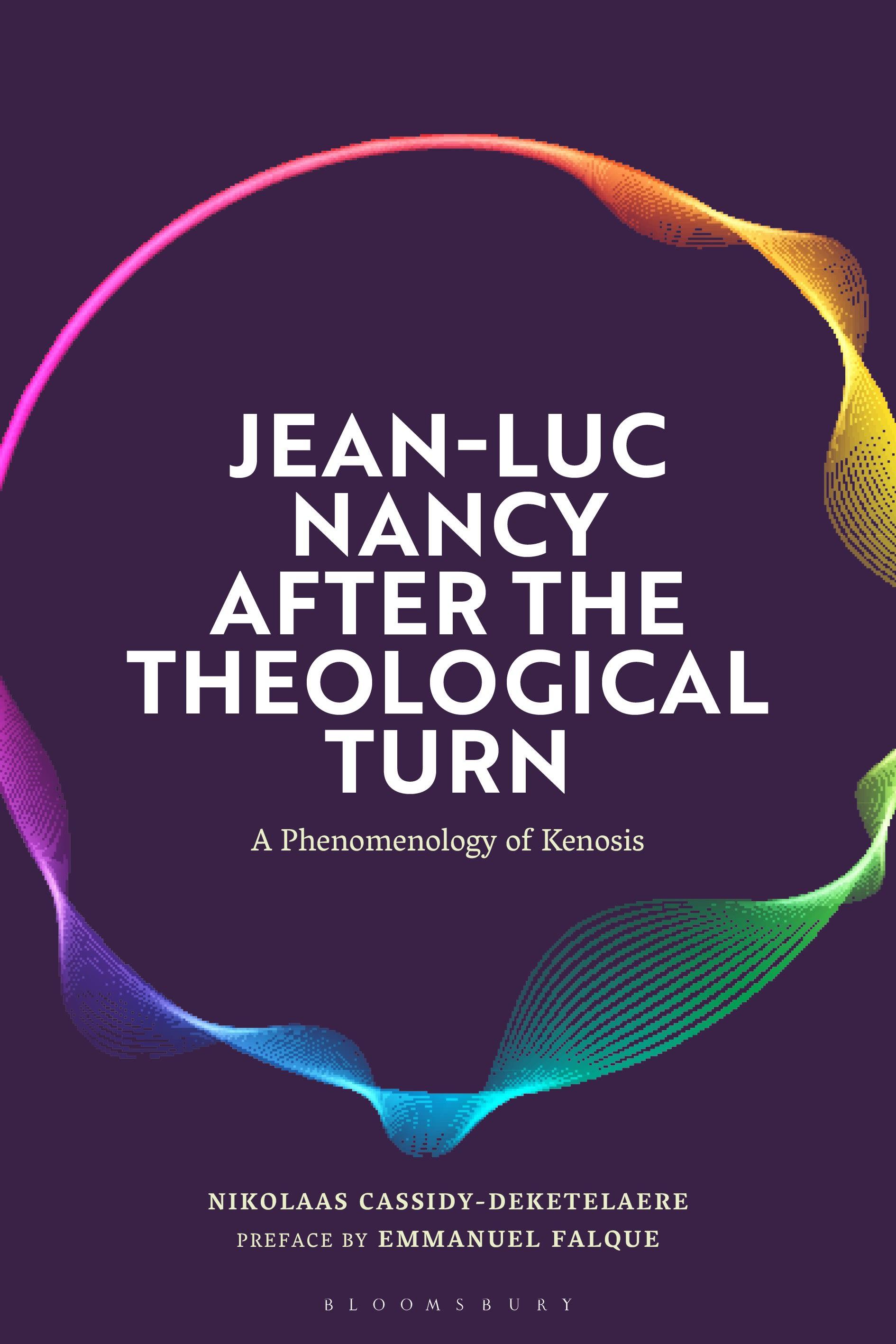
Nikolaas Cassidy-Deketelaere provides a novel and profound reading of Jean-Luc Nancy's deconstruction of Christianity in the context of French phenomenology's 'theological turn'.
Deftly exploring Nancy's work alongside major contemporary phenomenologists including Jean-Luc Marion, Michel Henry, Jean-Louis Chrétien and Emmanuel Falque, Jean-Luc Nancy after the Theological Turn argues that only by turning to theology can phenomenology come into its own as philosophy. Following Derrida's treatment of Nancy, Cassidy-Deketelaere thinks 'after' the theological turn by deconstructing phenomenology's inherent theological structure which made that turn possible; starting from the theological turn, this book seeks to move beyond it, that is, to 'de-theologise' phenomenology. This approach parallels Nancy's engagement with Christianity: drawing on Paul's kenosis – according to which God empties himself of his divinity in the Incarnation – Nancy understands Christianity as deconstructing or de-theologising itself.
Written in elegant and clear prose, this volume clarifies the phenomenological and theological consequences of one the most influential modern thinkers' philosophy.
Deftly exploring Nancy's work alongside major contemporary phenomenologists including Jean-Luc Marion, Michel Henry, Jean-Louis Chrétien and Emmanuel Falque, Jean-Luc Nancy after the Theological Turn argues that only by turning to theology can phenomenology come into its own as philosophy. Following Derrida's treatment of Nancy, Cassidy-Deketelaere thinks 'after' the theological turn by deconstructing phenomenology's inherent theological structure which made that turn possible; starting from the theological turn, this book seeks to move beyond it, that is, to 'de-theologise' phenomenology. This approach parallels Nancy's engagement with Christianity: drawing on Paul's kenosis – according to which God empties himself of his divinity in the Incarnation – Nancy understands Christianity as deconstructing or de-theologising itself.
Written in elegant and clear prose, this volume clarifies the phenomenological and theological consequences of one the most influential modern thinkers' philosophy.
Payez facilement par carte, Klarna, Apple Pay ou Google Pay. Pas satisfait ? Vous avez toujours une garantie de remboursement de 14 jours. En savoir plus dans nos conditions. Si vous avez des questions, envoyez-nous un e-mail à hello@memmo.org.
Memmo facilite tes études, où que tu sois dans le monde. On rassemble tes manuels de cours et des outils d'étude intelligents au même endroit : résumés, quiz, podcasts et flashcards. Et il y a Ted, ton compagnon d'étude qui répond à toutes tes questions. Plus de 50 000 étudiants étudient déjà ici – conçu pour t'aider à apprendre plus vite et à moins stresser.