
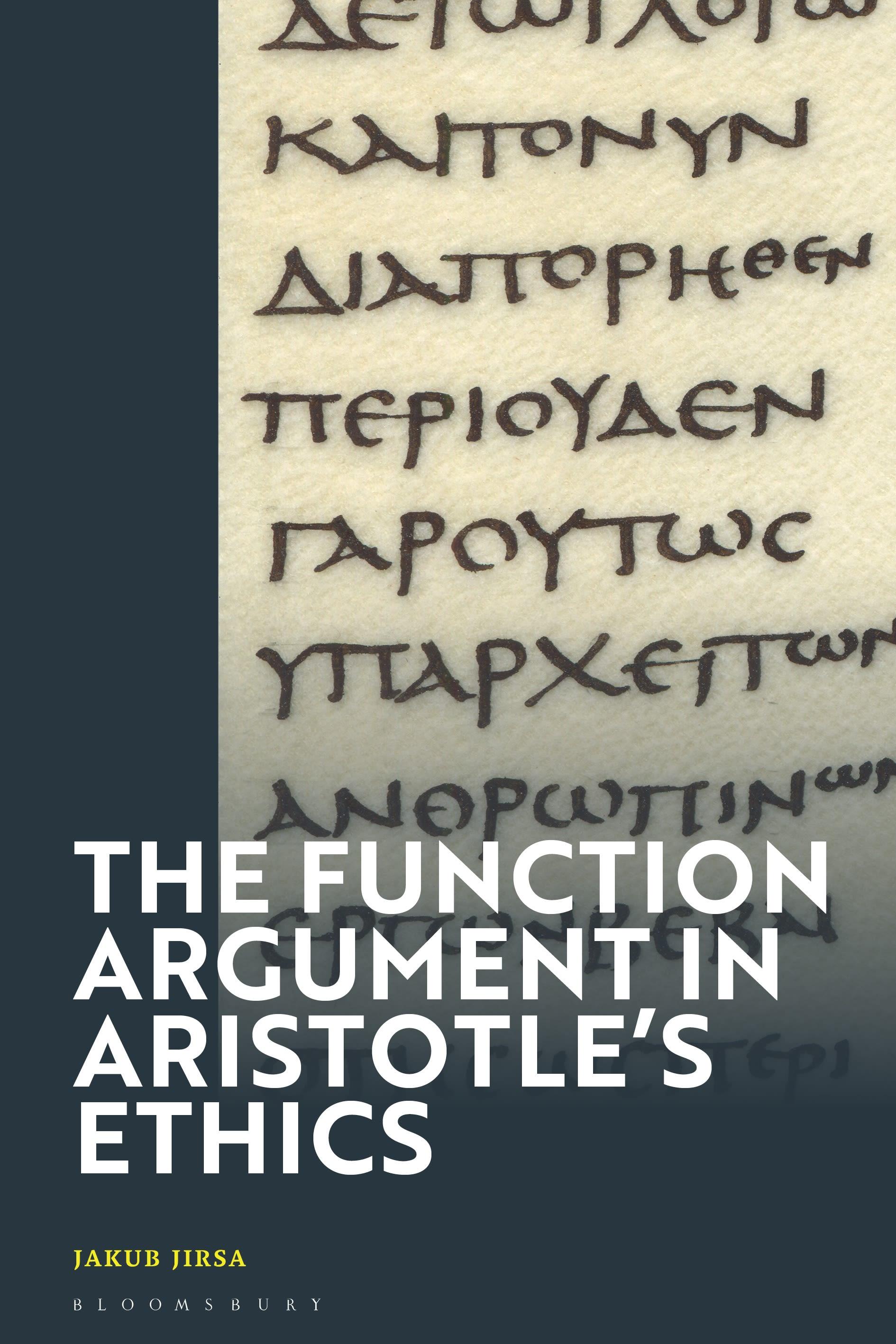
Jakub Jirsa provides the first book-length study of the “function argument”, outlining its central importance for Aristotle's ethics and his understanding of happiness and living well.
The Function Argument in Aristotle's Ethics gives a systematic account of the development of the function argument from Plato's Republic to the Nicomachean Ethics, with an explication of the interdependence between different versions of the argument which appear in Aristotle's ethical writings. In careful close readings of Aristotle's Proptrepticus, the Eudemian Ethics and the Nicomachean Ethics, Jirsa makes the case that the function (ergon) argument – that the function of human beings is virtuous activity of the rational part of the soul – serves as a transition from formal to substantial ethical debate and helps to differentiate between happiness and the happy life. The book then evaluates Aristotle's function argument against contemporary critiques.
With English translations of sections of the Proptrepticus based on the recent reconstruction from ancient sources and fragments, this volume offers a novel context for understanding a key element of Aristotle's ethical works, and is an ideal reference for those studying Aristotelian ethics, virtue ethics and the history of philosophy.
The Function Argument in Aristotle's Ethics gives a systematic account of the development of the function argument from Plato's Republic to the Nicomachean Ethics, with an explication of the interdependence between different versions of the argument which appear in Aristotle's ethical writings. In careful close readings of Aristotle's Proptrepticus, the Eudemian Ethics and the Nicomachean Ethics, Jirsa makes the case that the function (ergon) argument – that the function of human beings is virtuous activity of the rational part of the soul – serves as a transition from formal to substantial ethical debate and helps to differentiate between happiness and the happy life. The book then evaluates Aristotle's function argument against contemporary critiques.
With English translations of sections of the Proptrepticus based on the recent reconstruction from ancient sources and fragments, this volume offers a novel context for understanding a key element of Aristotle's ethical works, and is an ideal reference for those studying Aristotelian ethics, virtue ethics and the history of philosophy.
Payez facilement par carte, Klarna, Apple Pay ou Google Pay. Pas satisfait ? Vous avez toujours une garantie de remboursement de 14 jours. En savoir plus dans nos conditions. Si vous avez des questions, envoyez-nous un e-mail à hello@memmo.org.
Memmo facilite tes études, où que tu sois dans le monde. On rassemble tes manuels de cours et des outils d'étude intelligents au même endroit : résumés, quiz, podcasts et flashcards. Et il y a Ted, ton compagnon d'étude qui répond à toutes tes questions. Plus de 50 000 étudiants étudient déjà ici – conçu pour t'aider à apprendre plus vite et à moins stresser.