
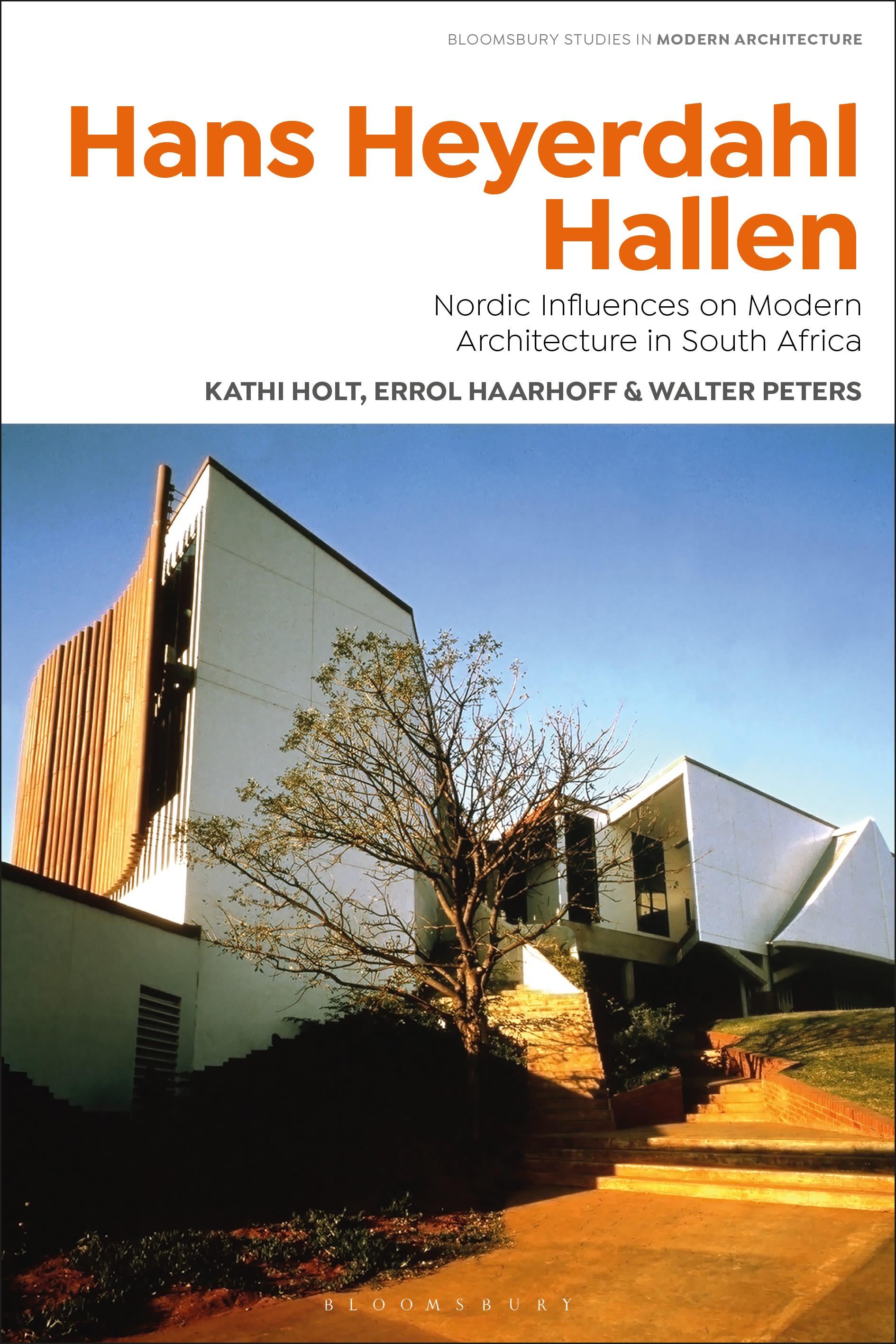
Tracing the life of architect Hans Heyerdahl Hallen (1930–2022), this book reveals the transnational influences that shaped his practice in South Africa, and the migratory circles of ideas that defined a new form of subtropical architecture.
Beginning with Hallen's Nordic and South African roots, chapters then explore his practice and studies at the London County Council and Architectural Association, where he met with contemporaries such as Jane Drew and Maxwell Fry. From here, he returned to South Africa with new ideas that challenged the teachings of early modernism, instead combining philosophies such as Norberg Schulz's genius loci with African traditional architecture (Zulu Kraal) to create buildings unique to local communities and topographical conditions.
This need to embrace vernacular forms was a response to local climate conditions and local materials, but also a desire to make cities relevant to the African context. In transmuting European teachings within colonial environments, Hallen's practice reveals the role of the architect to reflect local communities and to build for their needs, and to create spaces for community and resistance.
Published as part of the Bloomsbury Studies in Modern Architecture series, which brings to light the work of significant yet overlooked modernist architects, the study features a wealth of previously-unpublished archival material to explore the role of the architect in the colonial context.
Beginning with Hallen's Nordic and South African roots, chapters then explore his practice and studies at the London County Council and Architectural Association, where he met with contemporaries such as Jane Drew and Maxwell Fry. From here, he returned to South Africa with new ideas that challenged the teachings of early modernism, instead combining philosophies such as Norberg Schulz's genius loci with African traditional architecture (Zulu Kraal) to create buildings unique to local communities and topographical conditions.
This need to embrace vernacular forms was a response to local climate conditions and local materials, but also a desire to make cities relevant to the African context. In transmuting European teachings within colonial environments, Hallen's practice reveals the role of the architect to reflect local communities and to build for their needs, and to create spaces for community and resistance.
Published as part of the Bloomsbury Studies in Modern Architecture series, which brings to light the work of significant yet overlooked modernist architects, the study features a wealth of previously-unpublished archival material to explore the role of the architect in the colonial context.
Pages: 296
Catégorie: Arkitektur & Stadsplanering
e-ISBN: 9781350510340
Poids d'expédition: 1.2 kg
Expédié sous: 1-2 jours
Payez facilement par carte, Klarna, Apple Pay ou Google Pay. Pas satisfait ? Vous avez toujours une garantie de remboursement de 14 jours. En savoir plus dans nos conditions. Si vous avez des questions, envoyez-nous un e-mail à hello@memmo.org.
Memmo facilite tes études, où que tu sois dans le monde. On rassemble tes manuels de cours et des outils d'étude intelligents au même endroit : résumés, quiz, podcasts et flashcards. Et il y a Ted, ton compagnon d'étude qui répond à toutes tes questions. Plus de 50 000 étudiants étudient déjà ici – conçu pour t'aider à apprendre plus vite et à moins stresser.