
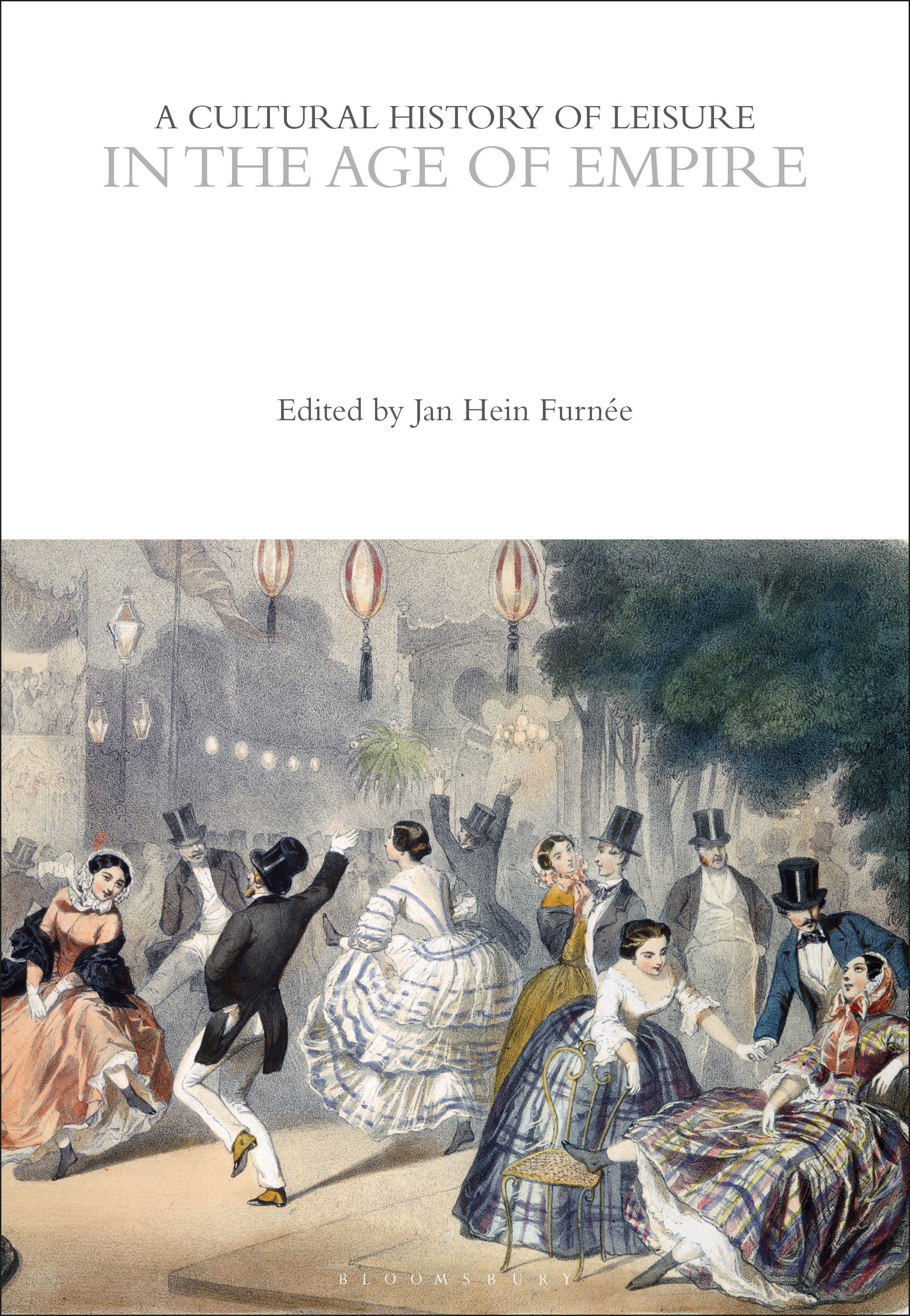
The Age of Empire (1800-1920) stands out as a profoundly new era in the history of leisure. Especially in cities and towns the landscape of recreation substantially expanded and differentiated, motivating growing masses of people in the Western world to cultivate their increasing – and increasingly demarcated – leisure time.
Men and women of all classes and ages enthusiastically embraced new commercial, state and civic initiatives to enjoy, enrich and display themselves – from music halls, reading rooms and shopping streets to parks, zoos and seaside resorts. Reading, games and gardening made their homes a more pleasurable place too. Which actors and factors were in play to make leisure meaningful? How did leisure activate both people's minds and bodies in novel ways? How did leisure culture travel across national and continental borders?
A Cultural History of Leisure in the Age of Empire, with a particular emphasis on Western and Central Europe, presents an overview of key themes and trends in this period, with essays on: Ideas of leisure; The performing arts and their audiences; The cerebral arts and their publics; Sports and games; Holydays, holidays and tourism; The world of conviviality; The world of goods; The world of nature; Representations of leisure.
A Cultural History of Leisure is part of The Cultural Histories Series. Titles are available as hardcover sets for libraries needing just one subject or preferring a tangible reference for their shelves or as part of a fully-searchable digital library. The digital product is available to institutions by annual subscription or on perpetual access via www.bloomsburyculturalhistory.com. Individual volumes for academics and researchers interested in specific historical periods are also available in print or digitally via www.bloomsburycollections.com.
Men and women of all classes and ages enthusiastically embraced new commercial, state and civic initiatives to enjoy, enrich and display themselves – from music halls, reading rooms and shopping streets to parks, zoos and seaside resorts. Reading, games and gardening made their homes a more pleasurable place too. Which actors and factors were in play to make leisure meaningful? How did leisure activate both people's minds and bodies in novel ways? How did leisure culture travel across national and continental borders?
A Cultural History of Leisure in the Age of Empire, with a particular emphasis on Western and Central Europe, presents an overview of key themes and trends in this period, with essays on: Ideas of leisure; The performing arts and their audiences; The cerebral arts and their publics; Sports and games; Holydays, holidays and tourism; The world of conviviality; The world of goods; The world of nature; Representations of leisure.
A Cultural History of Leisure is part of The Cultural Histories Series. Titles are available as hardcover sets for libraries needing just one subject or preferring a tangible reference for their shelves or as part of a fully-searchable digital library. The digital product is available to institutions by annual subscription or on perpetual access via www.bloomsburyculturalhistory.com. Individual volumes for academics and researchers interested in specific historical periods are also available in print or digitally via www.bloomsburycollections.com.
Payez facilement par carte, Klarna, Apple Pay ou Google Pay. Pas satisfait ? Vous avez toujours une garantie de remboursement de 14 jours. En savoir plus dans nos conditions. Si vous avez des questions, envoyez-nous un e-mail à hello@memmo.org.
Memmo facilite tes études, où que tu sois dans le monde. On rassemble tes manuels de cours et des outils d'étude intelligents au même endroit : résumés, quiz, podcasts et flashcards. Et il y a Ted, ton compagnon d'étude qui répond à toutes tes questions. Plus de 50 000 étudiants étudient déjà ici – conçu pour t'aider à apprendre plus vite et à moins stresser.