
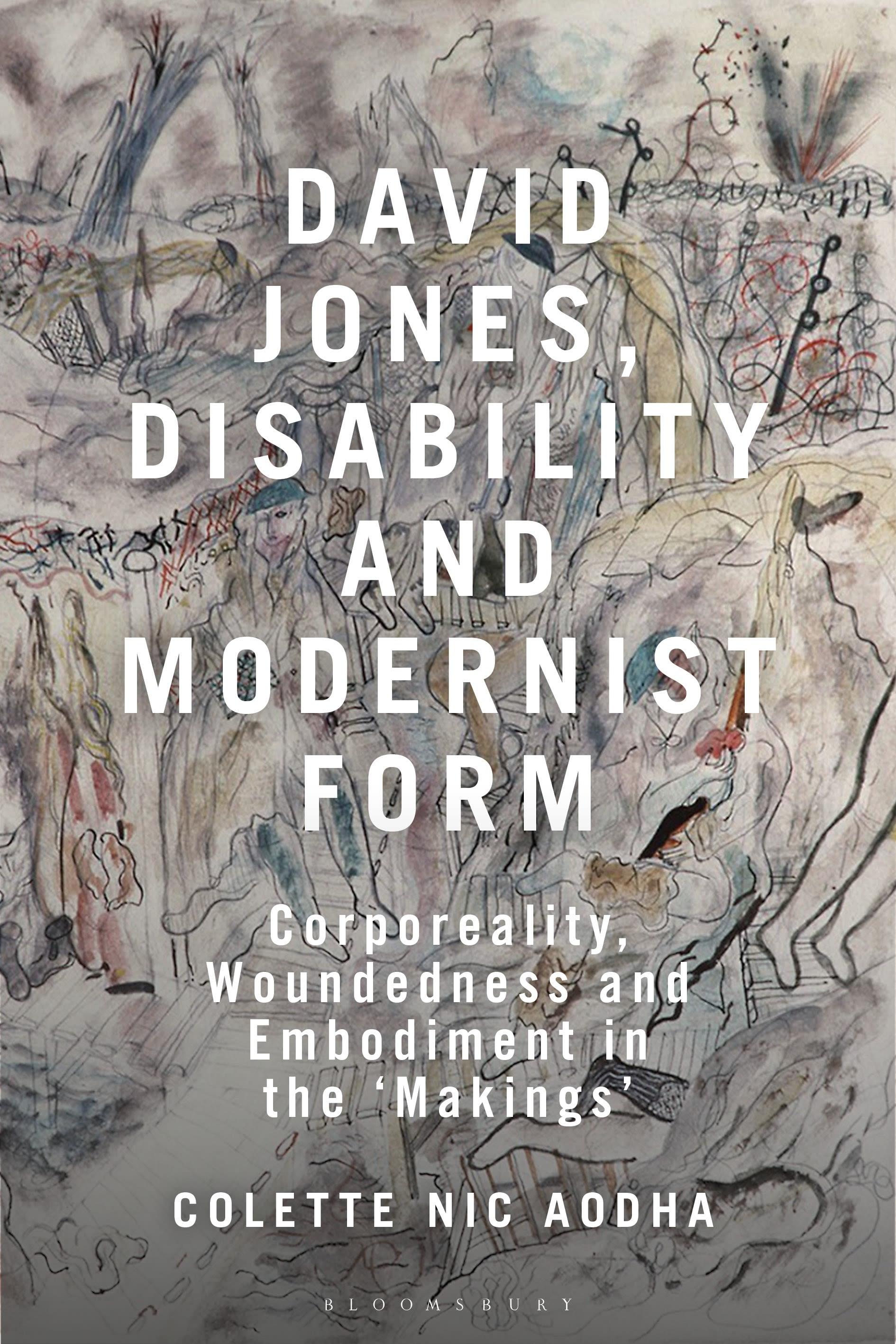
Employing a fresh theoretical approach to David Jones' work, this is the first book to use disability studies as a lens through which to consider his post-war work.
Unpacking the distinct corporeality in the work of Welsh modernist maker, poet, painter, and engraver, David Jones (1895-1974) that emerges from the trauma of Jones's participation in the Great War, this book frames the complex modes of embodiment in his post-war work. In doing so, it relates Jones's pioneering visual art and poetic form to antecedents (William Blake) and modern artists (Sarah Lucas and Damien Hirst) while using materiality to form connections between modernism, disability, and the liturgy of the Eucharist upon which Jones centres his work.
Unpacking the distinct corporeality in the work of Welsh modernist maker, poet, painter, and engraver, David Jones (1895-1974) that emerges from the trauma of Jones's participation in the Great War, this book frames the complex modes of embodiment in his post-war work. In doing so, it relates Jones's pioneering visual art and poetic form to antecedents (William Blake) and modern artists (Sarah Lucas and Damien Hirst) while using materiality to form connections between modernism, disability, and the liturgy of the Eucharist upon which Jones centres his work.
Payez facilement par carte, Klarna, Apple Pay ou Google Pay. Pas satisfait ? Vous avez toujours une garantie de remboursement de 14 jours. En savoir plus dans nos conditions. Si vous avez des questions, envoyez-nous un e-mail à hello@memmo.org.
Memmo facilite tes études, où que tu sois dans le monde. On rassemble tes manuels de cours et des outils d'étude intelligents au même endroit : résumés, quiz, podcasts et flashcards. Et il y a Ted, ton compagnon d'étude qui répond à toutes tes questions. Plus de 50 000 étudiants étudient déjà ici – conçu pour t'aider à apprendre plus vite et à moins stresser.