
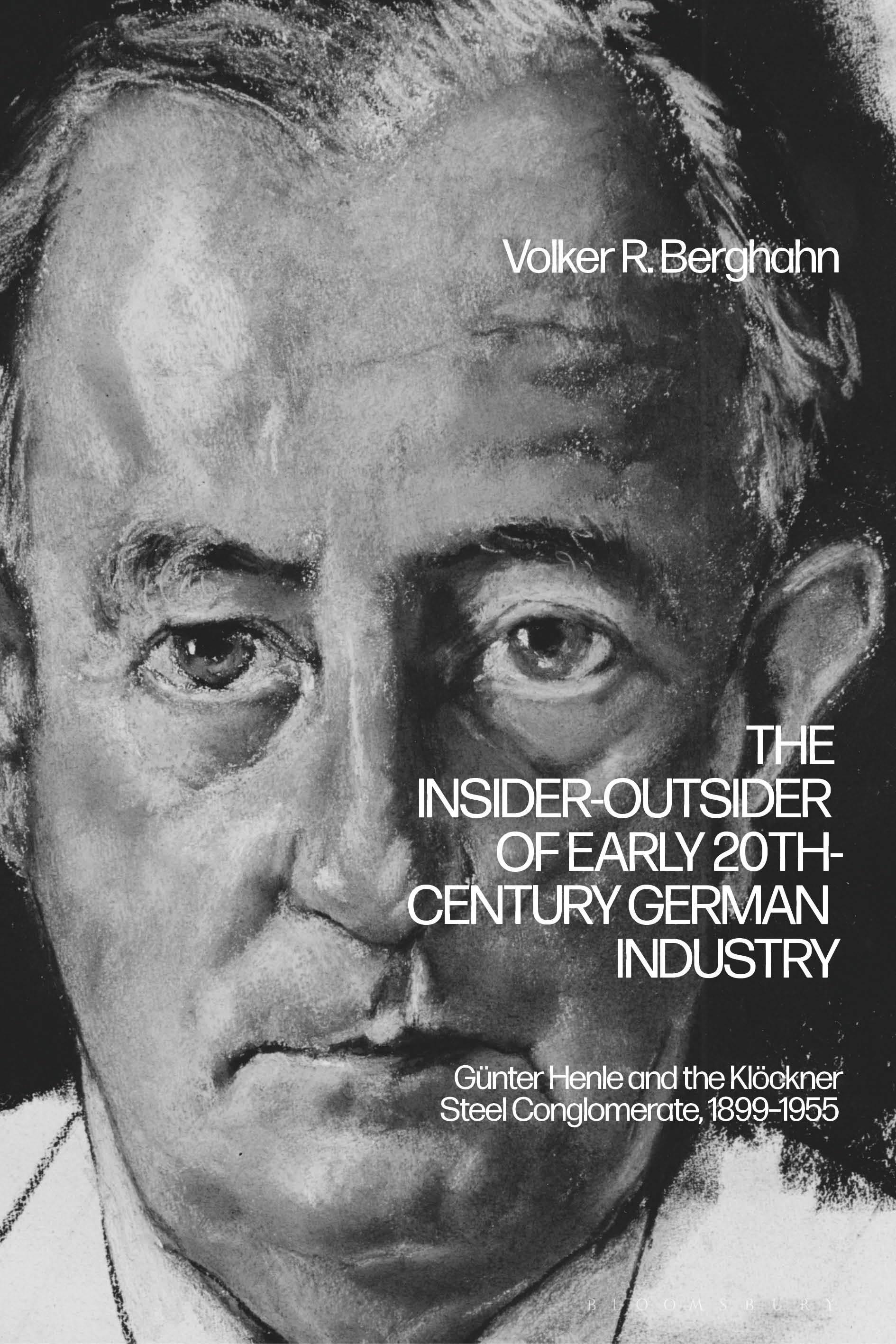
Using the life and work of Günter Henle, Volker R. Berghahn examines the postwar West German approach to labour relations and European integration. The study of Henle simultaneously allows Berghahn to reflect on the unique insights into German Jewish life before and during the Nazi dictatorship that his story provides.
The book looks at how Henle suffered from Nazi persecution, but was ultimately protected by the Establishment he had married into. It then charts how, reinstated after 1945, he involved himself not only in the reconstruction of his Klockner industrial enterprise, but also in the rebuilding of the West German economy and society, and the development of the European Coal and Steel Community (ECSC) - the embryo of what was ultimately to become the European Union.
The Insider-Outsider of Early 20th-Century German Industry discusses West European and American strategies to complement NATO as the political and military counter to the perceived threat of the Soviet Bloc with the creation of institutions for economic cooperation. It is a timely analysis which stresses the importance of cooperation between employers, trade unions and government in securing compromise, social peace and economic stability in trans-Atlantic perspective at a time when the neo-liberal axioms of Thatcherite and Reaganite shareholder societies are again being held against the strengths of the managed stakeholder societies of the early post-war decades.
The book looks at how Henle suffered from Nazi persecution, but was ultimately protected by the Establishment he had married into. It then charts how, reinstated after 1945, he involved himself not only in the reconstruction of his Klockner industrial enterprise, but also in the rebuilding of the West German economy and society, and the development of the European Coal and Steel Community (ECSC) - the embryo of what was ultimately to become the European Union.
The Insider-Outsider of Early 20th-Century German Industry discusses West European and American strategies to complement NATO as the political and military counter to the perceived threat of the Soviet Bloc with the creation of institutions for economic cooperation. It is a timely analysis which stresses the importance of cooperation between employers, trade unions and government in securing compromise, social peace and economic stability in trans-Atlantic perspective at a time when the neo-liberal axioms of Thatcherite and Reaganite shareholder societies are again being held against the strengths of the managed stakeholder societies of the early post-war decades.
Payez facilement par carte, Klarna, Apple Pay ou Google Pay. Pas satisfait ? Vous avez toujours une garantie de remboursement de 14 jours. En savoir plus dans nos conditions. Si vous avez des questions, envoyez-nous un e-mail à hello@memmo.org.
Memmo facilite tes études, où que tu sois dans le monde. On rassemble tes manuels de cours et des outils d'étude intelligents au même endroit : résumés, quiz, podcasts et flashcards. Et il y a Ted, ton compagnon d'étude qui répond à toutes tes questions. Plus de 50 000 étudiants étudient déjà ici – conçu pour t'aider à apprendre plus vite et à moins stresser.