
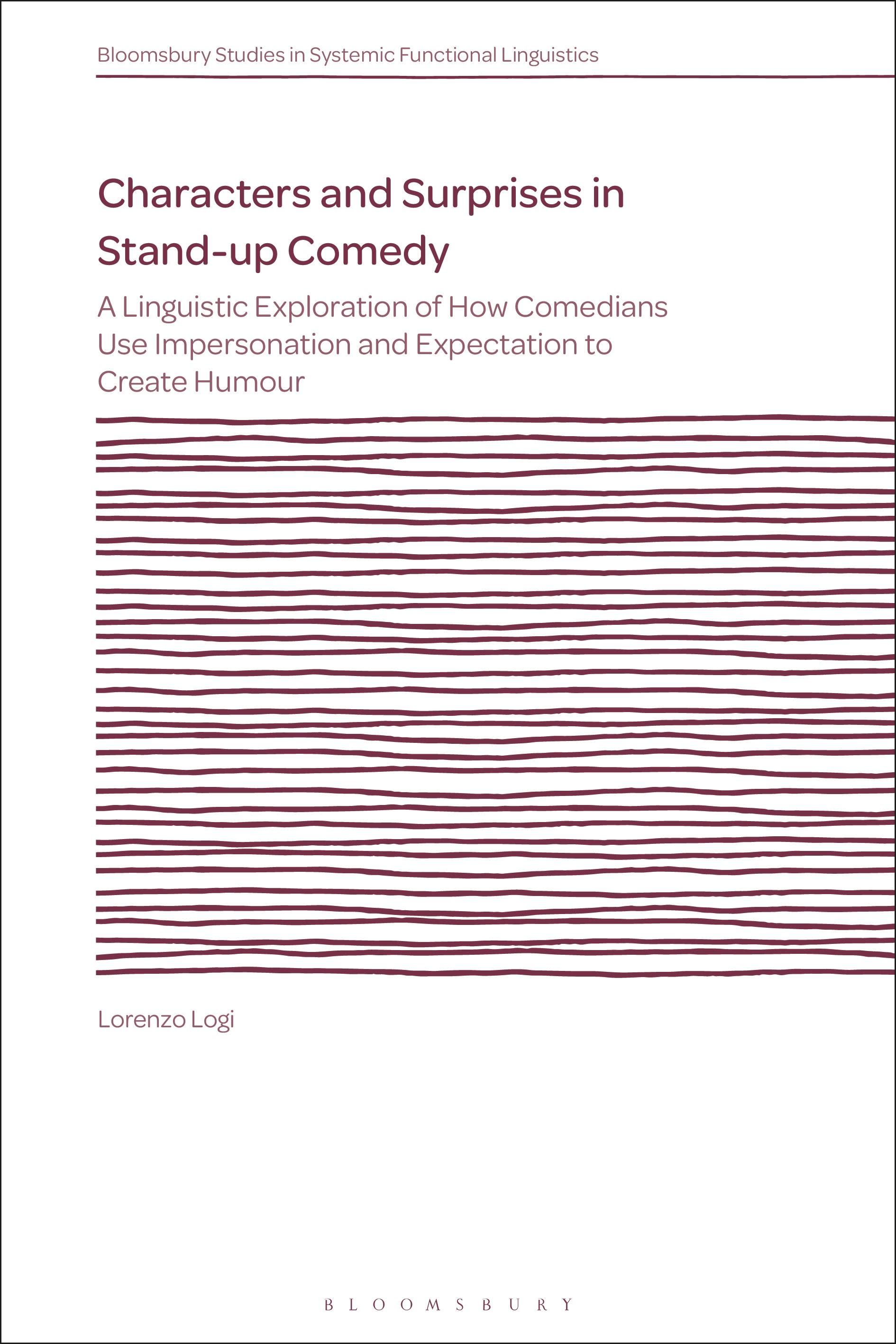
This book employs a social semiotic methodology to investigate how comedians use impersonation and expectation to create humour in stand-up comedy.
It advances the linguistic cartography of how meaning-making resources contribute to humour in interactive humour genres. Systemic Functional Linguistics (SFL) underpins the book's approach and is integrated with recent work on multimodality and paralanguage as well as humour studies.
The author develops a consolidated analytical framework for identifying and analysing the intermodal semiotic resources that contribute to impersonation and expectation in humour including gesture and voice quality – paralinguistic resources vital but underexplored in humorous texts. The framework is then applied through close discourse analysis of excerpts from three stand-up comedy texts by different comedians: Ricky Gervais, Eddie Izzard and Michelle Wolf. The findings outline typical and more complex realisations of intermodal impersonation, differentiate categories in how comedians employ impersonation to create humour, and describe how linguistic expectation can be established and subverted for humorous effect. These findings will be of interest to readers across the disciplines of linguistics, humour studies and multi/intermodality who are interested in the interaction between paralanguage, expectation and the negotiation of values so as to establish and maintain social relationships.
It advances the linguistic cartography of how meaning-making resources contribute to humour in interactive humour genres. Systemic Functional Linguistics (SFL) underpins the book's approach and is integrated with recent work on multimodality and paralanguage as well as humour studies.
The author develops a consolidated analytical framework for identifying and analysing the intermodal semiotic resources that contribute to impersonation and expectation in humour including gesture and voice quality – paralinguistic resources vital but underexplored in humorous texts. The framework is then applied through close discourse analysis of excerpts from three stand-up comedy texts by different comedians: Ricky Gervais, Eddie Izzard and Michelle Wolf. The findings outline typical and more complex realisations of intermodal impersonation, differentiate categories in how comedians employ impersonation to create humour, and describe how linguistic expectation can be established and subverted for humorous effect. These findings will be of interest to readers across the disciplines of linguistics, humour studies and multi/intermodality who are interested in the interaction between paralanguage, expectation and the negotiation of values so as to establish and maintain social relationships.
Pages: 280
Catégorie: Drama, Teater & Scenkonst
e-ISBN: 9781350448414
Poids d'expédition: 1.2 kg
Expédié sous: 1-2 jours
Payez facilement par carte, Klarna, Apple Pay ou Google Pay. Pas satisfait ? Vous avez toujours une garantie de remboursement de 14 jours. En savoir plus dans nos conditions. Si vous avez des questions, envoyez-nous un e-mail à hello@memmo.org.
Memmo facilite tes études, où que tu sois dans le monde. On rassemble tes manuels de cours et des outils d'étude intelligents au même endroit : résumés, quiz, podcasts et flashcards. Et il y a Ted, ton compagnon d'étude qui répond à toutes tes questions. Plus de 50 000 étudiants étudient déjà ici – conçu pour t'aider à apprendre plus vite et à moins stresser.