
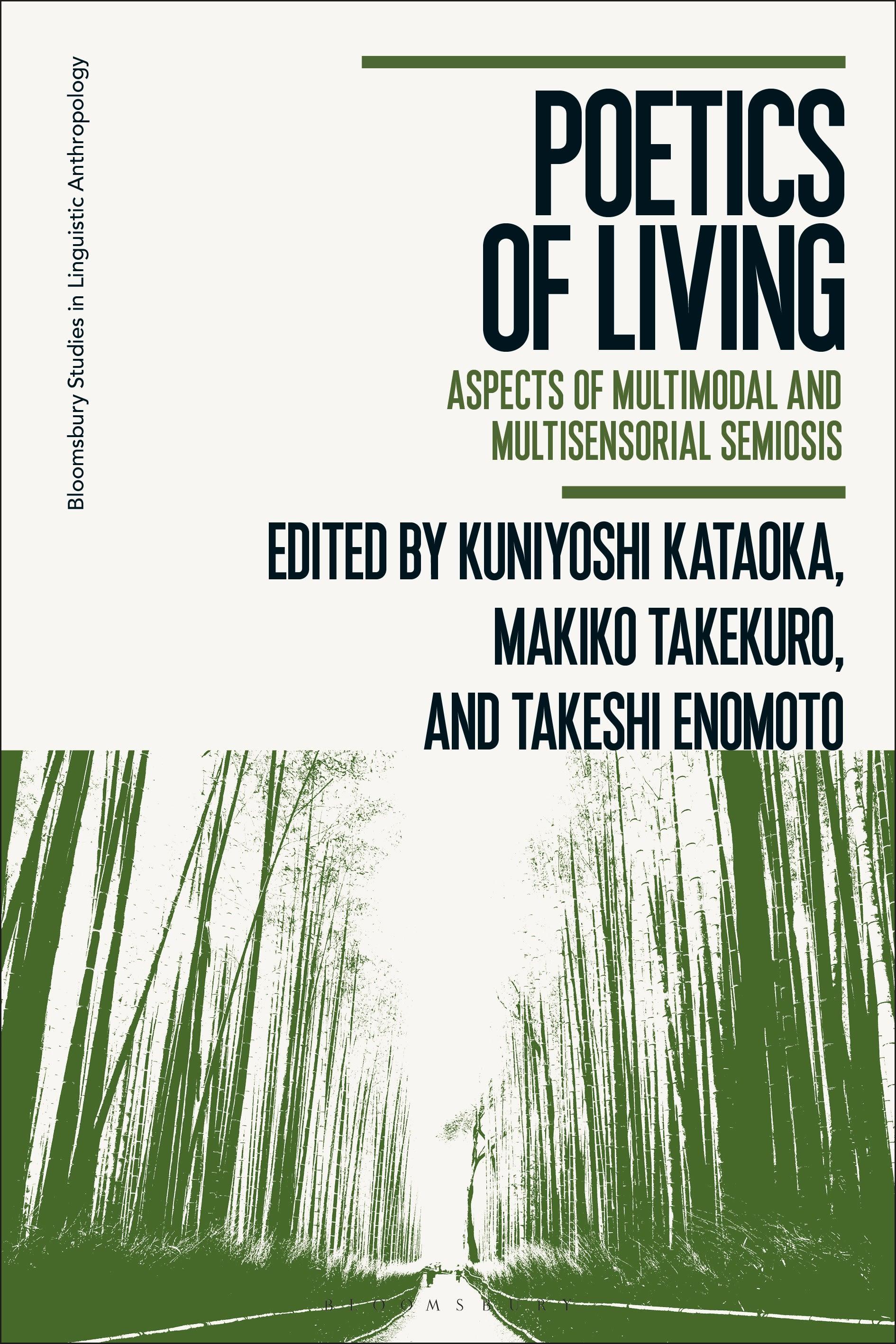
This book provides empirical and theoretical accounts of poetics from a sociolinguistic and linguistic anthropological perspective, highlighting the poesis of everyday living.
The authors not only regard poetry as a literary genre or a form of aesthetic performance, but also aim to clarify how everyday practices, such as casual conversation, radio broadcasting, sightseeing tours, classroom instruction, and reciprocal singing, are imbued with poetic (inter)actions achieved through senses, bodies, materials, and the environment. Such mediums are shown to be appropriated here and now in accordance with the ongoing social actions gleaned from the contributors' fields of research and expertise. Examples include classroom instruction and local festivals in Japan, music contests in China, rock climbing and public demonstrations in the USA, radio/TV broadcasts in Hawai'i and the USA, and tourist guidance in New Zealand, among others.
Building on major poetic theories in sociolinguistics, linguistic anthropology, and pragmatics, such as ethnopoetics, ritual poetics, and dialogic resonance, this book offers a showcase of highly interdisciplinary, cutting-edge approaches to poetic analysis that range from micro-interactional exchanges to macro-sociocultural issues surrounding poetic 'texts'. With such a diversity of activity, language, and approach, the authors cultivate novel ways in which multiple senses and modalities contribute to various forms of poesis, as well as to often-consequential social relations associated with the practices. The findings present students and researchers of language with an opportunity to re-evaluate the width and depth of poetic practice, as well as clues to enhance analytic sophistication through the multi/crossmodal engagement with dynamic poesis that seeps into everyday life.
The authors not only regard poetry as a literary genre or a form of aesthetic performance, but also aim to clarify how everyday practices, such as casual conversation, radio broadcasting, sightseeing tours, classroom instruction, and reciprocal singing, are imbued with poetic (inter)actions achieved through senses, bodies, materials, and the environment. Such mediums are shown to be appropriated here and now in accordance with the ongoing social actions gleaned from the contributors' fields of research and expertise. Examples include classroom instruction and local festivals in Japan, music contests in China, rock climbing and public demonstrations in the USA, radio/TV broadcasts in Hawai'i and the USA, and tourist guidance in New Zealand, among others.
Building on major poetic theories in sociolinguistics, linguistic anthropology, and pragmatics, such as ethnopoetics, ritual poetics, and dialogic resonance, this book offers a showcase of highly interdisciplinary, cutting-edge approaches to poetic analysis that range from micro-interactional exchanges to macro-sociocultural issues surrounding poetic 'texts'. With such a diversity of activity, language, and approach, the authors cultivate novel ways in which multiple senses and modalities contribute to various forms of poesis, as well as to often-consequential social relations associated with the practices. The findings present students and researchers of language with an opportunity to re-evaluate the width and depth of poetic practice, as well as clues to enhance analytic sophistication through the multi/crossmodal engagement with dynamic poesis that seeps into everyday life.
Payez facilement par carte, Klarna, Apple Pay ou Google Pay. Pas satisfait ? Vous avez toujours une garantie de remboursement de 14 jours. En savoir plus dans nos conditions. Si vous avez des questions, envoyez-nous un e-mail à hello@memmo.org.
Memmo facilite tes études, où que tu sois dans le monde. On rassemble tes manuels de cours et des outils d'étude intelligents au même endroit : résumés, quiz, podcasts et flashcards. Et il y a Ted, ton compagnon d'étude qui répond à toutes tes questions. Plus de 50 000 étudiants étudient déjà ici – conçu pour t'aider à apprendre plus vite et à moins stresser.