
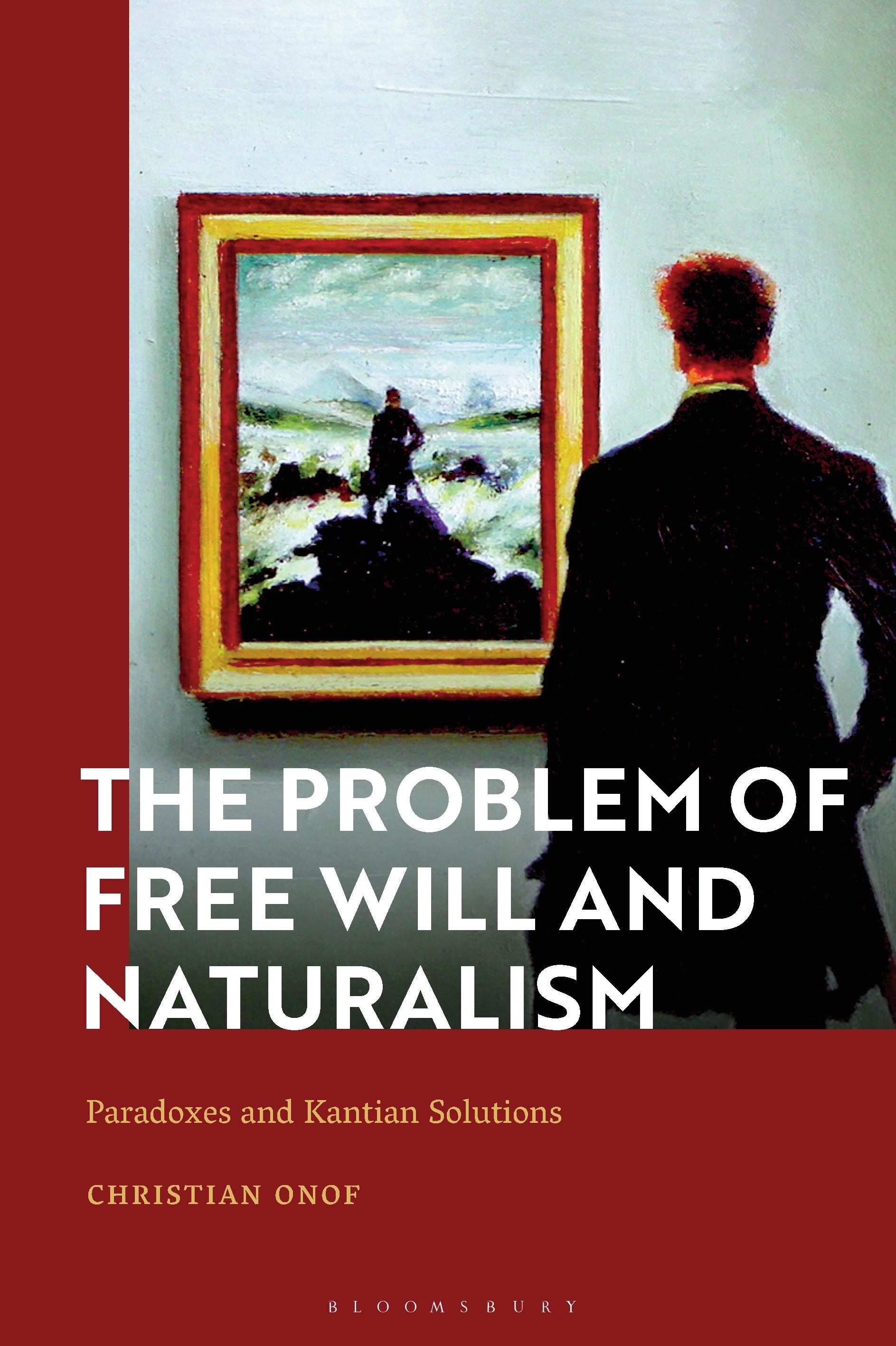
The problem of free will is one of the oldest and most central philosophical conundrums. The contemporary debate around it has produced a range of sophisticated proposals, but shows no sign of leading to convergence. Christian Onof reviews these contemporary approaches and argues that their main shortcomings are ultimately due to paradoxical requirements on free will imposed by the naturalistic framework.
Onof singles out Kant's critical solution as one that stands out among historical approaches insofar as it is based upon a rejection of this framework. By using the same methodological tool that he applies to contemporary proposals, namely a distinction between a volitional account of how we control our actions, a psychological account of the reasons for it and a metaphysical account of our status as agent, Onof shows that Kant's solution constitutes a coherent picture of free will.
By exhibiting the structure running through several key publications of Kant's critical period and drawing upon unpublished notes, Onof addresses several debates which loom large in contemporary Kant literature. His exegetical work puts Kant's theory into conversation with contemporary analytic theories of free will and leads to defining a Kantian position that overcomes the issues plaguing existing approaches to the problem of free will.
Onof singles out Kant's critical solution as one that stands out among historical approaches insofar as it is based upon a rejection of this framework. By using the same methodological tool that he applies to contemporary proposals, namely a distinction between a volitional account of how we control our actions, a psychological account of the reasons for it and a metaphysical account of our status as agent, Onof shows that Kant's solution constitutes a coherent picture of free will.
By exhibiting the structure running through several key publications of Kant's critical period and drawing upon unpublished notes, Onof addresses several debates which loom large in contemporary Kant literature. His exegetical work puts Kant's theory into conversation with contemporary analytic theories of free will and leads to defining a Kantian position that overcomes the issues plaguing existing approaches to the problem of free will.
Payez facilement par carte, Klarna, Apple Pay ou Google Pay. Pas satisfait ? Vous avez toujours une garantie de remboursement de 14 jours. En savoir plus dans nos conditions. Si vous avez des questions, envoyez-nous un e-mail à hello@memmo.org.
Memmo facilite tes études, où que tu sois dans le monde. On rassemble tes manuels de cours et des outils d'étude intelligents au même endroit : résumés, quiz, podcasts et flashcards. Et il y a Ted, ton compagnon d'étude qui répond à toutes tes questions. Plus de 50 000 étudiants étudient déjà ici – conçu pour t'aider à apprendre plus vite et à moins stresser.