
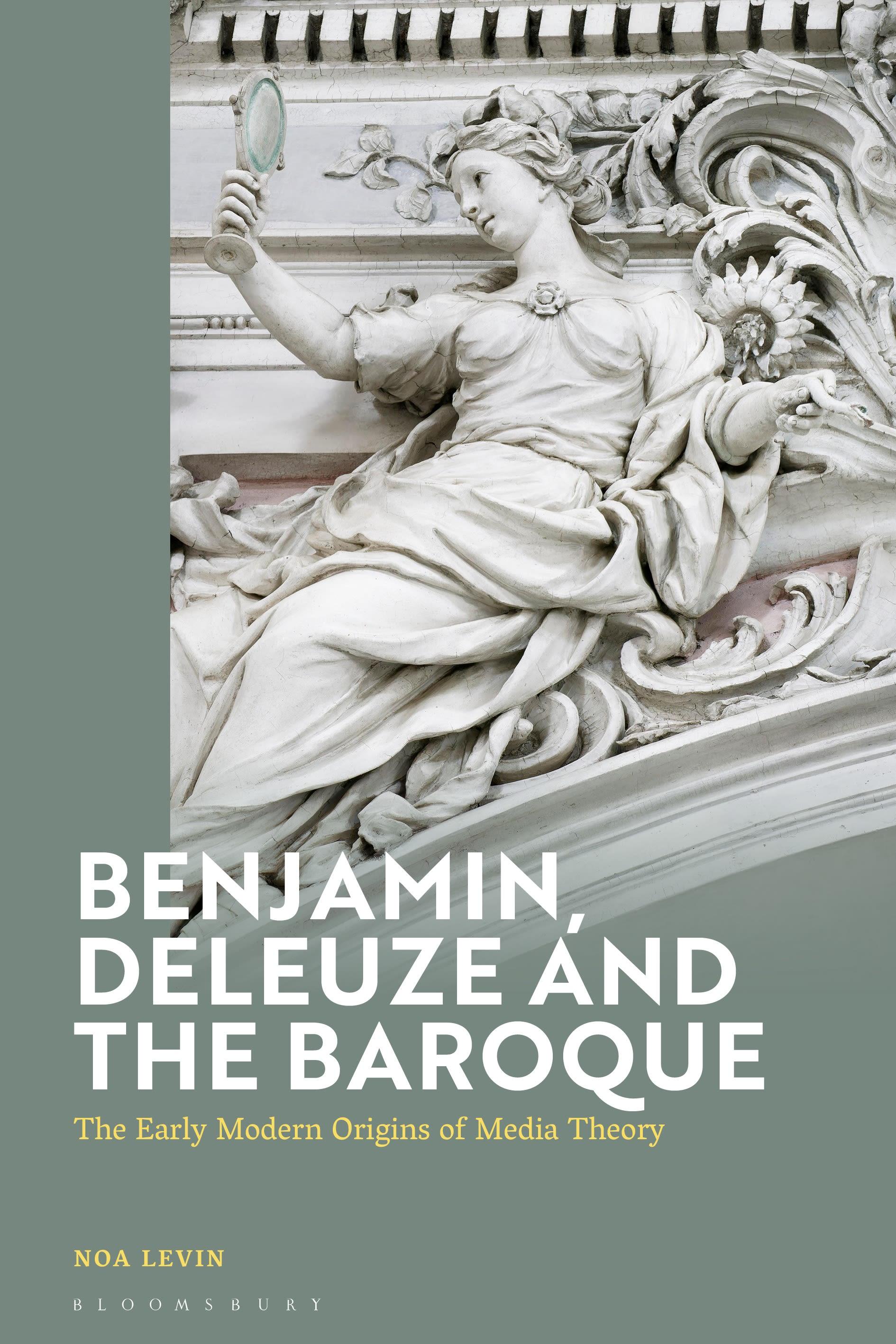
For Walter Benjamin and Gilles Deleuze, who both authored seminal theoretical works on early cinema and photography, the history of modern media begins much earlier, in Baroque culture and science. Benjamin, Deleuze and the Baroque argues that their media theories were informed by their respective readings of the philosophy and mathematics of G.W. Leibniz, and the Baroque can thus be seen as the locus of modern media.
By critically comparing Benjamin and Deleuze's interpretations of the Baroque, Levin demonstrates the extent to which their theories of visual culture are intertwined with critiques of Enlightenment historiography and politics. Using a hermeneutic comparative approach, this book argues that the juxtaposition of Benjamin's reception of Leibniz with Deleuze's highlights the extent to which both authors' theories of image and media were informed by Leibniz's concepts of expression and perspectivism, themselves inspired by ground-breaking evolutions in optics and perspective. Providing close readings of Deleuze's The Fold and Benjamin's Origin of the German Trauerspiel, which remain understudied in the English language, it explores how, in their dual roles of philosopher and cultural critic, the pair may illuminate our own age of multiple crises through the Baroque.
By critically comparing Benjamin and Deleuze's interpretations of the Baroque, Levin demonstrates the extent to which their theories of visual culture are intertwined with critiques of Enlightenment historiography and politics. Using a hermeneutic comparative approach, this book argues that the juxtaposition of Benjamin's reception of Leibniz with Deleuze's highlights the extent to which both authors' theories of image and media were informed by Leibniz's concepts of expression and perspectivism, themselves inspired by ground-breaking evolutions in optics and perspective. Providing close readings of Deleuze's The Fold and Benjamin's Origin of the German Trauerspiel, which remain understudied in the English language, it explores how, in their dual roles of philosopher and cultural critic, the pair may illuminate our own age of multiple crises through the Baroque.
Payez facilement par carte, Klarna, Apple Pay ou Google Pay. Pas satisfait ? Vous avez toujours une garantie de remboursement de 14 jours. En savoir plus dans nos conditions. Si vous avez des questions, envoyez-nous un e-mail à hello@memmo.org.
Memmo facilite tes études, où que tu sois dans le monde. On rassemble tes manuels de cours et des outils d'étude intelligents au même endroit : résumés, quiz, podcasts et flashcards. Et il y a Ted, ton compagnon d'étude qui répond à toutes tes questions. Plus de 50 000 étudiants étudient déjà ici – conçu pour t'aider à apprendre plus vite et à moins stresser.