
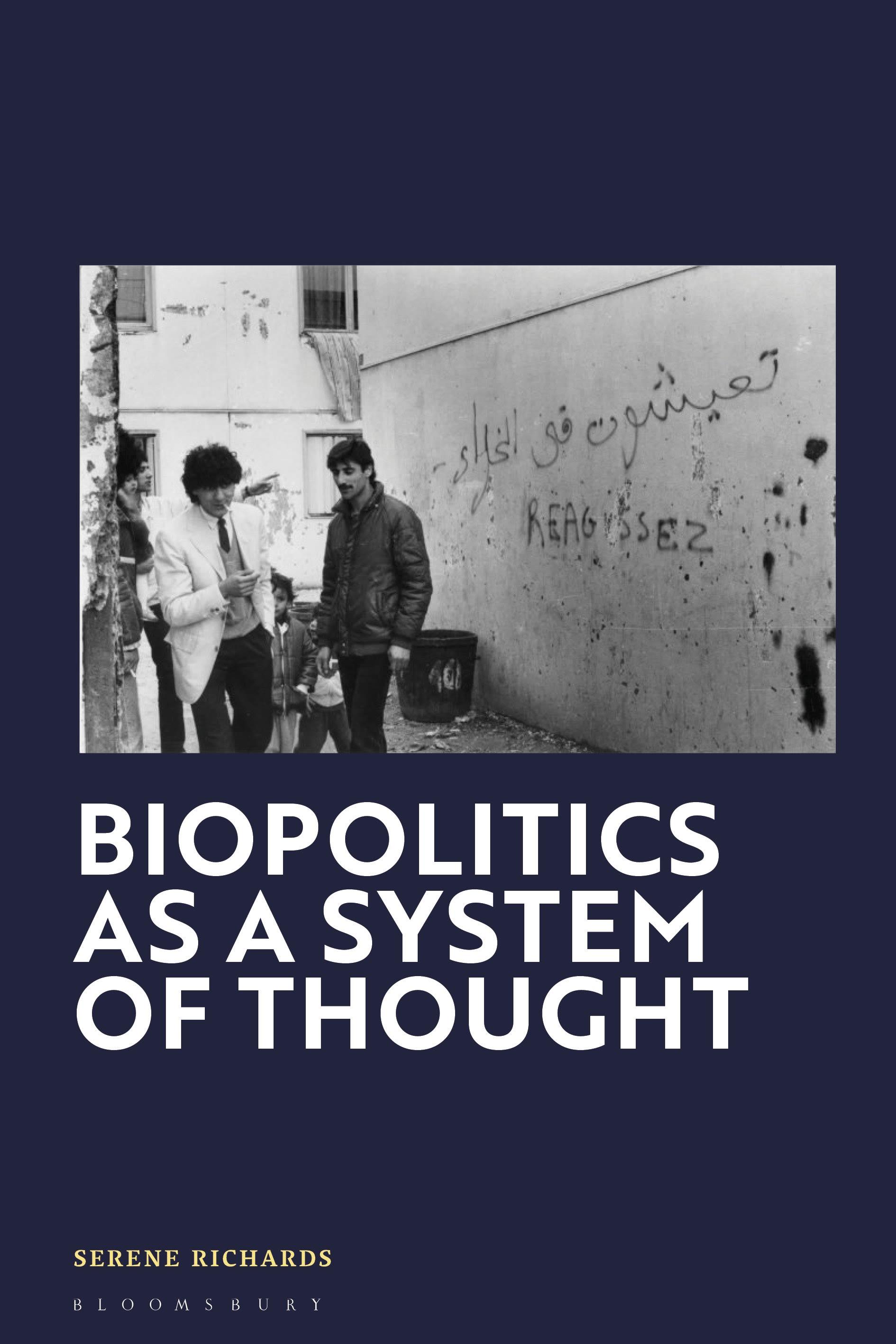
Our contemporary mode of life is characterised by what Serene Richards in Biopolitics as a System of Thought calls: Smart Being. Smart Being believes in the solutions of techno-capital where living is always at stake and directed to survival. Armed with this concept, this book examines how we arrived at this mode of being and asks how it could be that, while the material conditions of our lives have increasingly worsened, our capacities for effective political action, understood as the capacity for transforming our existing social relations, appear to be diminishing.
Drawing from jurists and philosophers such as Pierre Legendre, Yan Thomas, Giorgio Agamben, Michel Foucault and Gilles Deleuze, Richards argues that biopolitics intervenes at the most minute level of our everyday lives. She argues that there are conceptual truths presupposed in the mode of biopolitics' functioning, for instance that life can be assigned a value for the purpose of intervention, abandonment, or death, which have implications for our politics. In exciting engagements with political movements such as the post-May 1968 Mouvement des travailleurs Arabes (MTA), Richards shows how demands to transform our system of social relations are undermined by institutional models that proffer to offer rights protection while simultaneously annihilating the living altogether. Through a reappraisal of law, governance and capital, Richards seeks to reconceptualise our collectivity of thought, arguing for a politics of destitution that could form the basis of a communism to come.
Drawing from jurists and philosophers such as Pierre Legendre, Yan Thomas, Giorgio Agamben, Michel Foucault and Gilles Deleuze, Richards argues that biopolitics intervenes at the most minute level of our everyday lives. She argues that there are conceptual truths presupposed in the mode of biopolitics' functioning, for instance that life can be assigned a value for the purpose of intervention, abandonment, or death, which have implications for our politics. In exciting engagements with political movements such as the post-May 1968 Mouvement des travailleurs Arabes (MTA), Richards shows how demands to transform our system of social relations are undermined by institutional models that proffer to offer rights protection while simultaneously annihilating the living altogether. Through a reappraisal of law, governance and capital, Richards seeks to reconceptualise our collectivity of thought, arguing for a politics of destitution that could form the basis of a communism to come.
Payez facilement par carte, Klarna, Apple Pay ou Google Pay. Pas satisfait ? Vous avez toujours une garantie de remboursement de 14 jours. En savoir plus dans nos conditions. Si vous avez des questions, envoyez-nous un e-mail à hello@memmo.org.
Memmo facilite tes études, où que tu sois dans le monde. On rassemble tes manuels de cours et des outils d'étude intelligents au même endroit : résumés, quiz, podcasts et flashcards. Et il y a Ted, ton compagnon d'étude qui répond à toutes tes questions. Plus de 50 000 étudiants étudient déjà ici – conçu pour t'aider à apprendre plus vite et à moins stresser.