
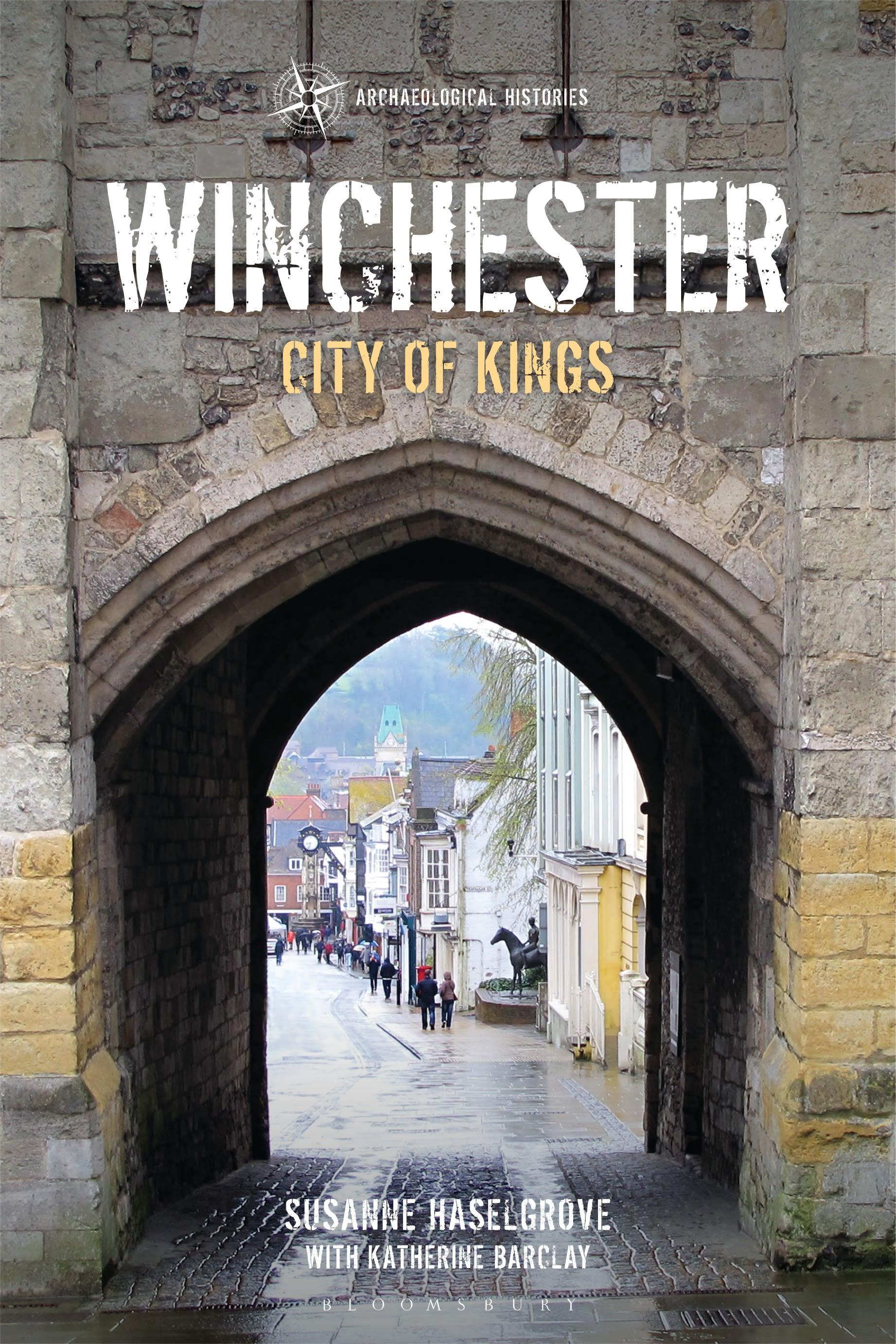
Winchester's rich heritage is brought to life in this uniquely accessible overview of the city's long and intricate physical and cultural history. Examining a wealth of archaeological evidence alongside surviving documentary sources, Susanne Haselgrove and Katherine Barclay paint a compelling picture of its waxing and waning fortunes, from prehistoric origins to early-medieval royal and ecclesiastical powerhouse, and subsequent decline to rebirth in 21st-century popular culture.
Although today Winchester is perhaps best-known globally as one of the key battlegrounds of the video-game Assassin's Creed Valhalla, its history and resonance in the contemporary world is far more complex. At its zenith the city held a prominent position on the national and international stage as a hub of learning and art, and this has endured into the modern age with the establishing of King Alfred as an icon of Britain's imperial past and the birth of environmentalism at the 'Battle of Twyford Down'.
A key part of this story is provided by the results of the ground-breaking and methodologically innovative excavations of the 1960s to 1970s, which played a critical role in the development of urban archaeology as we now know it. Across 19 sites, 3,000 volunteers brought to light the great halls of the kings and bishops, the magnificent Anglo-Saxon minsters and the homes and workshops of ordinary people. Post-excavation analyses revealed the crops and animals grown and imported into the area, how burial customs changed over time and the health of the local populations, while later excavations changed our view of medieval lepers, possibly unearthed King Alfred's body and revealed where two million First World War soldiers lived.
Although today Winchester is perhaps best-known globally as one of the key battlegrounds of the video-game Assassin's Creed Valhalla, its history and resonance in the contemporary world is far more complex. At its zenith the city held a prominent position on the national and international stage as a hub of learning and art, and this has endured into the modern age with the establishing of King Alfred as an icon of Britain's imperial past and the birth of environmentalism at the 'Battle of Twyford Down'.
A key part of this story is provided by the results of the ground-breaking and methodologically innovative excavations of the 1960s to 1970s, which played a critical role in the development of urban archaeology as we now know it. Across 19 sites, 3,000 volunteers brought to light the great halls of the kings and bishops, the magnificent Anglo-Saxon minsters and the homes and workshops of ordinary people. Post-excavation analyses revealed the crops and animals grown and imported into the area, how burial customs changed over time and the health of the local populations, while later excavations changed our view of medieval lepers, possibly unearthed King Alfred's body and revealed where two million First World War soldiers lived.
Payez facilement par carte, Klarna, Apple Pay ou Google Pay. Pas satisfait ? Vous avez toujours une garantie de remboursement de 14 jours. En savoir plus dans nos conditions. Si vous avez des questions, envoyez-nous un e-mail à hello@memmo.org.
Memmo facilite tes études, où que tu sois dans le monde. On rassemble tes manuels de cours et des outils d'étude intelligents au même endroit : résumés, quiz, podcasts et flashcards. Et il y a Ted, ton compagnon d'étude qui répond à toutes tes questions. Plus de 50 000 étudiants étudient déjà ici – conçu pour t'aider à apprendre plus vite et à moins stresser.