
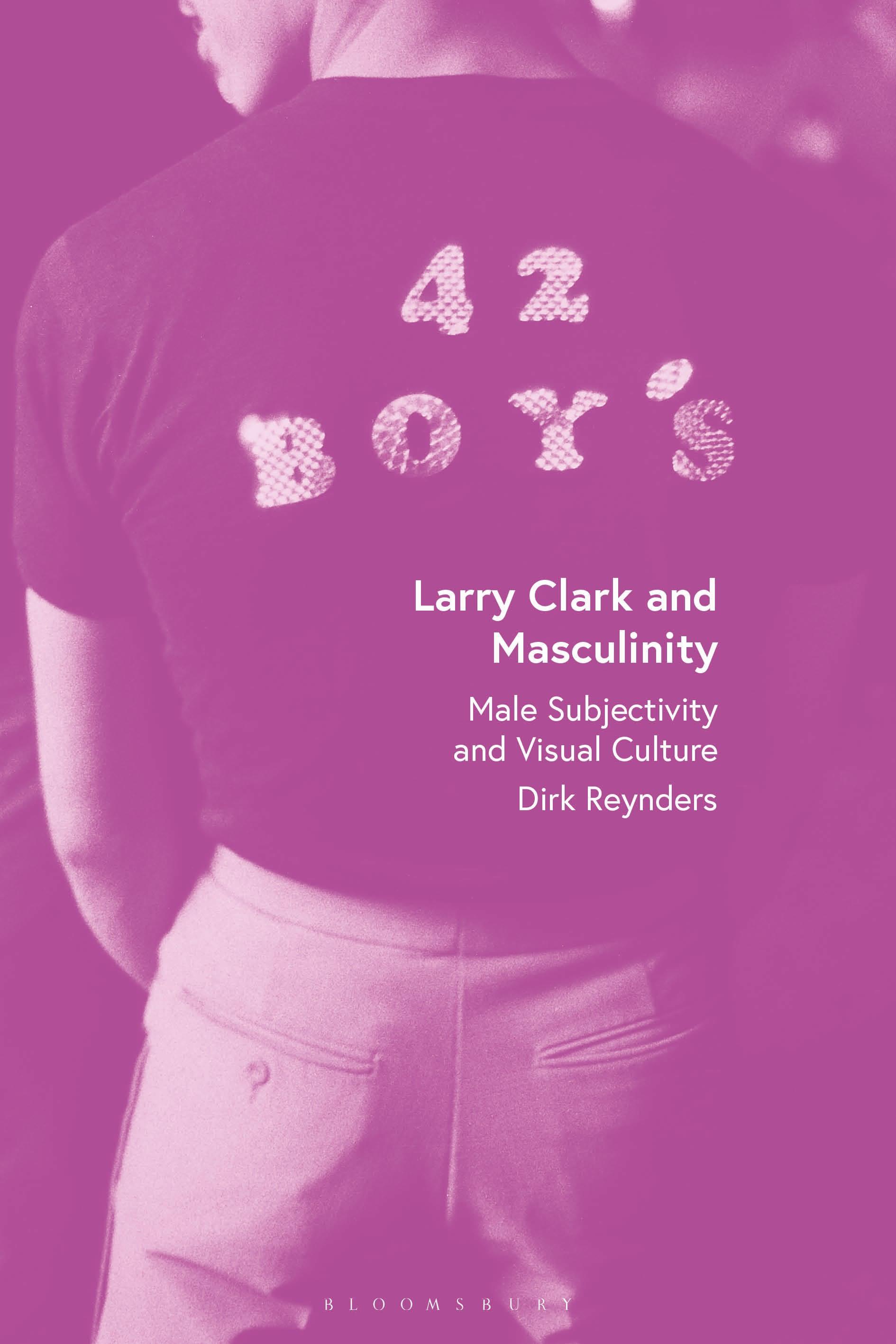
This book explores the visual representation of masculinity in the work of Larry Clark, using this to
prompt a wider conversation about the male body in visual culture and art.
Infamous for his often deeply personal depictions of teenage sexuality, subcultures and drug use, filmmaker and photographer Larry Clark also paid close attention to male identity, as revealed for the first time in this book. It explores the visual representation of masculinity in Clark's work, revealing how his images of the male body differ from traditional depictions and function not only as objects of spectacle, but as spectacular objects in themselves.
Despite being hugely influential, there has been a lack of critical attention paid to Clark's work following his celebrated photobook Tulsa (1971). Larry Clark and Masculinity is a vital contribution to research on Clark, and visual and photography studies more broadly, where it explores the photographer's depiction of the male subject as an object of desire. It also expands research in gender and queer studies by examining masculinity as a relational, social and intercultural construct in media and society, enhancing our understanding of Clark's narrative and iconographic practice, while simultaneously positioning his work at the centre of the cultural discourse around male subjectivity.
Drawing on an array of Clark's work, including his films 'Kids' and 'Ken Park', as well as his photographs, Masculinity and Visual Culture offers a critical re-examination of Clark's impact on visual culture and gender representation. By positioning Clark's work at the centre of the cultural discourse around male subjectivity, it enhances our understanding of Clark's narrative and iconographic practice as a means of negotiating complex subjectivities.
prompt a wider conversation about the male body in visual culture and art.
Infamous for his often deeply personal depictions of teenage sexuality, subcultures and drug use, filmmaker and photographer Larry Clark also paid close attention to male identity, as revealed for the first time in this book. It explores the visual representation of masculinity in Clark's work, revealing how his images of the male body differ from traditional depictions and function not only as objects of spectacle, but as spectacular objects in themselves.
Despite being hugely influential, there has been a lack of critical attention paid to Clark's work following his celebrated photobook Tulsa (1971). Larry Clark and Masculinity is a vital contribution to research on Clark, and visual and photography studies more broadly, where it explores the photographer's depiction of the male subject as an object of desire. It also expands research in gender and queer studies by examining masculinity as a relational, social and intercultural construct in media and society, enhancing our understanding of Clark's narrative and iconographic practice, while simultaneously positioning his work at the centre of the cultural discourse around male subjectivity.
Drawing on an array of Clark's work, including his films 'Kids' and 'Ken Park', as well as his photographs, Masculinity and Visual Culture offers a critical re-examination of Clark's impact on visual culture and gender representation. By positioning Clark's work at the centre of the cultural discourse around male subjectivity, it enhances our understanding of Clark's narrative and iconographic practice as a means of negotiating complex subjectivities.
Payez facilement par carte, Klarna, Apple Pay ou Google Pay. Pas satisfait ? Vous avez toujours une garantie de remboursement de 14 jours. En savoir plus dans nos conditions. Si vous avez des questions, envoyez-nous un e-mail à hello@memmo.org.
Memmo facilite tes études, où que tu sois dans le monde. On rassemble tes manuels de cours et des outils d'étude intelligents au même endroit : résumés, quiz, podcasts et flashcards. Et il y a Ted, ton compagnon d'étude qui répond à toutes tes questions. Plus de 50 000 étudiants étudient déjà ici – conçu pour t'aider à apprendre plus vite et à moins stresser.