
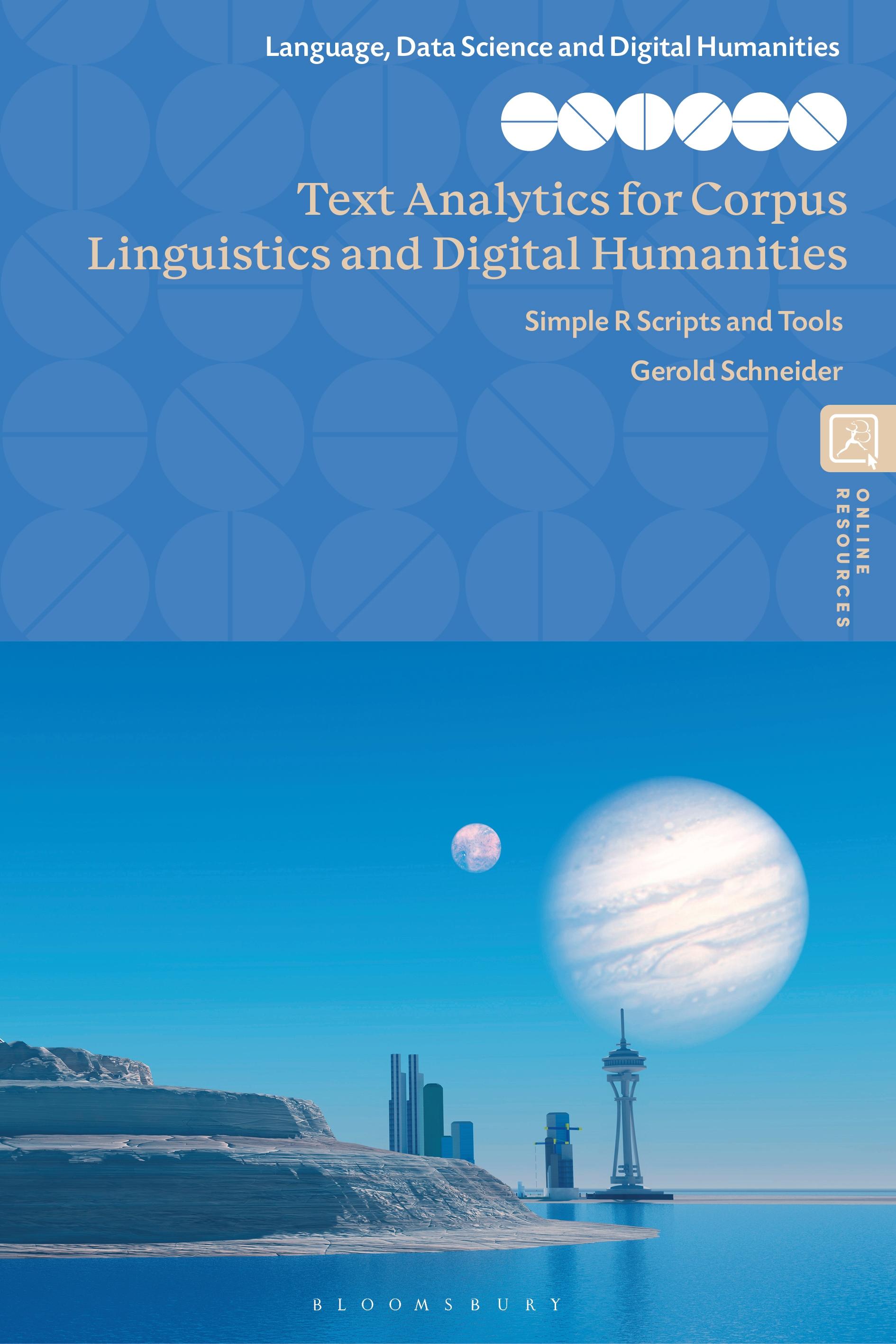
Do you want to gain a deeper understanding of how big tech analyses and exploits our text data, or investigate how political parties differ by analysing textual styles, associations and trends in documents? Or create a map of a text collection and write a simple QA system yourself?
This book explores how to apply state-of-the-art text analytics methods to detect and visualise phenomena in text data. Solidly based on methods from corpus linguistics, natural language processing, text analytics and digital humanities, this book shows readers how to conduct experiments with their own corpora and research questions, underpin their theories, quantify the differences and pinpoint characteristics. Case studies and experiments are detailed in every chapter using real-world and open access corpora from politics, World English, history, and literature. The results are interpreted and put into perspective, pitfalls are pointed out, and necessary pre-processing steps are demonstrated. This book also demonstrates how to use the programming language R, as well as simple alternatives and additions to R, to conduct experiments and employ visualisations by example, with extensible R-code, recipes, links to corpora, and a wide range of methods. The methods introduced
can be used across texts of all disciplines, from history or literature to party manifestos and patient reports.
This book explores how to apply state-of-the-art text analytics methods to detect and visualise phenomena in text data. Solidly based on methods from corpus linguistics, natural language processing, text analytics and digital humanities, this book shows readers how to conduct experiments with their own corpora and research questions, underpin their theories, quantify the differences and pinpoint characteristics. Case studies and experiments are detailed in every chapter using real-world and open access corpora from politics, World English, history, and literature. The results are interpreted and put into perspective, pitfalls are pointed out, and necessary pre-processing steps are demonstrated. This book also demonstrates how to use the programming language R, as well as simple alternatives and additions to R, to conduct experiments and employ visualisations by example, with extensible R-code, recipes, links to corpora, and a wide range of methods. The methods introduced
can be used across texts of all disciplines, from history or literature to party manifestos and patient reports.
Pages: 236
Catégorie: Språk & Lingvistik
e-ISBN: 9781350370845
Poids d'expédition: 1.2 kg
Expédié sous: 1-2 jours
Payez facilement par carte, Klarna, Apple Pay ou Google Pay. Pas satisfait ? Vous avez toujours une garantie de remboursement de 14 jours. En savoir plus dans nos conditions. Si vous avez des questions, envoyez-nous un e-mail à hello@memmo.org.
Memmo facilite tes études, où que tu sois dans le monde. On rassemble tes manuels de cours et des outils d'étude intelligents au même endroit : résumés, quiz, podcasts et flashcards. Et il y a Ted, ton compagnon d'étude qui répond à toutes tes questions. Plus de 50 000 étudiants étudient déjà ici – conçu pour t'aider à apprendre plus vite et à moins stresser.