
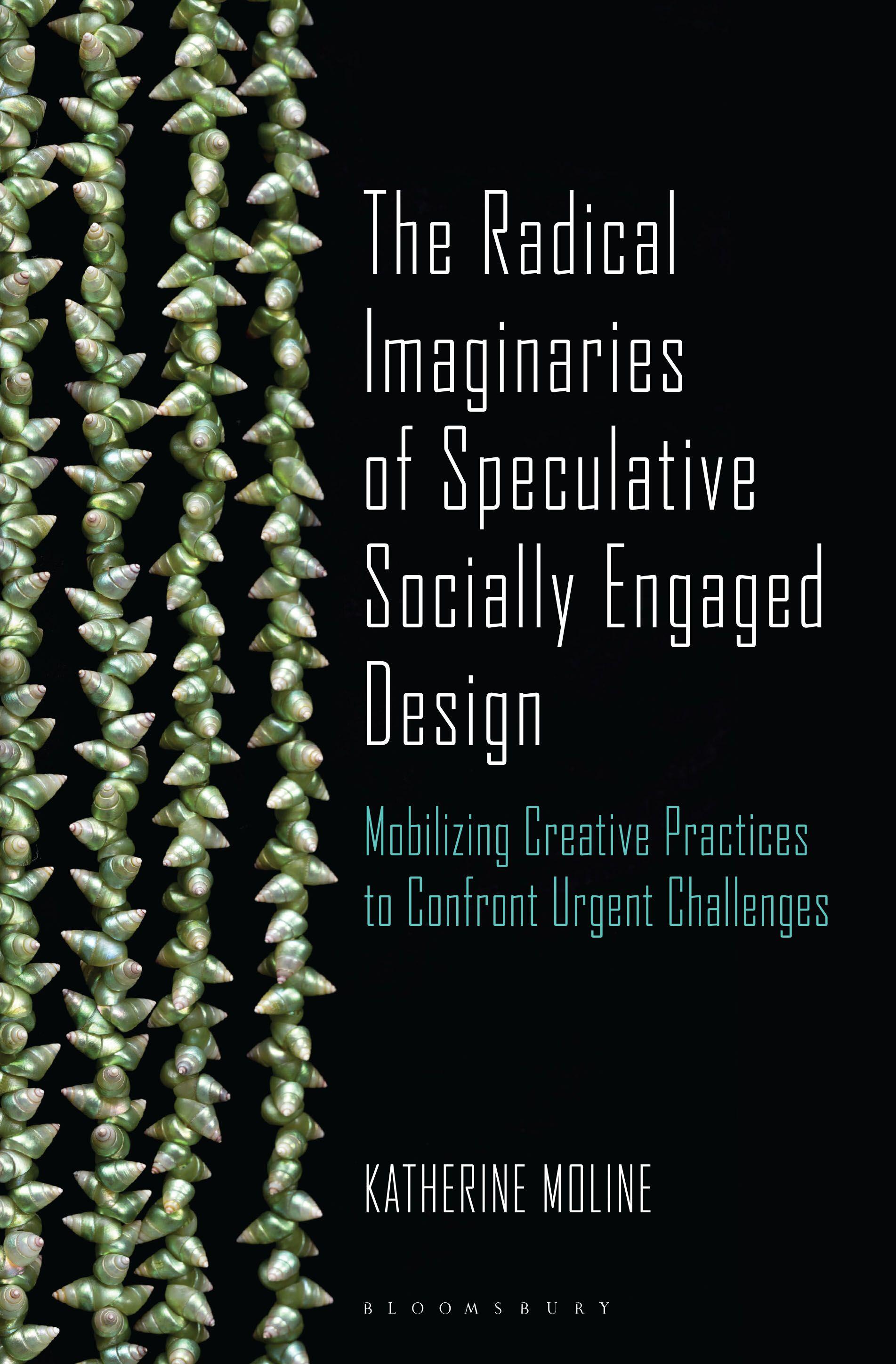
The Radical Imaginaries of Speculative Socially Engaged Design challenges dominant assumptions about the purpose and meaning of design in the 21st century.
Through an analysis of artistic avantgarde strategies employed by designers to generate impactful social engagement, this book explores the value of design as a collaborative process, rather than an exercise in authority and control. Chapters spotlight designers who respond to urgent technological, environmental and social issues.
Katherine Moline examines a range of socially engaged design practices and their international critical reception, from the early 20th century to the present day. Through a series of case studies, she examines work by designers including Dunne & Raby, whose work stimulates discussions around artificial intelligence and the alternative realities of the more-than-human; Martí Guixé, who questions ideas of industrialization and consumerism; and Ana Mir, whose practice disrupts the bourgeois values and moral agenda shaping the ethos of modernist functionalism in design. Other case studies feature the Interaction Research Studio, Gabriel A. Maher, Formafantasma, Benedikt Groß, Lola Greeno, Carl DiSalvo, Onkar Kular and Brave New Alps.
Moline demonstrates how these designers experiment with materials, technology and processes to produce powerful, thought-provoking works and mobilize what she terms a radical imaginary sensibility in design. In doing so, she puts forward new theoretical and conceptual tools for evaluating design and argues for the enduring importance of aesthetic theory in understanding both design's historical significance and transformative potential.
Through an analysis of artistic avantgarde strategies employed by designers to generate impactful social engagement, this book explores the value of design as a collaborative process, rather than an exercise in authority and control. Chapters spotlight designers who respond to urgent technological, environmental and social issues.
Katherine Moline examines a range of socially engaged design practices and their international critical reception, from the early 20th century to the present day. Through a series of case studies, she examines work by designers including Dunne & Raby, whose work stimulates discussions around artificial intelligence and the alternative realities of the more-than-human; Martí Guixé, who questions ideas of industrialization and consumerism; and Ana Mir, whose practice disrupts the bourgeois values and moral agenda shaping the ethos of modernist functionalism in design. Other case studies feature the Interaction Research Studio, Gabriel A. Maher, Formafantasma, Benedikt Groß, Lola Greeno, Carl DiSalvo, Onkar Kular and Brave New Alps.
Moline demonstrates how these designers experiment with materials, technology and processes to produce powerful, thought-provoking works and mobilize what she terms a radical imaginary sensibility in design. In doing so, she puts forward new theoretical and conceptual tools for evaluating design and argues for the enduring importance of aesthetic theory in understanding both design's historical significance and transformative potential.
Pages: 296
Catégorie: Konst, Design & Fotografi
e-ISBN: 9781350365643
Poids d'expédition: 1.2 kg
Expédié sous: 1-2 jours
Payez facilement par carte, Klarna, Apple Pay ou Google Pay. Pas satisfait ? Vous avez toujours une garantie de remboursement de 14 jours. En savoir plus dans nos conditions. Si vous avez des questions, envoyez-nous un e-mail à hello@memmo.org.
Memmo facilite tes études, où que tu sois dans le monde. On rassemble tes manuels de cours et des outils d'étude intelligents au même endroit : résumés, quiz, podcasts et flashcards. Et il y a Ted, ton compagnon d'étude qui répond à toutes tes questions. Plus de 50 000 étudiants étudient déjà ici – conçu pour t'aider à apprendre plus vite et à moins stresser.