
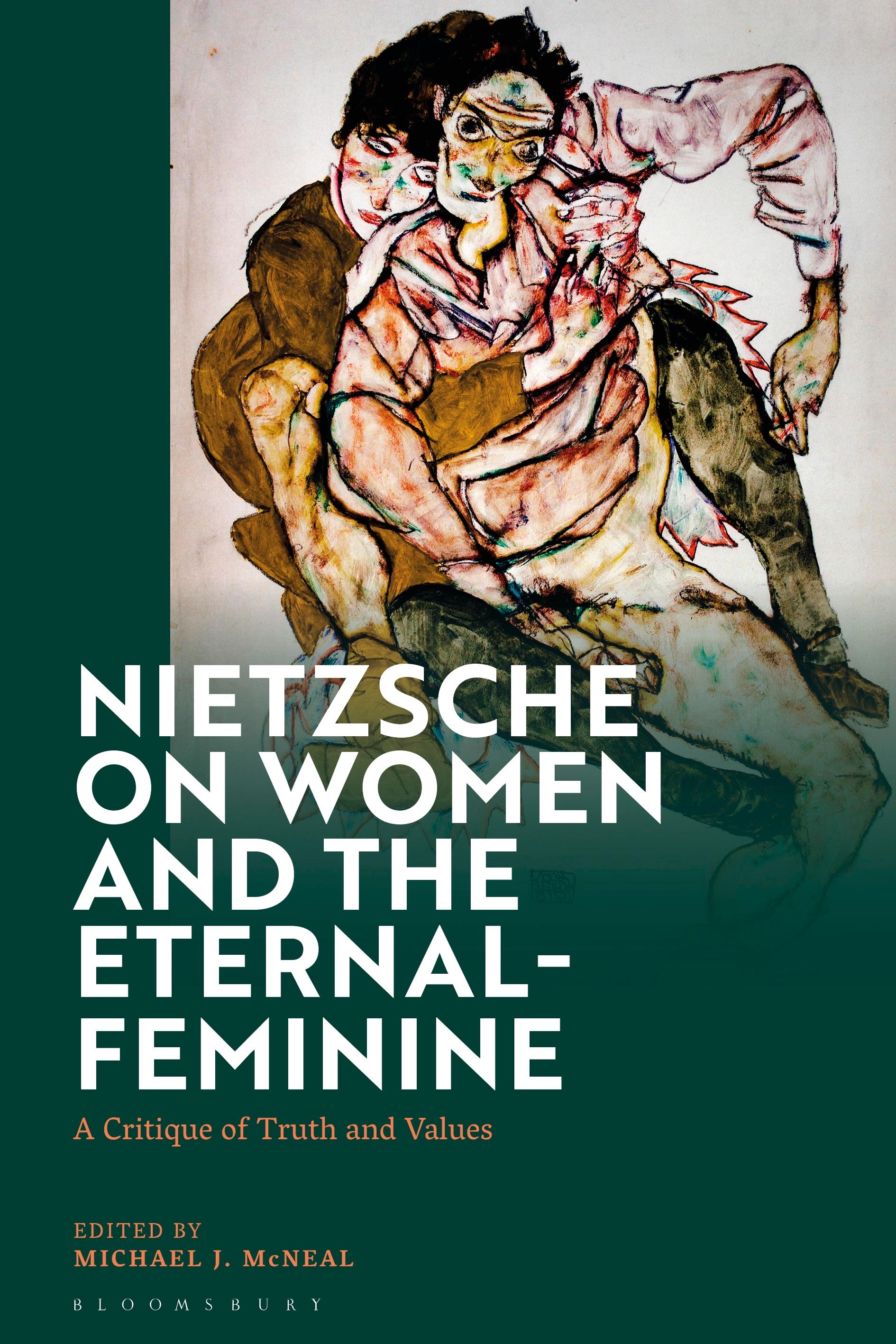
By re-examining Nietzsche's notion of the “eternal-feminine” and his views on women and feminism, this volume offers new perspectives on some of his key ideas. It brings together a diverse group of scholars to critically engage with Nietzsche's use of late-19th-century gender stereotypes and the ways in which they served his critique of values, including his use of “woman” as a trope for truth.
Among other subjects, the contributors consider the role of psychology in Nietzsche's thought, his concern with style, self-creation, and advocacy of perfectionism, his views on romantic love and marriage, and his aim of revaluing all values to instigate a distant philosophy of the future. They investigate parallels between Nietzsche's thought and Shaktism, his relation to Goethe and Stendahl, and his influence on Beauvoir, Butler, and Dohm. With the inclusion of two seminal essays on Nietzsche and women by Lawrence J. Hatab and Kelly Oliver, the volume also illustrates some of the ways in which scholarship on these subjects has evolved over the last four decades.
Providing fresh insights into these inter-related subjects, Nietzsche on Women and the Eternal-Feminine highlights the enduring relevance of his thought and its still-underappreciated potential for re-thinking both the bases for and aims of feminism and other emancipatory movements.
Among other subjects, the contributors consider the role of psychology in Nietzsche's thought, his concern with style, self-creation, and advocacy of perfectionism, his views on romantic love and marriage, and his aim of revaluing all values to instigate a distant philosophy of the future. They investigate parallels between Nietzsche's thought and Shaktism, his relation to Goethe and Stendahl, and his influence on Beauvoir, Butler, and Dohm. With the inclusion of two seminal essays on Nietzsche and women by Lawrence J. Hatab and Kelly Oliver, the volume also illustrates some of the ways in which scholarship on these subjects has evolved over the last four decades.
Providing fresh insights into these inter-related subjects, Nietzsche on Women and the Eternal-Feminine highlights the enduring relevance of his thought and its still-underappreciated potential for re-thinking both the bases for and aims of feminism and other emancipatory movements.
Payez facilement par carte, Klarna, Apple Pay ou Google Pay. Pas satisfait ? Vous avez toujours une garantie de remboursement de 14 jours. En savoir plus dans nos conditions. Si vous avez des questions, envoyez-nous un e-mail à hello@memmo.org.
Memmo facilite tes études, où que tu sois dans le monde. On rassemble tes manuels de cours et des outils d'étude intelligents au même endroit : résumés, quiz, podcasts et flashcards. Et il y a Ted, ton compagnon d'étude qui répond à toutes tes questions. Plus de 50 000 étudiants étudient déjà ici – conçu pour t'aider à apprendre plus vite et à moins stresser.