
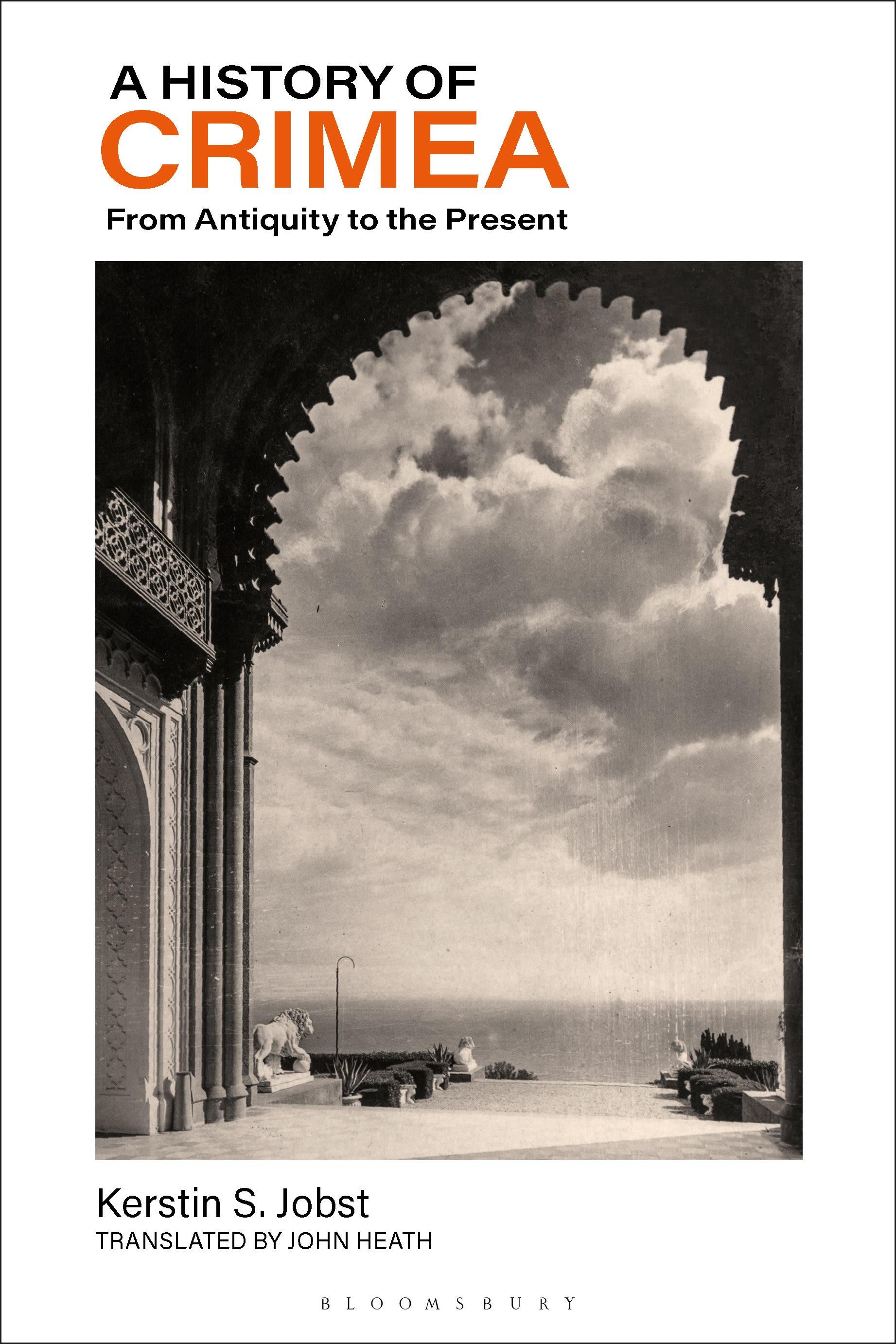
Since the Russian Federation's illegal annexation of Crimea from Ukraine in March 2014 – 160 years after the Crimean War – the peninsula has returned to the fore on the global geopolitical stage. This book provides a comprehensive history of the peninsula that was previously lacking, one that stretches from ancient times to the present and explores various aspects and inhabitants through the ages.
Kerstin S. Jobst examines the complex history of multi-ethnic and pluri-religious Crimea – not only from a political perspective, but also considering the manifold cultural and historical interdependencies that are central to the territory. The book examines myths and legends about Crimea, as well as the various peoples for whom it has been a settlement and transit area and who have shaped the fate of the peninsula: Greek, Genoese and Venetian colonists, Eurasian nomads, Crimean Tatars, Germans, Russians, Ukrainians and others. A History of Crimea shows the importance of Crimea as a site of early Christianity, but also as a contact zone between different religions – Judaism, Christianity and Islam. It also emphasizes the role of the peninsula as a peripheral space of various great powers – the Roman Empire, Byzantium, the Golden Horde, the “Third Reich” and the Ottoman, Russian and Soviet empires.
With this detailed overview of 2,000 years of Crimea's history, Kerstin S. Jobst debunks the narratives around the most recent explosive events in the peninsula by examining the full historical context. In doing so, she de-mythologizes simplified claims to historical legitimacy that, rooted in Russian emotional attachment and geopolitical ambitions, ignore the cultural complexities of the previous centuries. This important work thus rebalances skewed narratives that continue to prevail even among seasoned observers of developments in Crimea.
Kerstin S. Jobst examines the complex history of multi-ethnic and pluri-religious Crimea – not only from a political perspective, but also considering the manifold cultural and historical interdependencies that are central to the territory. The book examines myths and legends about Crimea, as well as the various peoples for whom it has been a settlement and transit area and who have shaped the fate of the peninsula: Greek, Genoese and Venetian colonists, Eurasian nomads, Crimean Tatars, Germans, Russians, Ukrainians and others. A History of Crimea shows the importance of Crimea as a site of early Christianity, but also as a contact zone between different religions – Judaism, Christianity and Islam. It also emphasizes the role of the peninsula as a peripheral space of various great powers – the Roman Empire, Byzantium, the Golden Horde, the “Third Reich” and the Ottoman, Russian and Soviet empires.
With this detailed overview of 2,000 years of Crimea's history, Kerstin S. Jobst debunks the narratives around the most recent explosive events in the peninsula by examining the full historical context. In doing so, she de-mythologizes simplified claims to historical legitimacy that, rooted in Russian emotional attachment and geopolitical ambitions, ignore the cultural complexities of the previous centuries. This important work thus rebalances skewed narratives that continue to prevail even among seasoned observers of developments in Crimea.
Payez facilement par carte, Klarna, Apple Pay ou Google Pay. Pas satisfait ? Vous avez toujours une garantie de remboursement de 14 jours. En savoir plus dans nos conditions. Si vous avez des questions, envoyez-nous un e-mail à hello@memmo.org.
Memmo facilite tes études, où que tu sois dans le monde. On rassemble tes manuels de cours et des outils d'étude intelligents au même endroit : résumés, quiz, podcasts et flashcards. Et il y a Ted, ton compagnon d'étude qui répond à toutes tes questions. Plus de 50 000 étudiants étudient déjà ici – conçu pour t'aider à apprendre plus vite et à moins stresser.