
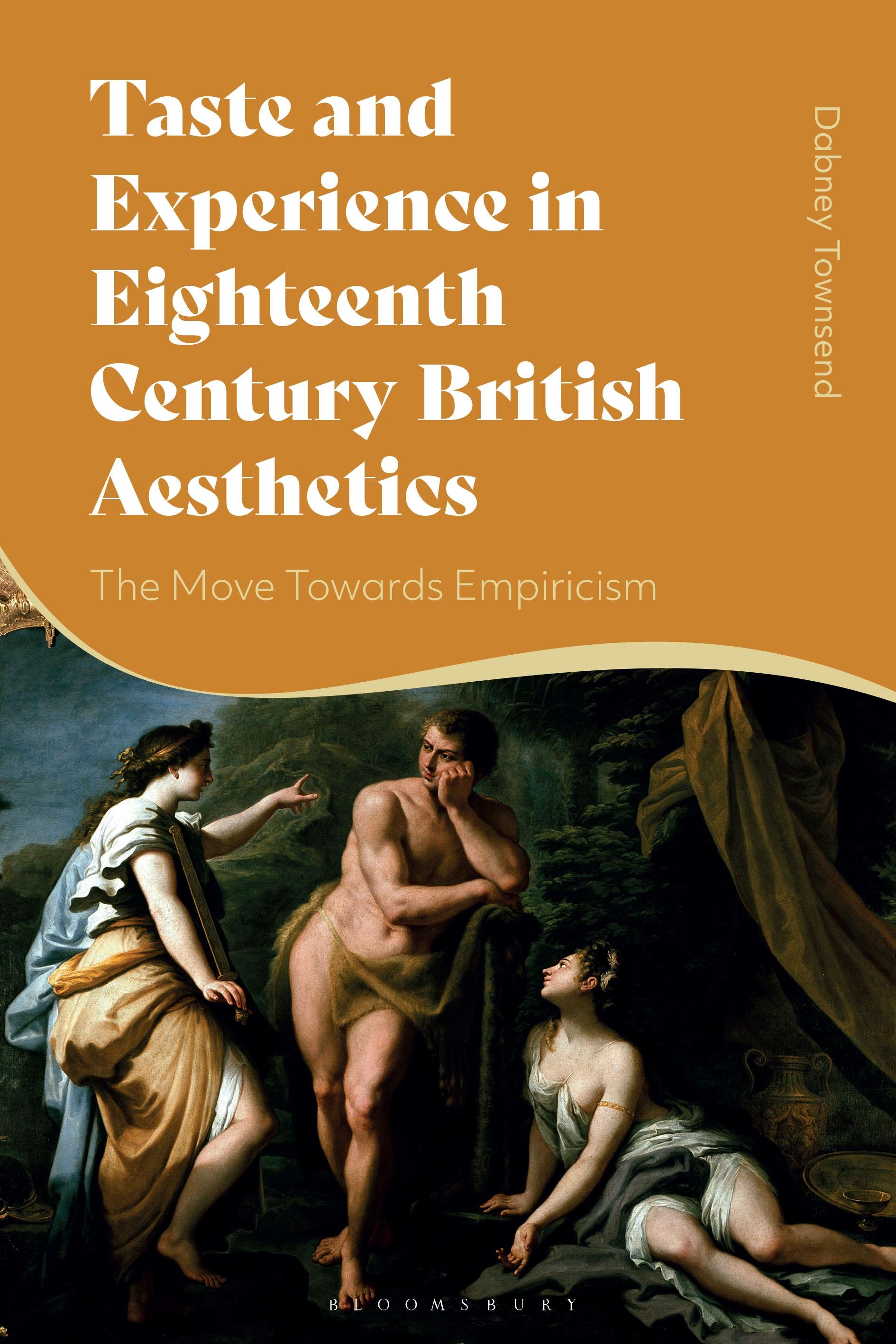
Taste and Experience in Eighteenth Century Aesthetics acknowledges theories of taste, beauty, the fine arts, genius, expression, the sublime and the picturesque in their own right, distinct from later theories of an exclusively aesthetic kind of experience. By drawing on a wealth of thinkers, including several marginalised philosophers, Dabney Townsend presents a novel reading of the century to challenge our understanding of art and move towards a unique way of thinking about aesthetics.
Speaking of a proto-aesthetic, Townsend surveys theories of taste and beauty arising from the empiricist shift in philosophy. A proto-aesthetic was shaped by the philosophers who followed Locke and accepted that theories of taste and beauty must be products of experience alone. Francis Hutcheson, David Hume, Alexander Gerard and Thomas Reid were among the most important advocates, joined by others who re-thought traditional topics.
Featuring chapters tracing its philosophical principles, issues raised by the subjectivity of the empiricist approach and the more academic proto-aesthetic formed toward the end of the century, Townsend argues that Lockean empiricism laid the foundations for what we now call aesthetics.
Speaking of a proto-aesthetic, Townsend surveys theories of taste and beauty arising from the empiricist shift in philosophy. A proto-aesthetic was shaped by the philosophers who followed Locke and accepted that theories of taste and beauty must be products of experience alone. Francis Hutcheson, David Hume, Alexander Gerard and Thomas Reid were among the most important advocates, joined by others who re-thought traditional topics.
Featuring chapters tracing its philosophical principles, issues raised by the subjectivity of the empiricist approach and the more academic proto-aesthetic formed toward the end of the century, Townsend argues that Lockean empiricism laid the foundations for what we now call aesthetics.
Payez facilement par carte, Klarna, Apple Pay ou Google Pay. Pas satisfait ? Vous avez toujours une garantie de remboursement de 14 jours. En savoir plus dans nos conditions. Si vous avez des questions, envoyez-nous un e-mail à hello@memmo.org.
Memmo facilite tes études, où que tu sois dans le monde. On rassemble tes manuels de cours et des outils d'étude intelligents au même endroit : résumés, quiz, podcasts et flashcards. Et il y a Ted, ton compagnon d'étude qui répond à toutes tes questions. Plus de 50 000 étudiants étudient déjà ici – conçu pour t'aider à apprendre plus vite et à moins stresser.