
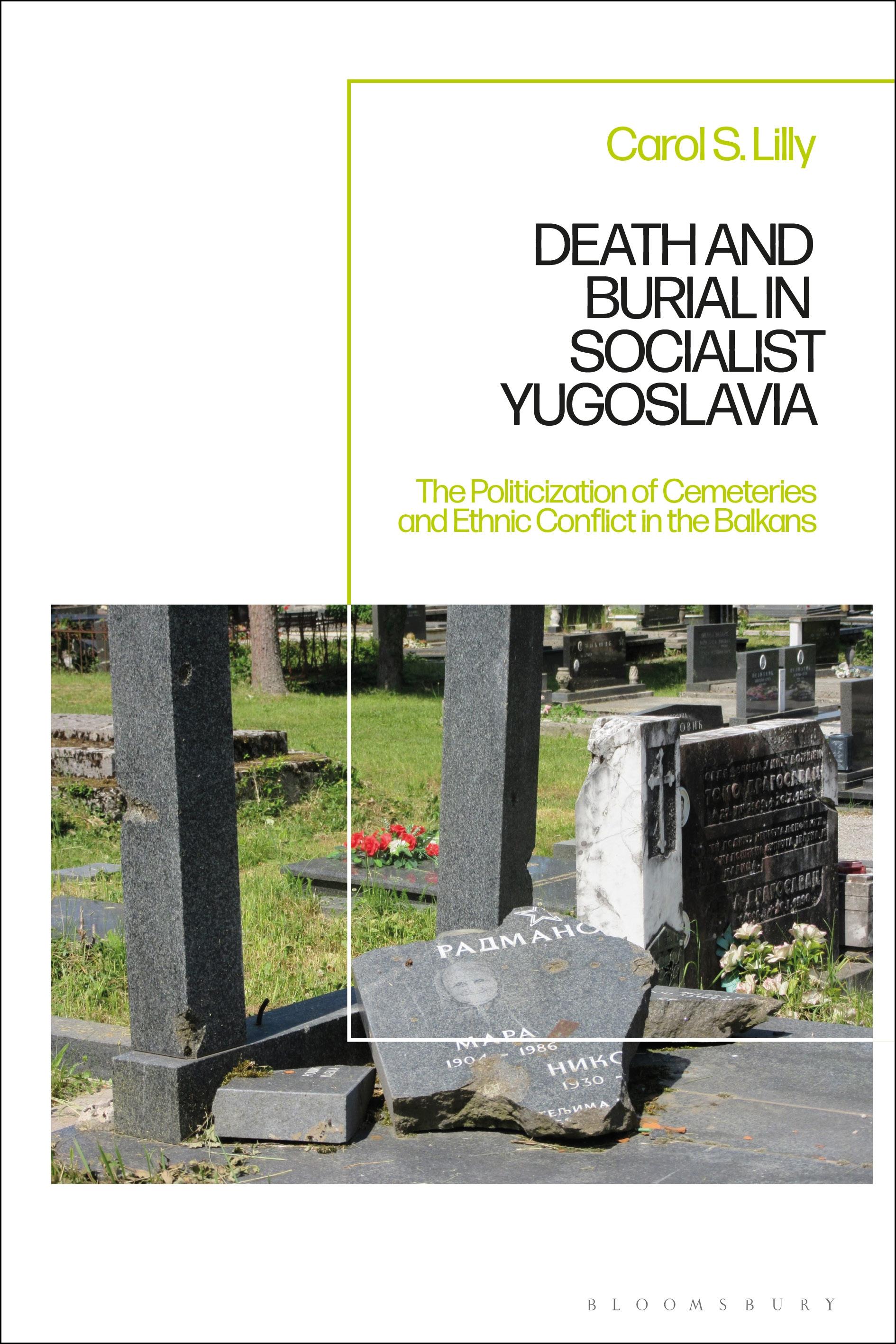
Across the globe, memorial and grave sites are being increasingly weaponized in conflicts and politicized by parties to advance agendas. Here, Carol S. Lilly examines ideas of death, politics, memory, ideology and nationalism in the former Yugoslav republics of Bosnia & Hercegovina, Croatia, and Serbia to shine fresh light on cemetery culture in 20th-century Europe.
More specifically, Death and Burial in Socialist Yugoslavia argues that while the CPY created its own communities of the dead in postwar Partisan Cemeteries, it failed to do the same for civilian cemeteries in ways that might reinforce its ideals of secularism, pluralism, and brotherhood and unity. Moreover, the communist regime left the previous system of ethno-religious segregation in place, further isolating Catholics, Orthodox, Muslims and Jews who continued to be buried in separate locations. Finally, it explicitly politicized burial rites and grave markers, making cemeteries into legitimate spaces of political discourse.
As a result, by the time Yugoslavia disintegrated in the early 1990s, dead bodies and cemeteries had become a concerted weapon of war in the ongoing ethnic conflict. Ultimately, then, this timely study reveals for the first time the extent to which the communist regime not only failed to created their own communities of the dead but also further divided and alienated living communities in Yugoslavia.
More specifically, Death and Burial in Socialist Yugoslavia argues that while the CPY created its own communities of the dead in postwar Partisan Cemeteries, it failed to do the same for civilian cemeteries in ways that might reinforce its ideals of secularism, pluralism, and brotherhood and unity. Moreover, the communist regime left the previous system of ethno-religious segregation in place, further isolating Catholics, Orthodox, Muslims and Jews who continued to be buried in separate locations. Finally, it explicitly politicized burial rites and grave markers, making cemeteries into legitimate spaces of political discourse.
As a result, by the time Yugoslavia disintegrated in the early 1990s, dead bodies and cemeteries had become a concerted weapon of war in the ongoing ethnic conflict. Ultimately, then, this timely study reveals for the first time the extent to which the communist regime not only failed to created their own communities of the dead but also further divided and alienated living communities in Yugoslavia.
Payez facilement par carte, Klarna, Apple Pay ou Google Pay. Pas satisfait ? Vous avez toujours une garantie de remboursement de 14 jours. En savoir plus dans nos conditions. Si vous avez des questions, envoyez-nous un e-mail à hello@memmo.org.
Memmo facilite tes études, où que tu sois dans le monde. On rassemble tes manuels de cours et des outils d'étude intelligents au même endroit : résumés, quiz, podcasts et flashcards. Et il y a Ted, ton compagnon d'étude qui répond à toutes tes questions. Plus de 50 000 étudiants étudient déjà ici – conçu pour t'aider à apprendre plus vite et à moins stresser.