
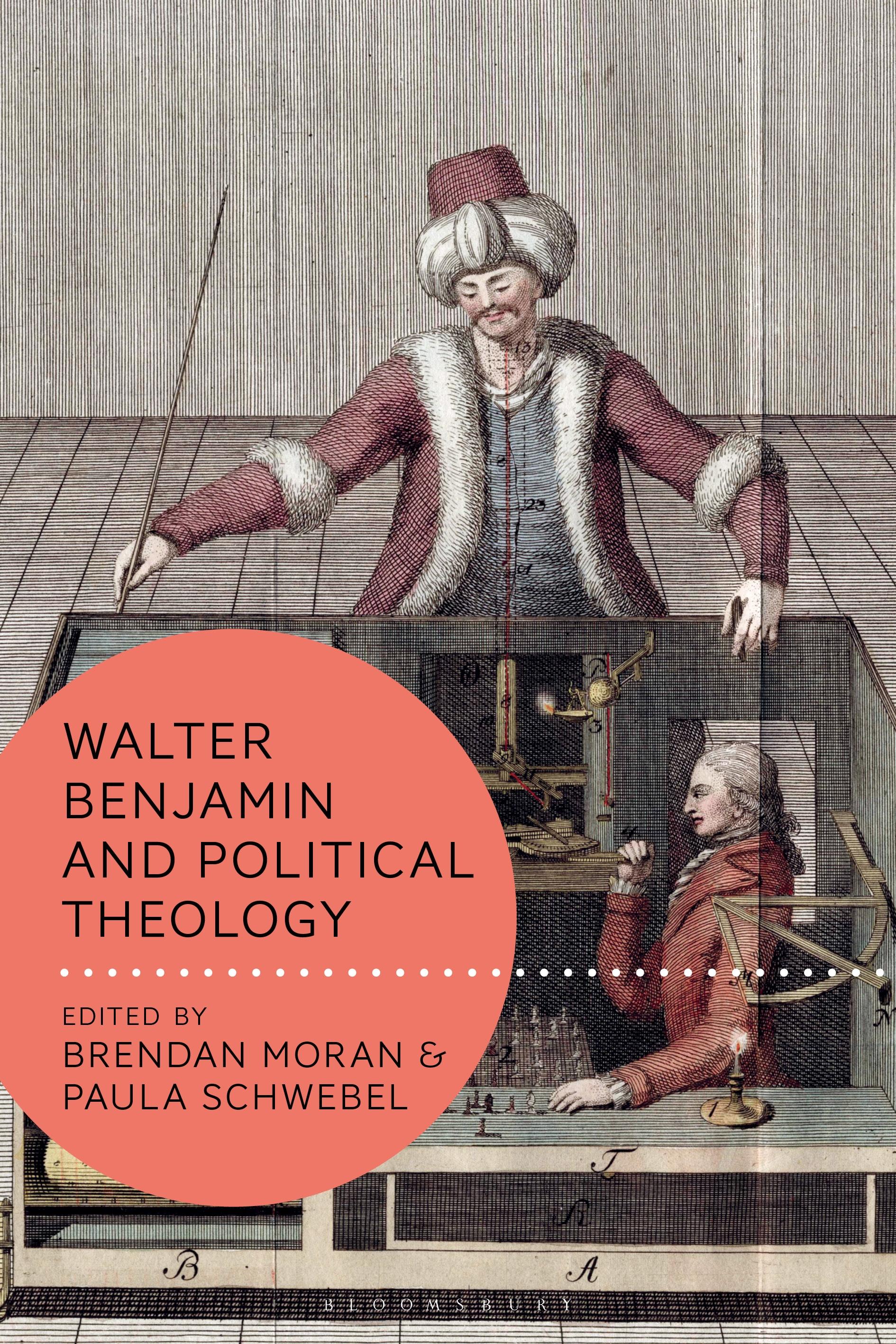
Tracing Walter Benjamin's convergences with, and divergences from, influential German legal theorist Carl Schmitt, this edited collection contextualizes Benjamin's thinking in the intellectual currents of his time, while also placing him in dialogue with traditions and thinkers from antiquity to the present. At stake is whether Benjamin presents the possibility of a distinctive political theology-a question which the collection addresses without collapsing the tensions internal to Benjamin's thought.
Benjamin's thought has been a touchstone, explicitly or implicitly, in numerous efforts to conceive of a 'new' political theology that is not anchored in legitimizing and preserving power, but in justice and liberation. Benjamin interrogates the political-theological complex from what may be construed as a vantage point opposed to Schmitt. Whereas Schmitt excavates the theological elements in modernity in order to shore up liberalism's illiberal inheritance, Benjamin roots out these latent structures in order to dissolve them and liberate us from their oppressive legacy. This volume's multifaceted contributions explore why Benjamin has been such a fertile source for thinking about political theology beyond – and often against – Schmitt. Benjamin indicates how existing political theologies can be challenged or expanded. This book accordingly makes a wide range of relevant work available for study whilst also opening new perspectives on Benjamin's œuvre.
Benjamin's thought has been a touchstone, explicitly or implicitly, in numerous efforts to conceive of a 'new' political theology that is not anchored in legitimizing and preserving power, but in justice and liberation. Benjamin interrogates the political-theological complex from what may be construed as a vantage point opposed to Schmitt. Whereas Schmitt excavates the theological elements in modernity in order to shore up liberalism's illiberal inheritance, Benjamin roots out these latent structures in order to dissolve them and liberate us from their oppressive legacy. This volume's multifaceted contributions explore why Benjamin has been such a fertile source for thinking about political theology beyond – and often against – Schmitt. Benjamin indicates how existing political theologies can be challenged or expanded. This book accordingly makes a wide range of relevant work available for study whilst also opening new perspectives on Benjamin's œuvre.
Payez facilement par carte, Klarna, Apple Pay ou Google Pay. Pas satisfait ? Vous avez toujours une garantie de remboursement de 14 jours. En savoir plus dans nos conditions. Si vous avez des questions, envoyez-nous un e-mail à hello@memmo.org.
Memmo facilite tes études, où que tu sois dans le monde. On rassemble tes manuels de cours et des outils d'étude intelligents au même endroit : résumés, quiz, podcasts et flashcards. Et il y a Ted, ton compagnon d'étude qui répond à toutes tes questions. Plus de 50 000 étudiants étudient déjà ici – conçu pour t'aider à apprendre plus vite et à moins stresser.