
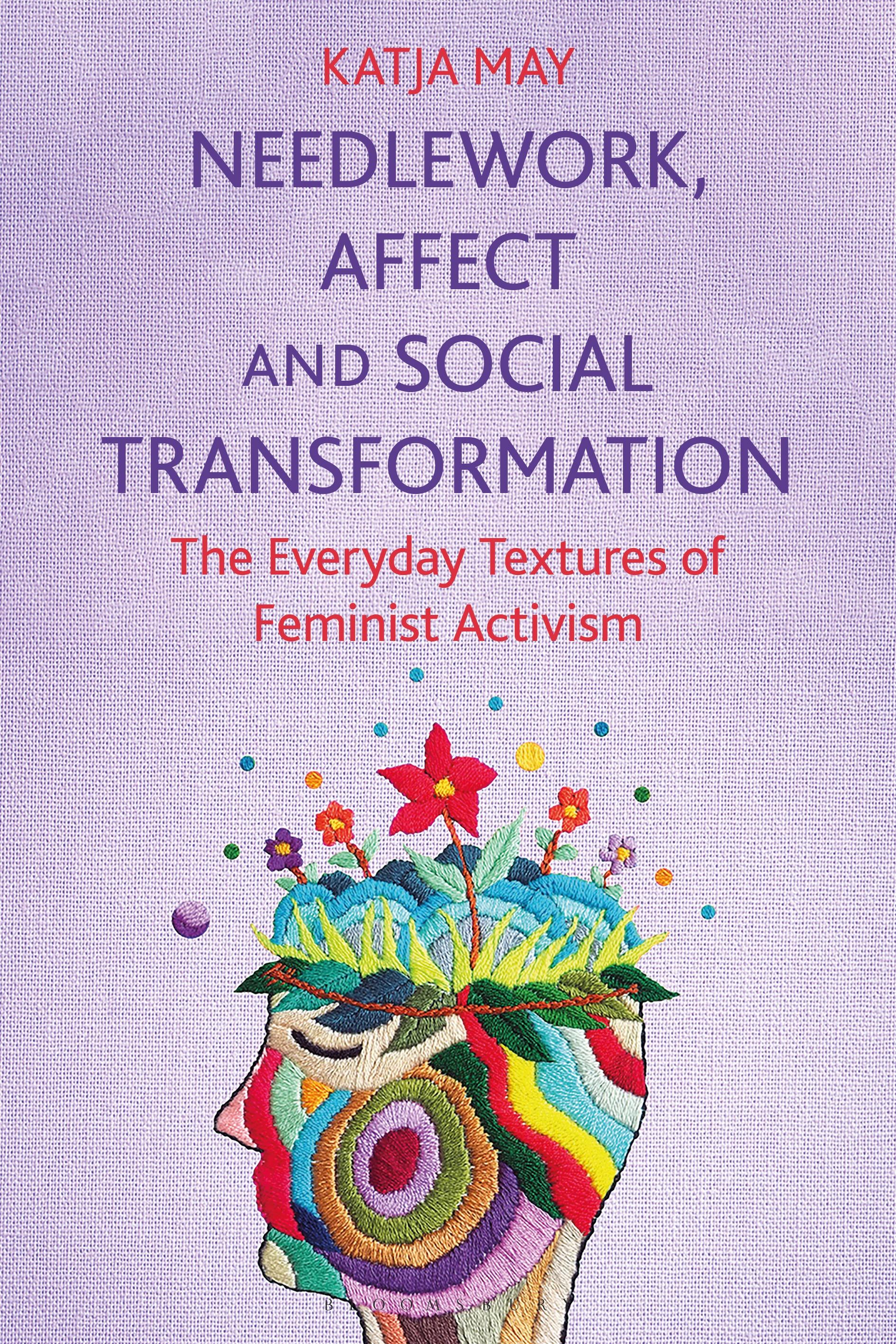
Needlework, Affect and Social Transformation offers an original framework for moving beyond binary discourses that class practices of needlework as either feminist or reactionary. Using transnational, contemporary case studies – such as the Social Justice Sewing Academy, fictionalised Bangladeshi garment workers as well as the famous Pussyhat Project – Katja May suggests a new approach to the interpretation of textile crafts as an affective social practice, and draws on under-represented issues of race.
May connects her study to broader material and social conditions of inequality, allowing for a nuanced and sensitive understanding of the role of needlework in feminist political activism. This broader look at how textile crafts function in the realms of politics and activism conceptualizes quilting, dressmaking, embroidery and knitting as routine activities invested with emotions and entangled with material and social conditions as well as political potential.
May connects her study to broader material and social conditions of inequality, allowing for a nuanced and sensitive understanding of the role of needlework in feminist political activism. This broader look at how textile crafts function in the realms of politics and activism conceptualizes quilting, dressmaking, embroidery and knitting as routine activities invested with emotions and entangled with material and social conditions as well as political potential.
Payez facilement par carte, Klarna, Apple Pay ou Google Pay. Pas satisfait ? Vous avez toujours une garantie de remboursement de 14 jours. En savoir plus dans nos conditions. Si vous avez des questions, envoyez-nous un e-mail à hello@memmo.org.
Memmo facilite tes études, où que tu sois dans le monde. On rassemble tes manuels de cours et des outils d'étude intelligents au même endroit : résumés, quiz, podcasts et flashcards. Et il y a Ted, ton compagnon d'étude qui répond à toutes tes questions. Plus de 50 000 étudiants étudient déjà ici – conçu pour t'aider à apprendre plus vite et à moins stresser.