
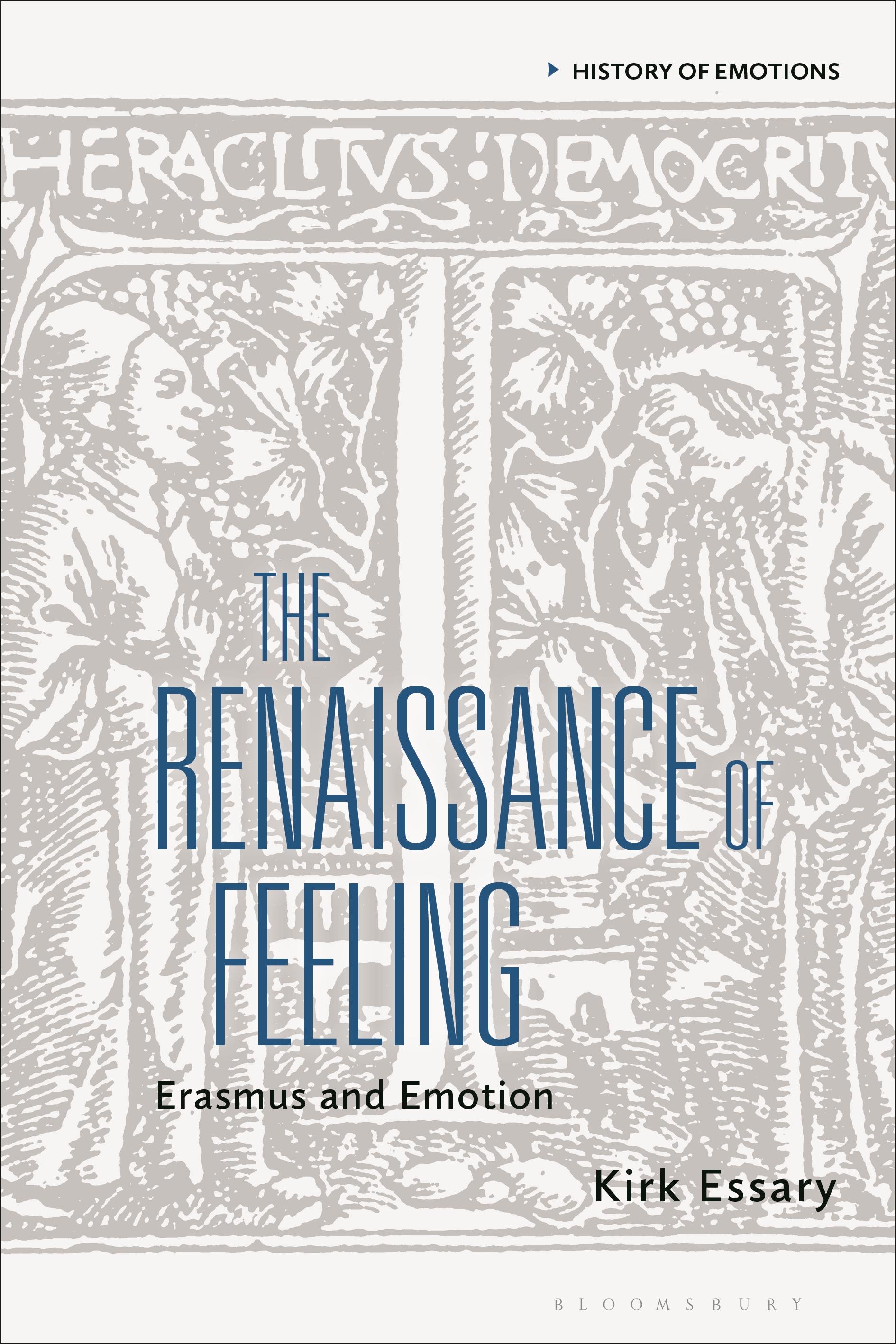
Offering a re-reading of Erasmus's works, this book shows that emotion and affectivity were central to his writings. It argues that Erasmus's conception of emotion was highly complex and richly diverse by tracing how the Dutch humanist writes about emotion not only from different perspectives-theological, philosophical, literary, rhetorical, medical-but also in different genres. In doing so, this book suggests, Erasmus provided a distinctive, if not unique, Christian humanist emotional style.
Demonstrating that Erasmus consulted multiple intellectual traditions and previous works in his thoughts on affectivity, The Renaissance of Feeling sheds light on how understanding emotions in late medieval and early modern Europe was a multi-disciplinary affair for humanist scholars. It argues that the rediscovery and proliferation ancient texts during the so-called renaissance resulted in shifting perspectives on how emotions were described and understood, and on their significance for Christian thought and practice. The book shows how the very availability of source material, coupled with humanists' eagerness to engage with multiple intellectual traditions gave rise to new understandings of feeling in the 16th century.
Essary shows how Erasmus provides the clearest example of such an intellectual inheritance by examining his writings about emotion across much of his vast corpus, including literary and rhetorical works, theological treatises, textual commentaries, religious disputations, and letters. Considering the rich and diverse ways that Erasmus wrote about emotions and affectivity, this book provides a new lens to study his works and sheds light on how emotions were understood in early modern Europe.
Demonstrating that Erasmus consulted multiple intellectual traditions and previous works in his thoughts on affectivity, The Renaissance of Feeling sheds light on how understanding emotions in late medieval and early modern Europe was a multi-disciplinary affair for humanist scholars. It argues that the rediscovery and proliferation ancient texts during the so-called renaissance resulted in shifting perspectives on how emotions were described and understood, and on their significance for Christian thought and practice. The book shows how the very availability of source material, coupled with humanists' eagerness to engage with multiple intellectual traditions gave rise to new understandings of feeling in the 16th century.
Essary shows how Erasmus provides the clearest example of such an intellectual inheritance by examining his writings about emotion across much of his vast corpus, including literary and rhetorical works, theological treatises, textual commentaries, religious disputations, and letters. Considering the rich and diverse ways that Erasmus wrote about emotions and affectivity, this book provides a new lens to study his works and sheds light on how emotions were understood in early modern Europe.
Payez facilement par carte, Klarna, Apple Pay ou Google Pay. Pas satisfait ? Vous avez toujours une garantie de remboursement de 14 jours. En savoir plus dans nos conditions. Si vous avez des questions, envoyez-nous un e-mail à hello@memmo.org.
Memmo facilite tes études, où que tu sois dans le monde. On rassemble tes manuels de cours et des outils d'étude intelligents au même endroit : résumés, quiz, podcasts et flashcards. Et il y a Ted, ton compagnon d'étude qui répond à toutes tes questions. Plus de 50 000 étudiants étudient déjà ici – conçu pour t'aider à apprendre plus vite et à moins stresser.