
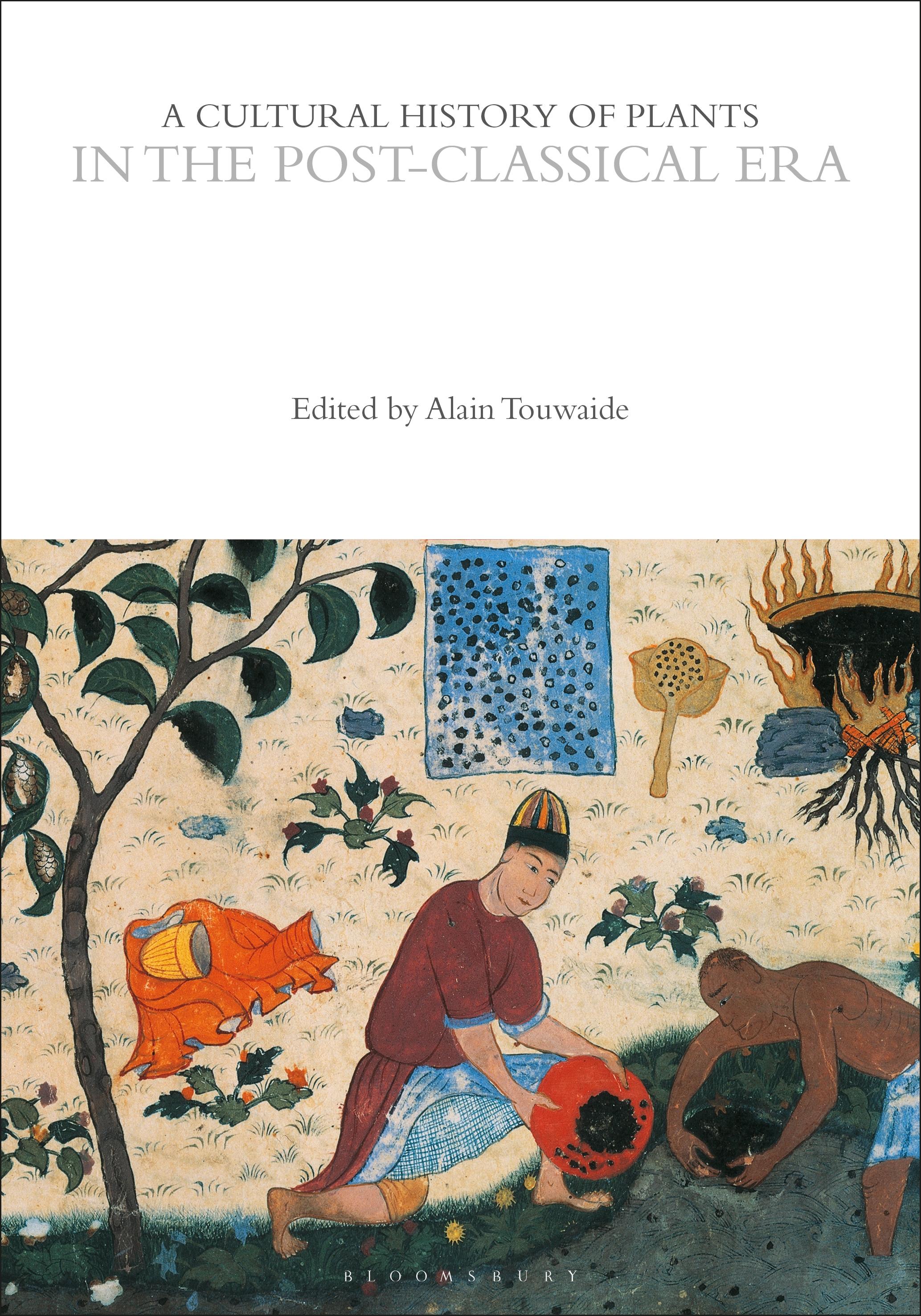
A Cultural History of Plants in the Post-Classical Era covers the period from 500 to 1400, ranging across northern and central Europe to the Mediterranean, and from the Byzantine and Arabic Empires to the Persian World, India, and China. This was an age of empires and fluctuating borders, presenting a changing mosaic of environments, populations, and cultural practices. Many of the ancient uses and meanings of plants were preserved, but these were overlaid with new developments in agriculture, landscapes, medicine, eating habits, and art.
The 6 volume set of the Cultural History of Plants presents the first comprehensive history of the uses and meanings of plants from prehistory to today. The themes covered in each volume are plants as staple foods; plants as luxury foods; trade and exploration; plant technology and science; plants and medicine; plants in culture; plants as natural ornaments; the representation of plants.
Alain Touwaide is Scientific Director at the Institute for the Preservation of Medical Traditions, Washington, D.C., USA.
Volume 2 in the Cultural History of Plants set.
General Editors: Annette Giesecke, University of Delaware, USA, and David Mabberley, University of Oxford, UK.
The 6 volume set of the Cultural History of Plants presents the first comprehensive history of the uses and meanings of plants from prehistory to today. The themes covered in each volume are plants as staple foods; plants as luxury foods; trade and exploration; plant technology and science; plants and medicine; plants in culture; plants as natural ornaments; the representation of plants.
Alain Touwaide is Scientific Director at the Institute for the Preservation of Medical Traditions, Washington, D.C., USA.
Volume 2 in the Cultural History of Plants set.
General Editors: Annette Giesecke, University of Delaware, USA, and David Mabberley, University of Oxford, UK.
Payez facilement par carte, Klarna, Apple Pay ou Google Pay. Pas satisfait ? Vous avez toujours une garantie de remboursement de 14 jours. En savoir plus dans nos conditions. Si vous avez des questions, envoyez-nous un e-mail à hello@memmo.org.
Memmo facilite tes études, où que tu sois dans le monde. On rassemble tes manuels de cours et des outils d'étude intelligents au même endroit : résumés, quiz, podcasts et flashcards. Et il y a Ted, ton compagnon d'étude qui répond à toutes tes questions. Plus de 50 000 étudiants étudient déjà ici – conçu pour t'aider à apprendre plus vite et à moins stresser.