
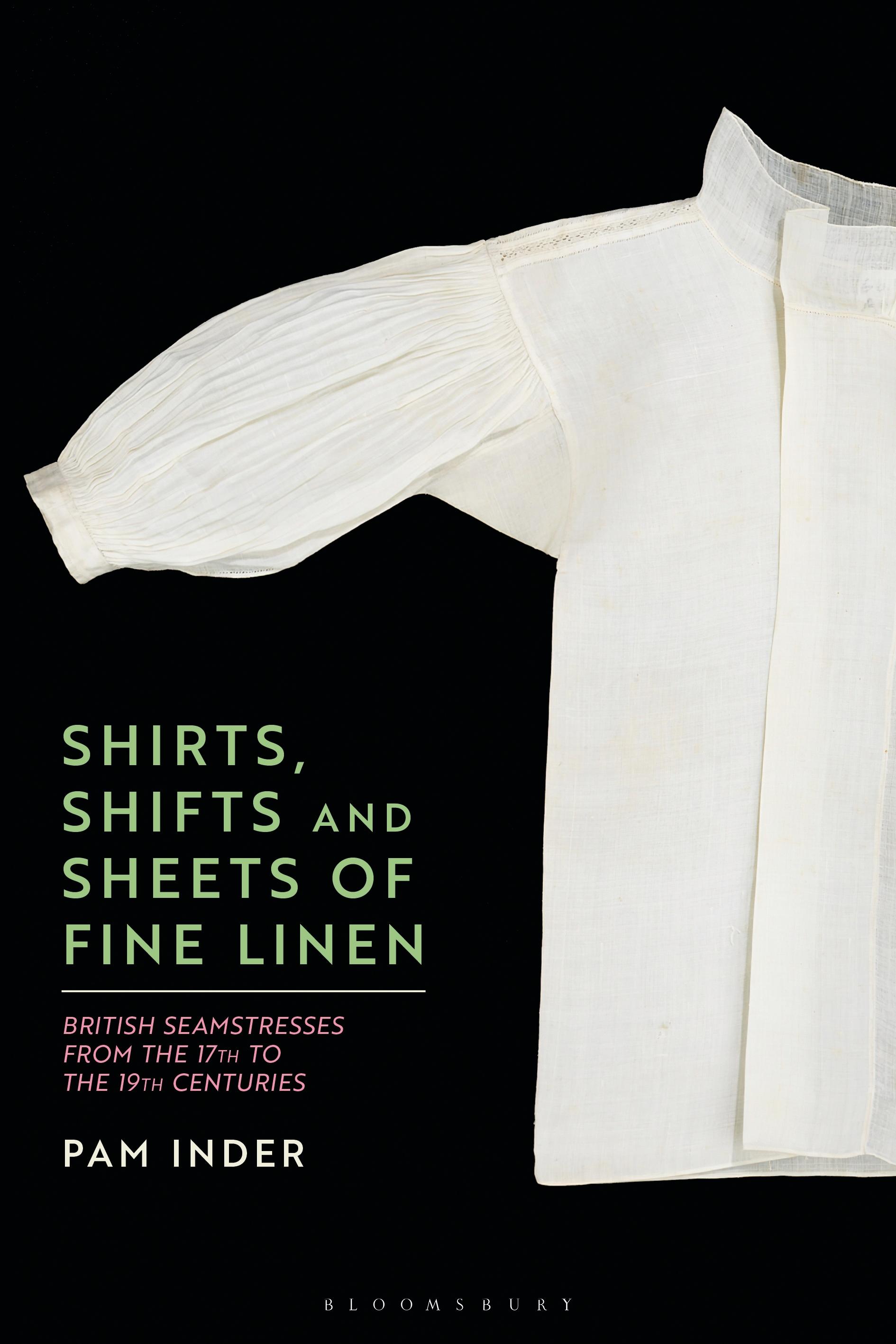
Shirts, Shifts and Sheets of Fine Linen explores how the jobs of the 'seamstress' evolved in scope, and status, between 1600-1900.
In the 17th and early 18th centuries, seamstressing was a trade for women who worked in linen and cotton, making men's shirts, women's chemises, underwear and baby linen; some of these seamstresses were consummate craftswomen, able to sew with stitches almost invisible to the naked eye. Few examples of their work survive, but those that do attest to their skill. However, as the ready-to-wear trade expanded in the 18th century, women who assembled these garments were also known as seamstresses, and by the 1840s, most seamstresses were outworkers for companies or entrepreneurs, paid unbelievably low rates per dozen for the garments they produced, notorious examples of downtrodden, exploited womenfolk.
Drawing on a range of original and hitherto unpublished sources, including business diaries, letters and bills, Shirts, Shifts and Sheets of Fine Linen explores the seamstress's change of status in the 19th century and the reasons for it, hinting at the resurgence of the trade today given so few women today are skilled at repairing and altering clothes. Illustrated with 60 images, the book brings seamstresses into focus as real people, granting new insights into working class life in 18th- and 19th-century Britain.
In the 17th and early 18th centuries, seamstressing was a trade for women who worked in linen and cotton, making men's shirts, women's chemises, underwear and baby linen; some of these seamstresses were consummate craftswomen, able to sew with stitches almost invisible to the naked eye. Few examples of their work survive, but those that do attest to their skill. However, as the ready-to-wear trade expanded in the 18th century, women who assembled these garments were also known as seamstresses, and by the 1840s, most seamstresses were outworkers for companies or entrepreneurs, paid unbelievably low rates per dozen for the garments they produced, notorious examples of downtrodden, exploited womenfolk.
Drawing on a range of original and hitherto unpublished sources, including business diaries, letters and bills, Shirts, Shifts and Sheets of Fine Linen explores the seamstress's change of status in the 19th century and the reasons for it, hinting at the resurgence of the trade today given so few women today are skilled at repairing and altering clothes. Illustrated with 60 images, the book brings seamstresses into focus as real people, granting new insights into working class life in 18th- and 19th-century Britain.
Payez facilement par carte, Klarna, Apple Pay ou Google Pay. Pas satisfait ? Vous avez toujours une garantie de remboursement de 14 jours. En savoir plus dans nos conditions. Si vous avez des questions, envoyez-nous un e-mail à hello@memmo.org.
Memmo facilite tes études, où que tu sois dans le monde. On rassemble tes manuels de cours et des outils d'étude intelligents au même endroit : résumés, quiz, podcasts et flashcards. Et il y a Ted, ton compagnon d'étude qui répond à toutes tes questions. Plus de 50 000 étudiants étudient déjà ici – conçu pour t'aider à apprendre plus vite et à moins stresser.