
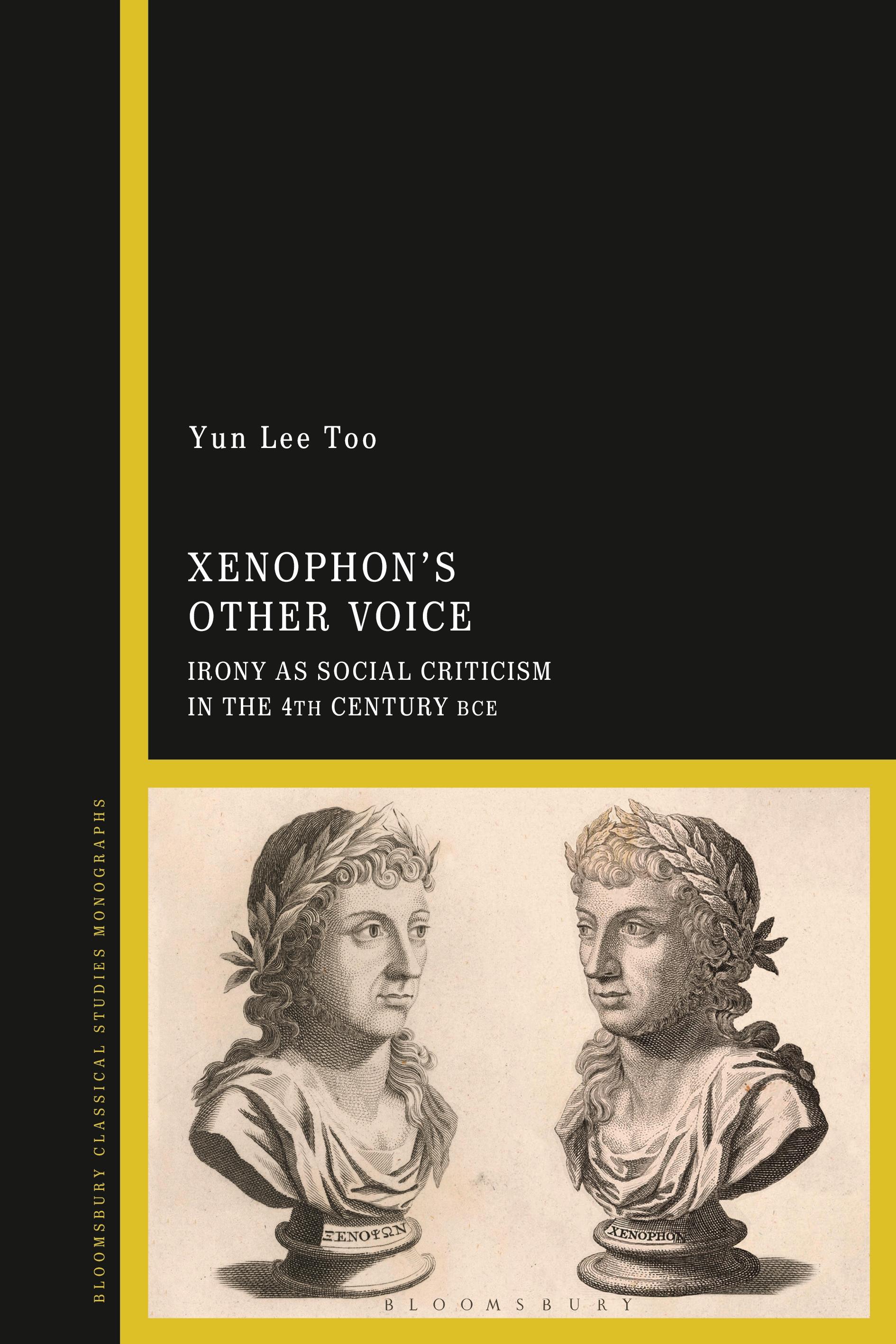
This volume explores irony – in its essence, saying other than one actually means – in the collected works of Xenophon. Xenophon's Other Voice argues that there are two voices in the author: one ostensible at the level of the literal text, which is available to everyone, while the sub-title designates the other voice, which is less obvious to the reader and indeed, an ironic one. It presents a unified view of the author's entire corpus and argues that the function of Xenophontic irony is to offer critiques of the societies in which he finds himself.
Rejecting both non-ironic and Straussian interpretations of Xenophon's writings, Yun Lee Too offers a wholly original perspective on the contemporary debate of how he should be read, which is underpinned by a series of incisive readings of the individual works. Beginning with Xenophon's representation of an ironic Socrates, who condemns the contemporary city and its more prominent citizens, the book moves on to consider how the author develops his own approach to irony. He deploys irony to criticize aspects of Athenian society, such as its understanding of wealth, its armed forces and sophistic education. The book then turns to his treatment of other Hellenic societies, including the Spartan city-state and laws, kingship in Syracuse and war amongst the Greek states. It finally considers Persia, covering Xenophon's depiction of Cyrus the Great and the expedition with Cyrus the Younger.
Rejecting both non-ironic and Straussian interpretations of Xenophon's writings, Yun Lee Too offers a wholly original perspective on the contemporary debate of how he should be read, which is underpinned by a series of incisive readings of the individual works. Beginning with Xenophon's representation of an ironic Socrates, who condemns the contemporary city and its more prominent citizens, the book moves on to consider how the author develops his own approach to irony. He deploys irony to criticize aspects of Athenian society, such as its understanding of wealth, its armed forces and sophistic education. The book then turns to his treatment of other Hellenic societies, including the Spartan city-state and laws, kingship in Syracuse and war amongst the Greek states. It finally considers Persia, covering Xenophon's depiction of Cyrus the Great and the expedition with Cyrus the Younger.
Pages: 264
Catégorie: Arkeologi & Antikvetenskap
e-ISBN: 9781350250550
Poids d'expédition: 1.2 kg
Expédié sous: 1-2 jours
Payez facilement par carte, Klarna, Apple Pay ou Google Pay. Pas satisfait ? Vous avez toujours une garantie de remboursement de 14 jours. En savoir plus dans nos conditions. Si vous avez des questions, envoyez-nous un e-mail à hello@memmo.org.
Memmo facilite tes études, où que tu sois dans le monde. On rassemble tes manuels de cours et des outils d'étude intelligents au même endroit : résumés, quiz, podcasts et flashcards. Et il y a Ted, ton compagnon d'étude qui répond à toutes tes questions. Plus de 50 000 étudiants étudient déjà ici – conçu pour t'aider à apprendre plus vite et à moins stresser.