
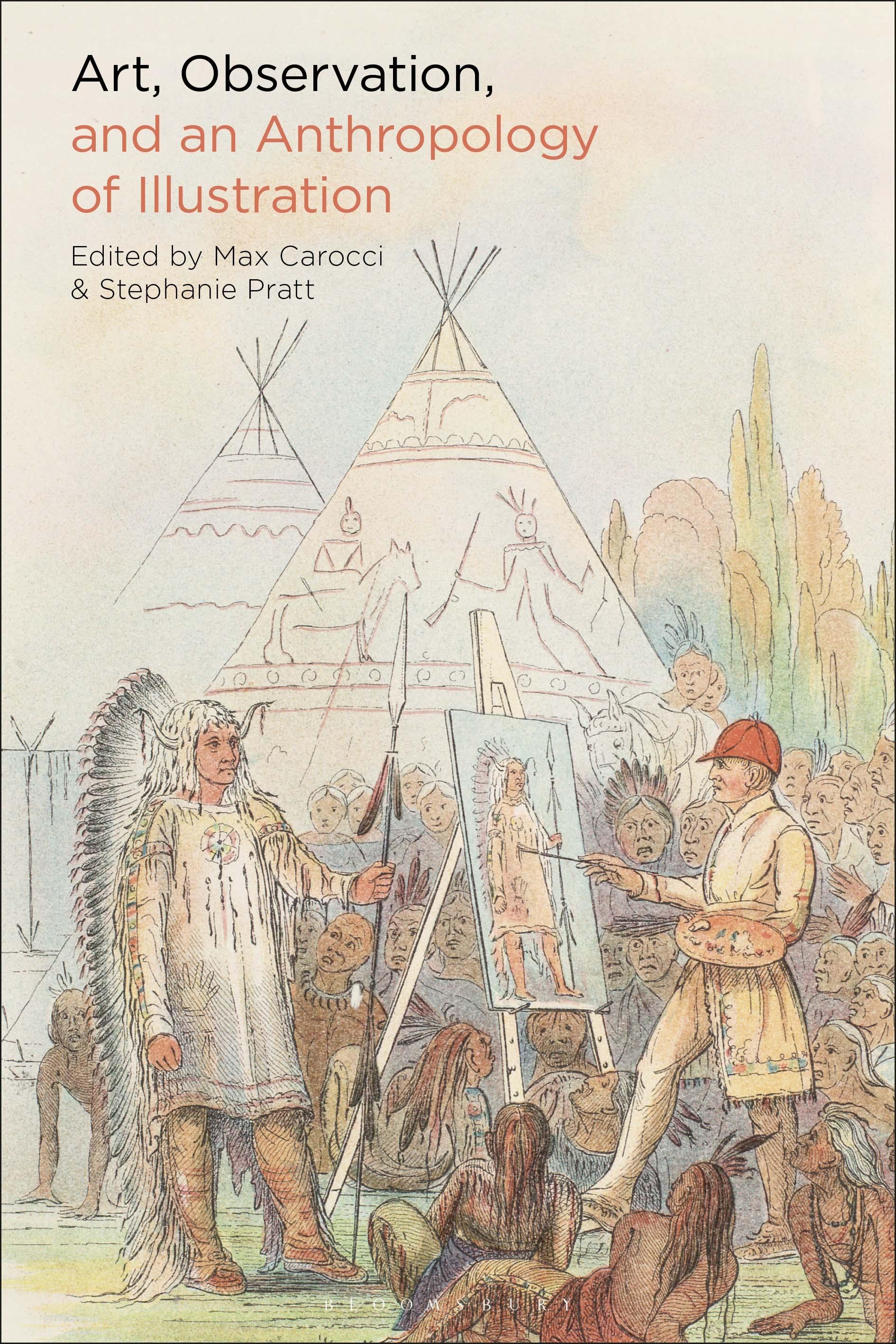
Art, Observation, and an Anthropology of Illustration examines the role of sketches, drawings and other artworks in our understanding of human cultures of the past.
Bringing together art historians and anthropologists, it presents a selection of detailed case studies of various bodies of work produced by non-Western and Western artists from different world regions and from different time periods (from Native North America, Cameroon, and Nepal, to Italy, Solomon Islands, and Mexico) to explore the contemporary relevance and challenges implicit in artistic renditions of past peoples and places.
In an age when identities are partially constructed on the basis of existing visual records, the book asks important questions about the nature of observation and the inclusion of culturally-relevant information in artistic representations. How reliable are watercolours, paintings, or sketches for the understanding of past ways of life? How do old images of bygone peoples relate to art historical and anthropological canons? How have these images and technologies of representation been used to describe, illustrate, or explain unknown realities?
The book is an essential tool for art historians, anthropologists, and anyone who wants to understand how the observation of different realities has impacted upon the production of art and visual cultures. Incorporating current methodological and theoretical tools, the 10 chapters collected here expand the area of connection between the disciplines of art history and anthropology, bringing into sharp focus the multiple intersections of objectivity, evidence, and artistic licence.
Bringing together art historians and anthropologists, it presents a selection of detailed case studies of various bodies of work produced by non-Western and Western artists from different world regions and from different time periods (from Native North America, Cameroon, and Nepal, to Italy, Solomon Islands, and Mexico) to explore the contemporary relevance and challenges implicit in artistic renditions of past peoples and places.
In an age when identities are partially constructed on the basis of existing visual records, the book asks important questions about the nature of observation and the inclusion of culturally-relevant information in artistic representations. How reliable are watercolours, paintings, or sketches for the understanding of past ways of life? How do old images of bygone peoples relate to art historical and anthropological canons? How have these images and technologies of representation been used to describe, illustrate, or explain unknown realities?
The book is an essential tool for art historians, anthropologists, and anyone who wants to understand how the observation of different realities has impacted upon the production of art and visual cultures. Incorporating current methodological and theoretical tools, the 10 chapters collected here expand the area of connection between the disciplines of art history and anthropology, bringing into sharp focus the multiple intersections of objectivity, evidence, and artistic licence.
Pages: 256
Catégorie: Konst, Design & Fotografi
e-ISBN: 9781350248458
Poids d'expédition: 1.2 kg
Expédié sous: 1-2 jours
Payez facilement par carte, Klarna, Apple Pay ou Google Pay. Pas satisfait ? Vous avez toujours une garantie de remboursement de 14 jours. En savoir plus dans nos conditions. Si vous avez des questions, envoyez-nous un e-mail à hello@memmo.org.
Memmo facilite tes études, où que tu sois dans le monde. On rassemble tes manuels de cours et des outils d'étude intelligents au même endroit : résumés, quiz, podcasts et flashcards. Et il y a Ted, ton compagnon d'étude qui répond à toutes tes questions. Plus de 50 000 étudiants étudient déjà ici – conçu pour t'aider à apprendre plus vite et à moins stresser.