
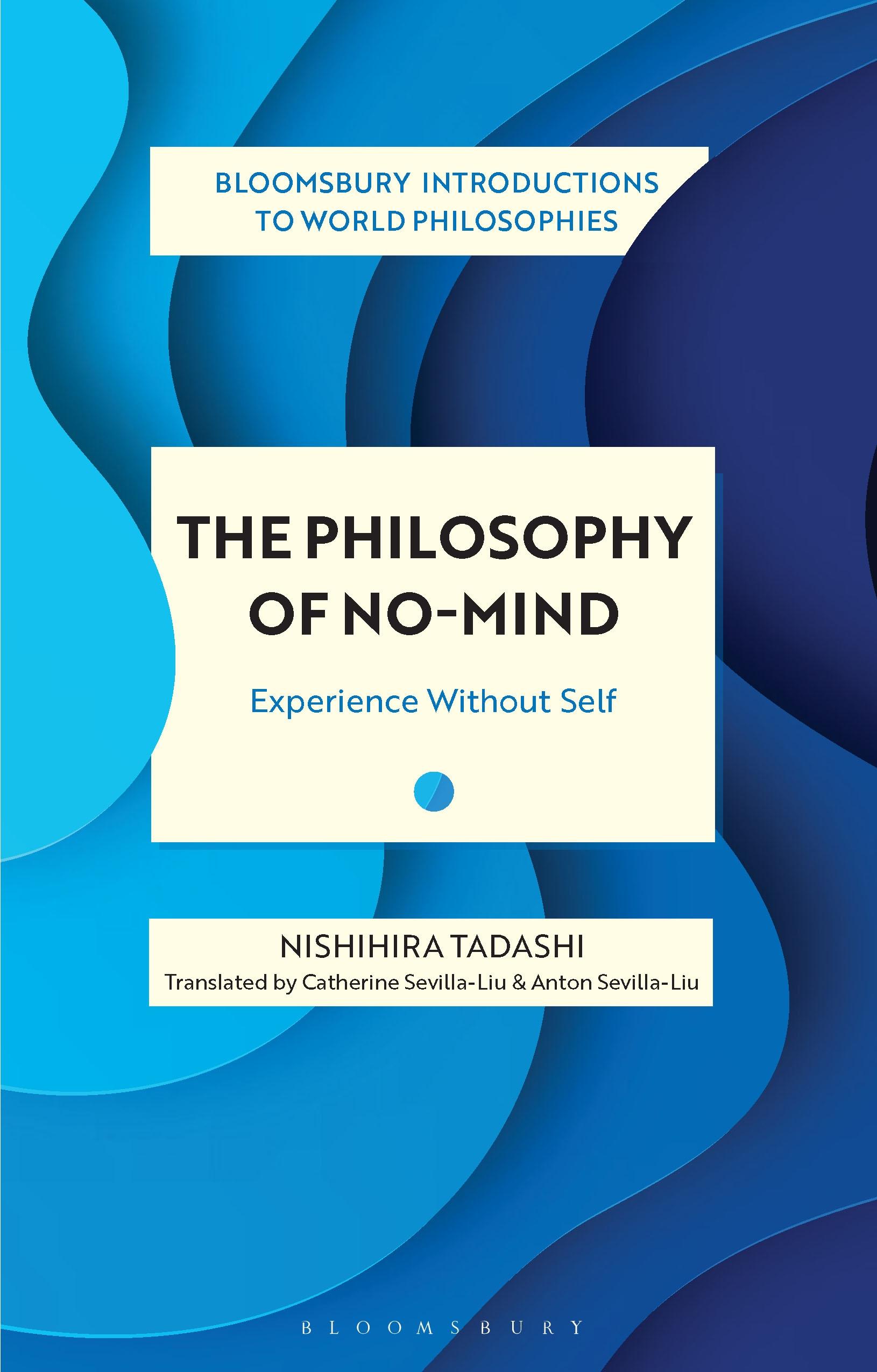
Nishihira Tadashi, one of Japan's leading philosophers, introduces the deeply experiential philosophy of no-mind (mushin). In everyday Japanese, mushin is when one loses oneself in the reality of the present and becomes one with it, resulting in one's best performance. However, behind this everyday use is a concept that touches the core of Japanese spirituality.
This book explores no-mind in its dynamic complexity. It is both the letting go of the calculations of mind and at the same time the arising of a vibrant consciousness in unity with reality. This gives rise to various tensions: Is it about negating or affirming self? Is stillness or activity? How does it relate with social ethics, or religious transcendence? And what is stopping no-mind from descending into mere mindlessness?
These tensional facets are explored through philosophy and history of thought in Japan, from pre-Buddhist Japanese thought, to Zen Buddhism in D.T. Suzuki and Toshihiko Izutsu, to swordsmanship and Noh theater. These historical approaches are brought to the here-and-now, dialoguing with psychology, ethics, and the experiences of everyday life, and ending with two preliminary practical explorations-What does it mean to care for another and to educate from the point of view of no-mind?
This book explores no-mind in its dynamic complexity. It is both the letting go of the calculations of mind and at the same time the arising of a vibrant consciousness in unity with reality. This gives rise to various tensions: Is it about negating or affirming self? Is stillness or activity? How does it relate with social ethics, or religious transcendence? And what is stopping no-mind from descending into mere mindlessness?
These tensional facets are explored through philosophy and history of thought in Japan, from pre-Buddhist Japanese thought, to Zen Buddhism in D.T. Suzuki and Toshihiko Izutsu, to swordsmanship and Noh theater. These historical approaches are brought to the here-and-now, dialoguing with psychology, ethics, and the experiences of everyday life, and ending with two preliminary practical explorations-What does it mean to care for another and to educate from the point of view of no-mind?
Payez facilement par carte, Klarna, Apple Pay ou Google Pay. Pas satisfait ? Vous avez toujours une garantie de remboursement de 14 jours. En savoir plus dans nos conditions. Si vous avez des questions, envoyez-nous un e-mail à hello@memmo.org.
Memmo facilite tes études, où que tu sois dans le monde. On rassemble tes manuels de cours et des outils d'étude intelligents au même endroit : résumés, quiz, podcasts et flashcards. Et il y a Ted, ton compagnon d'étude qui répond à toutes tes questions. Plus de 50 000 étudiants étudient déjà ici – conçu pour t'aider à apprendre plus vite et à moins stresser.