
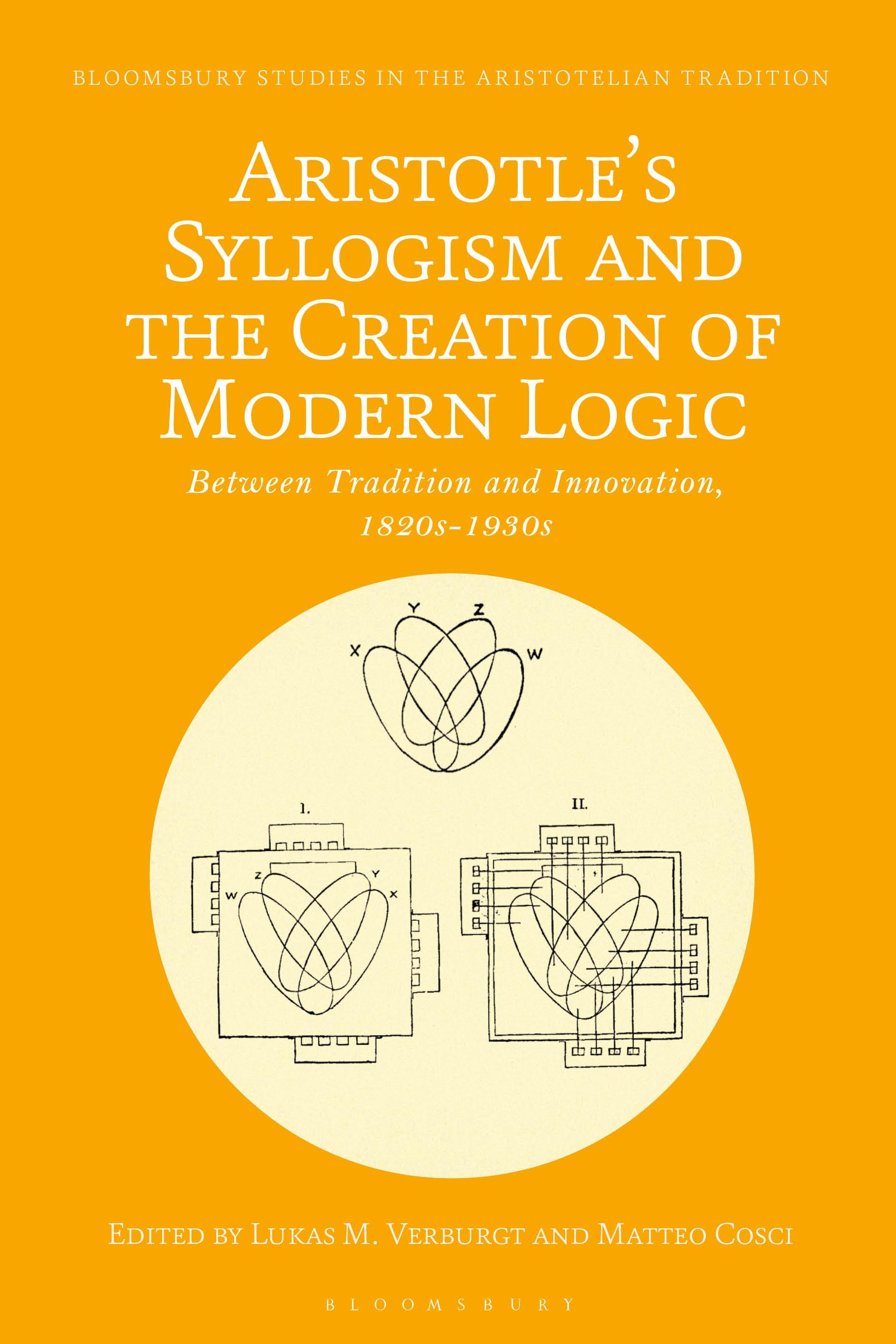
Offering a bold new vision on the history of modern logic, Lukas M. Verburgt and Matteo Cosci focus on the lasting impact of Aristotle's syllogism between the 1820s and 1930s.
For over two millennia, deductive logic was the syllogism and syllogism was the yardstick of sound human reasoning. During the 19th century, this hegemony fell apart and logicians, including Boole, Frege and Peirce, took deductive logic far beyond its Aristotelian borders. However, contrary to common wisdom, reflections on syllogism were also instrumental to the creation of new logical developments, such as first-order logic and early set theory. This volume presents the period under discussion as one of both tradition and innovation, both continuity and discontinuity. Modern logic broke away from the syllogistic tradition, but without Aristotle's syllogism, modern logic would not have been born.
A vital follow up to The Aftermath of Syllogism, this book traces the longue durée history of syllogism from Richard Whately's revival of formal logic in the 1820s through the work of David Hilbert and the Göttingen school up to the 1930s. Bringing together a group of major international experts, it sheds crucial new light on the emergence of modern logic and the roots of analytic philosophy in the 19th and early 20th centuries.
For over two millennia, deductive logic was the syllogism and syllogism was the yardstick of sound human reasoning. During the 19th century, this hegemony fell apart and logicians, including Boole, Frege and Peirce, took deductive logic far beyond its Aristotelian borders. However, contrary to common wisdom, reflections on syllogism were also instrumental to the creation of new logical developments, such as first-order logic and early set theory. This volume presents the period under discussion as one of both tradition and innovation, both continuity and discontinuity. Modern logic broke away from the syllogistic tradition, but without Aristotle's syllogism, modern logic would not have been born.
A vital follow up to The Aftermath of Syllogism, this book traces the longue durée history of syllogism from Richard Whately's revival of formal logic in the 1820s through the work of David Hilbert and the Göttingen school up to the 1930s. Bringing together a group of major international experts, it sheds crucial new light on the emergence of modern logic and the roots of analytic philosophy in the 19th and early 20th centuries.
Payez facilement par carte, Klarna, Apple Pay ou Google Pay. Pas satisfait ? Vous avez toujours une garantie de remboursement de 14 jours. En savoir plus dans nos conditions. Si vous avez des questions, envoyez-nous un e-mail à hello@memmo.org.
Memmo facilite tes études, où que tu sois dans le monde. On rassemble tes manuels de cours et des outils d'étude intelligents au même endroit : résumés, quiz, podcasts et flashcards. Et il y a Ted, ton compagnon d'étude qui répond à toutes tes questions. Plus de 50 000 étudiants étudient déjà ici – conçu pour t'aider à apprendre plus vite et à moins stresser.