
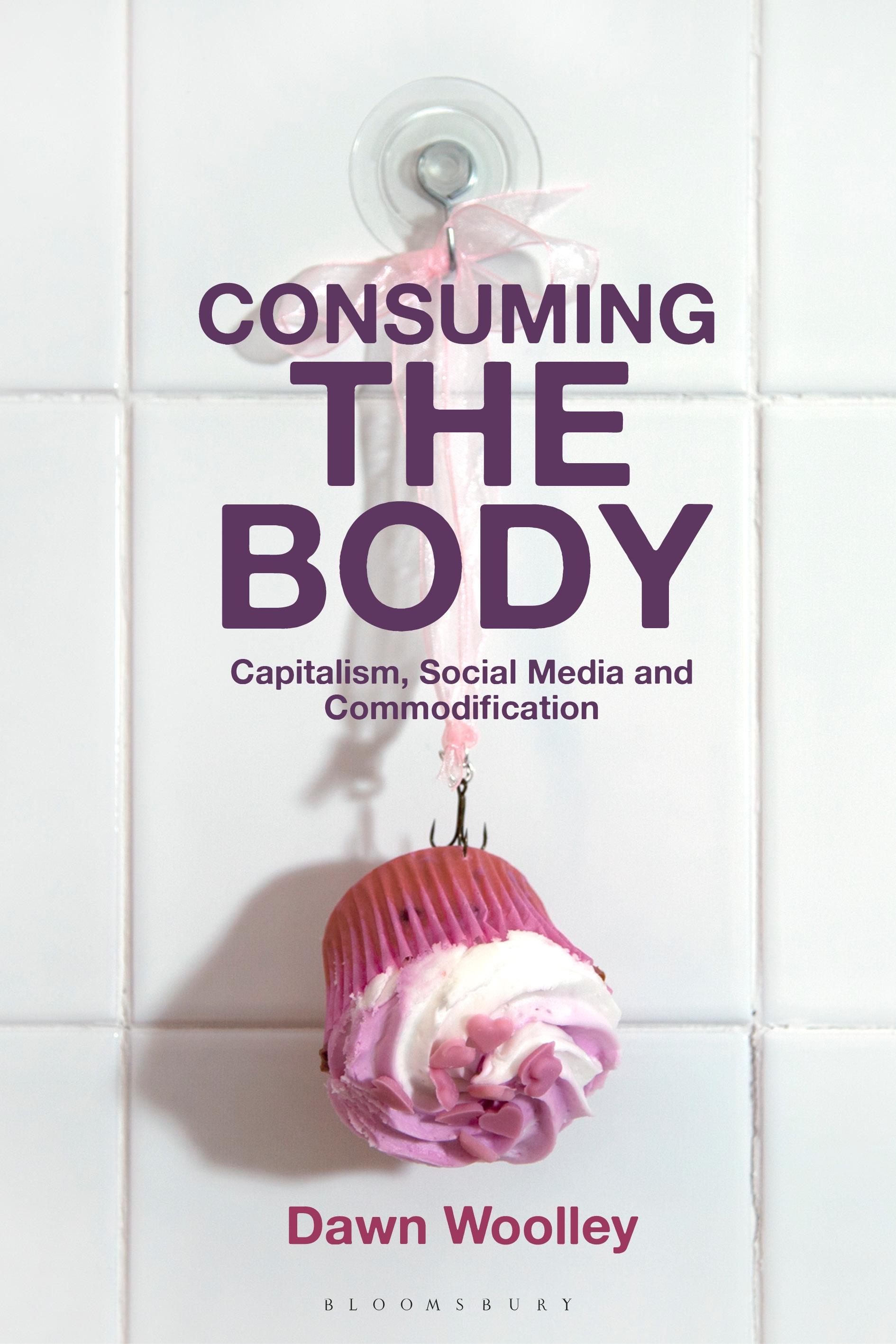
Consuming the Body examines contemporary consumerism and the commodified construction of ideal gendered bodies, paying particular attention to the new forms of interaction produced by social networking sites. Describing the behaviours of an ideal neoliberal subject, Woolley identifies modes of discipline, forms of pleasure, and opportunities for subversion in an examination of how individuals are addressed and the ways in which they are expected to respond. Key modes of address that compel the consumer to consume are: sadistic commands communicated in adverts, TV programmes and magazine articles; a fetishistic gaze that dissects the body into parts to be improved through commodification; and a hystericized insistent presence that compels the consumer to present their body for critique and appreciation that is exemplified in the selfie.
Woolley interprets the visual characteristics of different types of selfies, including #fitspiration, #thinspiration, #fatspiration, and #bodypositivity to understand how they relate to current body ideals. Healthism and culture bound illnesses such as hysteria and eating disorders are examined to demonstrate the impact of commodified body ideals on consumers' bodies. An analysis of thinspiration images (photographs of emaciated bodies shared on pro-eating-disorder blogs and websites) suggests that the anorexic body represents the logical (and fatal) end point for the idealised body in consumer culture. Fat acceptance selfies suggest there is a fourth mode of address, empowering presence that has the potential to liberate consumers from the 'trap of visibleness' produced by the other three modes of address. In conclusion, the book identifies some creative methods for producing selfies that evade commoditisation and discipline.
Woolley interprets the visual characteristics of different types of selfies, including #fitspiration, #thinspiration, #fatspiration, and #bodypositivity to understand how they relate to current body ideals. Healthism and culture bound illnesses such as hysteria and eating disorders are examined to demonstrate the impact of commodified body ideals on consumers' bodies. An analysis of thinspiration images (photographs of emaciated bodies shared on pro-eating-disorder blogs and websites) suggests that the anorexic body represents the logical (and fatal) end point for the idealised body in consumer culture. Fat acceptance selfies suggest there is a fourth mode of address, empowering presence that has the potential to liberate consumers from the 'trap of visibleness' produced by the other three modes of address. In conclusion, the book identifies some creative methods for producing selfies that evade commoditisation and discipline.
Pages: 240
Catégorie: Kultur-, Genus- & Postkoloniala studier
e-ISBN: 9781350225312
Poids d'expédition: 1.2 kg
Expédié sous: 1-2 jours
Payez facilement par carte, Klarna, Apple Pay ou Google Pay. Pas satisfait ? Vous avez toujours une garantie de remboursement de 14 jours. En savoir plus dans nos conditions. Si vous avez des questions, envoyez-nous un e-mail à hello@memmo.org.
Memmo facilite tes études, où que tu sois dans le monde. On rassemble tes manuels de cours et des outils d'étude intelligents au même endroit : résumés, quiz, podcasts et flashcards. Et il y a Ted, ton compagnon d'étude qui répond à toutes tes questions. Plus de 50 000 étudiants étudient déjà ici – conçu pour t'aider à apprendre plus vite et à moins stresser.