
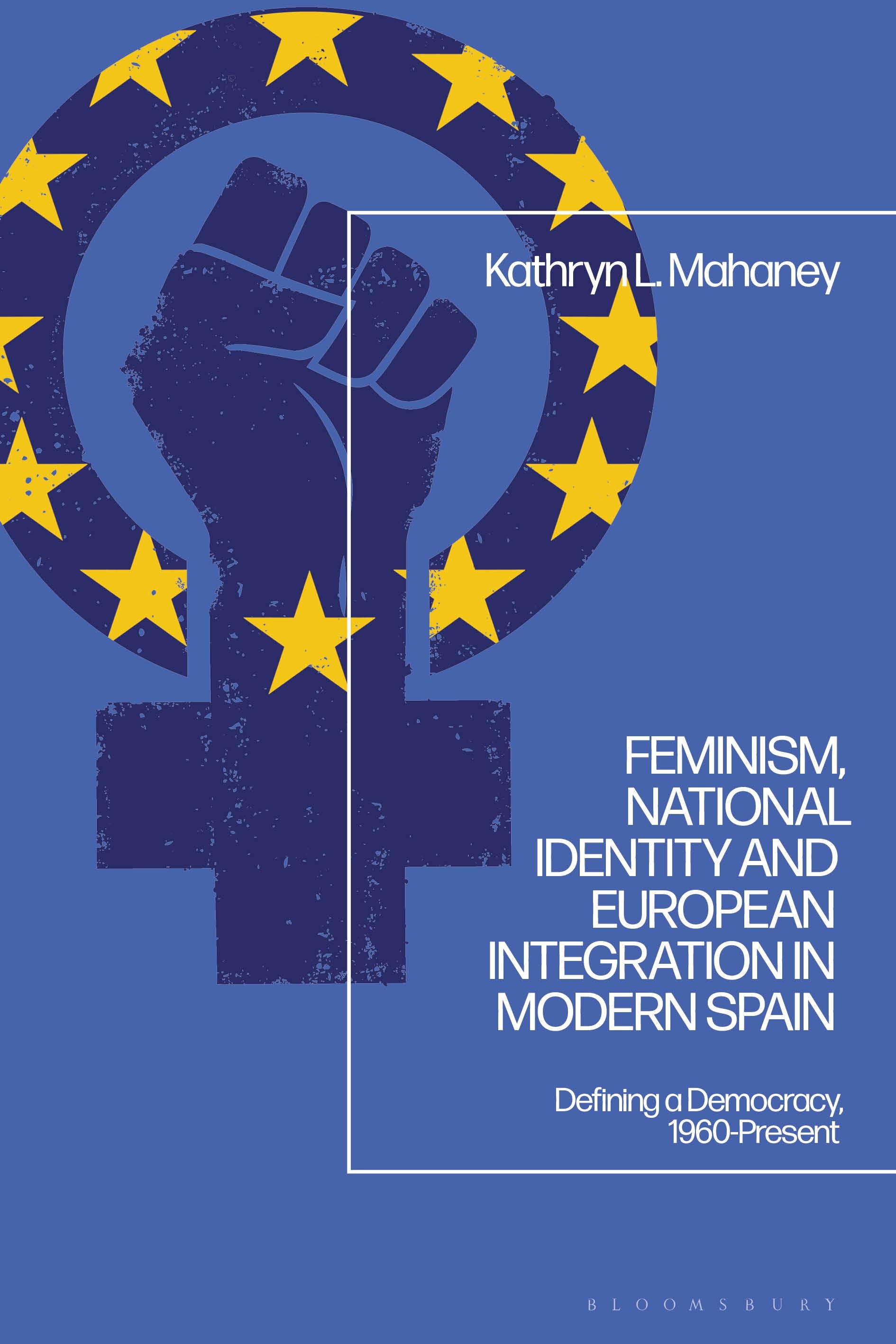
This book explores the evolution of Spanish feminism in the context of European feminisms and institutions from the 1960s to recent times.
Beginning with Sección Femenina, the official Francoist women's organization, Feminism, National Identity and European Integration in Modern Spain traces the interplay between Spanish women's policy and international policymaking. In some cases, as with the Sección Femenina-championed Law of Political Rights (Ley de Derechos) in 1961, Spanish women's policy at least appeared more progressive than what Western democracies offered – notable at a time when Spain was considered backward. After Franco's death in 1975, Spain's democratic transition seemingly consolidated forward-thinking women's policy with a Constitution that guaranteed equality of the sexes in 1978, and with the creation of a national bureau charged with crafting women's policy, the Instituto de la Mujer (Women's Institute), in 1983.
Yet feminists found themselves marginalized in Spanish political decision-making, as Kathryn L. Mahaney argues so successfully in this study. Mahaney reveals that women ultimately influenced domestic policy not by acting within national networks but by leveraging European connections, particularly after Spain joined the European Economic Community (EEC) in 1986. The book shows that Spanish feminists worked through the EEC to gain international approval of policies that had met domestic opposition, and did so by representing them as necessary litmus tests of nations' democratic integrity. Their proposals were shaped by the specific context of Spanish feminism, but also by Spanish debates about what rights democracies should grant women and what equality in a post-fascist nation should encompass. This ground-breaking study explains that, in turn, these processes shaped both Spain's and the European Union's much-prized self-identities as democratic communities.
Beginning with Sección Femenina, the official Francoist women's organization, Feminism, National Identity and European Integration in Modern Spain traces the interplay between Spanish women's policy and international policymaking. In some cases, as with the Sección Femenina-championed Law of Political Rights (Ley de Derechos) in 1961, Spanish women's policy at least appeared more progressive than what Western democracies offered – notable at a time when Spain was considered backward. After Franco's death in 1975, Spain's democratic transition seemingly consolidated forward-thinking women's policy with a Constitution that guaranteed equality of the sexes in 1978, and with the creation of a national bureau charged with crafting women's policy, the Instituto de la Mujer (Women's Institute), in 1983.
Yet feminists found themselves marginalized in Spanish political decision-making, as Kathryn L. Mahaney argues so successfully in this study. Mahaney reveals that women ultimately influenced domestic policy not by acting within national networks but by leveraging European connections, particularly after Spain joined the European Economic Community (EEC) in 1986. The book shows that Spanish feminists worked through the EEC to gain international approval of policies that had met domestic opposition, and did so by representing them as necessary litmus tests of nations' democratic integrity. Their proposals were shaped by the specific context of Spanish feminism, but also by Spanish debates about what rights democracies should grant women and what equality in a post-fascist nation should encompass. This ground-breaking study explains that, in turn, these processes shaped both Spain's and the European Union's much-prized self-identities as democratic communities.
Pages: 224
Catégorie: Kultur-, Genus- & Postkoloniala studier
e-ISBN: 9781350195134
Poids d'expédition: 1.2 kg
Expédié sous: 1-2 jours
Payez facilement par carte, Klarna, Apple Pay ou Google Pay. Pas satisfait ? Vous avez toujours une garantie de remboursement de 14 jours. En savoir plus dans nos conditions. Si vous avez des questions, envoyez-nous un e-mail à hello@memmo.org.
Memmo facilite tes études, où que tu sois dans le monde. On rassemble tes manuels de cours et des outils d'étude intelligents au même endroit : résumés, quiz, podcasts et flashcards. Et il y a Ted, ton compagnon d'étude qui répond à toutes tes questions. Plus de 50 000 étudiants étudient déjà ici – conçu pour t'aider à apprendre plus vite et à moins stresser.