
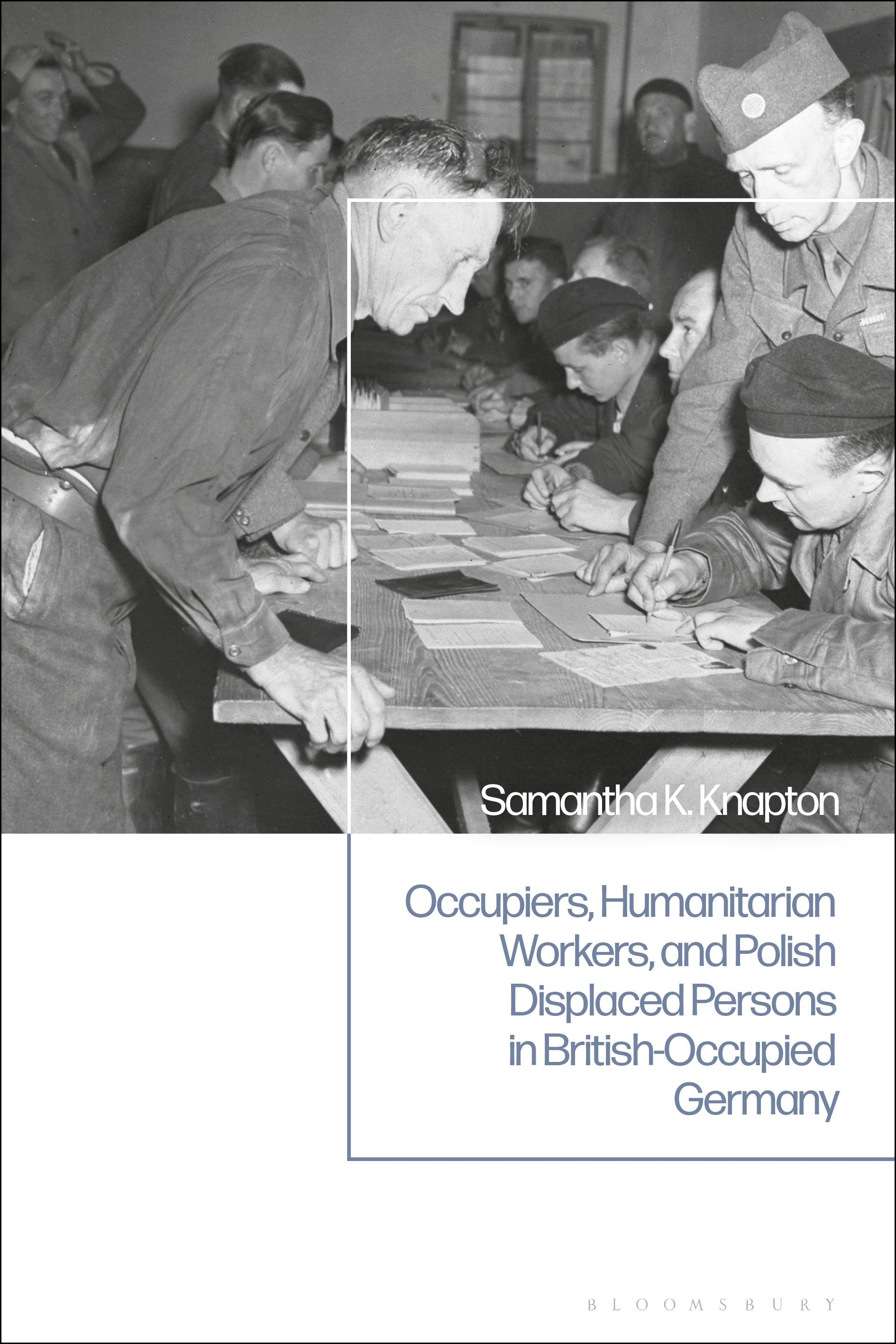
Concepts of migration and displacement are all too often separated from ideas of international humanitarianism and occupations; and yet, between 1945 and 1951, victims of war became the joint responsibility of humanitarian workers and military officials in occupied Germany. In this innovative study, Samantha K. Knapton focuses on the lives of Polish displaced persons (DPs) – one of the largest groups in occupied Germany – to shine a spotlight on this interaction for the first time.
From the everyday experience of clothing, feeding and sheltering to governmental policies and military actions, Occupiers, Humanitarian Workers and the Polish Displaced Persons in British-Occupied Germany investigates the impact of occupation on post-war refugees and explores how the birth of state-driven international humanitarianism played a vital role in both the identity of the Polish people and the reconstruction of Germany. To do so, Knapton fuses together archival material and personal collections such as memoirs, letters and diaries to present an account which considers both the macro and micro issues of displacement, occupation and humanitarianism. The result is a sophisticated analysis of Anglo-Polish-German relations in post-war Europe which will be of immense value to all scholars of modern Europe, Polish history, and displacement studies more generally.
From the everyday experience of clothing, feeding and sheltering to governmental policies and military actions, Occupiers, Humanitarian Workers and the Polish Displaced Persons in British-Occupied Germany investigates the impact of occupation on post-war refugees and explores how the birth of state-driven international humanitarianism played a vital role in both the identity of the Polish people and the reconstruction of Germany. To do so, Knapton fuses together archival material and personal collections such as memoirs, letters and diaries to present an account which considers both the macro and micro issues of displacement, occupation and humanitarianism. The result is a sophisticated analysis of Anglo-Polish-German relations in post-war Europe which will be of immense value to all scholars of modern Europe, Polish history, and displacement studies more generally.
Payez facilement par carte, Klarna, Apple Pay ou Google Pay. Pas satisfait ? Vous avez toujours une garantie de remboursement de 14 jours. En savoir plus dans nos conditions. Si vous avez des questions, envoyez-nous un e-mail à hello@memmo.org.
Memmo facilite tes études, où que tu sois dans le monde. On rassemble tes manuels de cours et des outils d'étude intelligents au même endroit : résumés, quiz, podcasts et flashcards. Et il y a Ted, ton compagnon d'étude qui répond à toutes tes questions. Plus de 50 000 étudiants étudient déjà ici – conçu pour t'aider à apprendre plus vite et à moins stresser.